Neighbors in Arms: Burlington and the Revolution
From the first alarm at Lexington and Concord to service in the Continental Army, the story of Burlington’s militia traces the opening years of the American Revolution.

The United States is celebrating the 250th anniversary of the signing of the Declaration of Independence this summer. Here in Massachusetts, the commemoration reminds us of two important facts: First, the American Revolution started just down the road with the Battles of Lexington and Concord; Second, if it hadn’t been for our militia responding in one minute on April 19, 1775, there would not be a Declaration today.
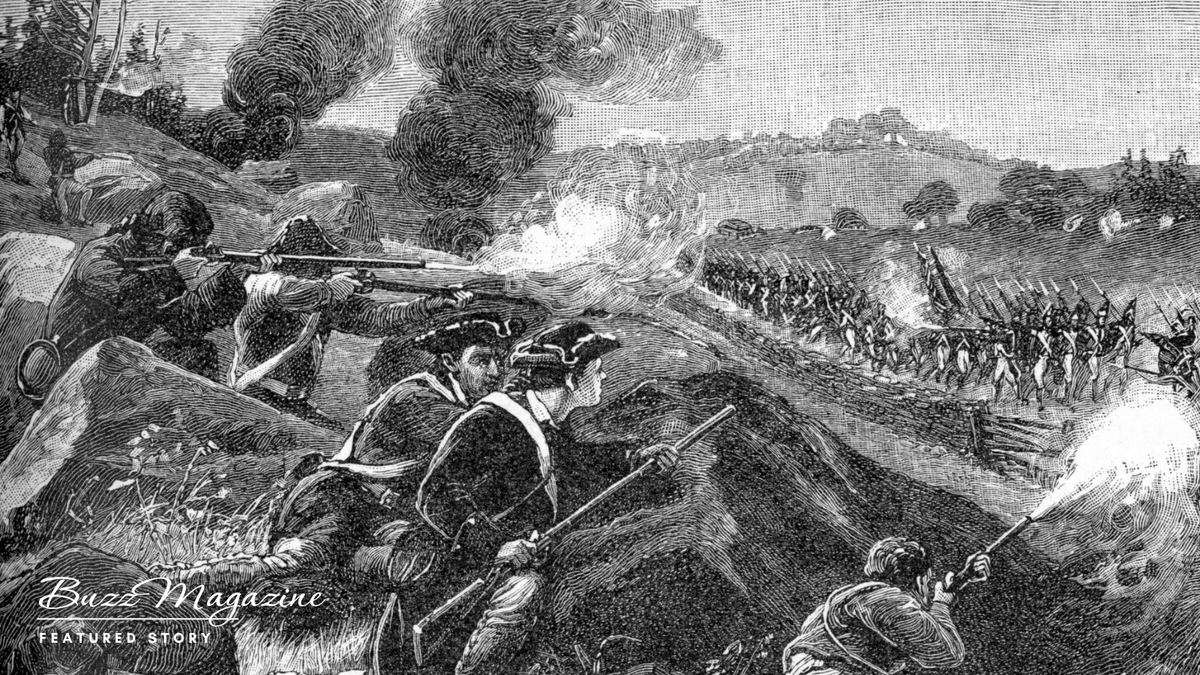
The story of the involvement of Burlington’s militia in that battle is typically told as follows: Burlington, which was then the second precinct of Woburn, fought with Colonel David Green’s 2nd Regiment of Foot, with the 3rd Company under the command of Captain Joshua Walker. On that day Captain Walker had about 78 men. The company arrived at Lexington Green minutes after the first skirmish of the War, stayed to help with the wounded, and pursued the British to Concord. They established a defensive position on the Concord Road at what would become known as the Bloody Angle. There, eight British soldiers were killed or wounded.
Burlington was involved in another important way that day: The first British prisoners were taken to the Reed saw mill, located at what is now the Burlington Mall parking lot, as James Reed recounted on January 19, 1825: “I also saw a British soldier march up the road, near said meeting-house, and Joshua Reed of Woburn met him, and demanded him to surrender. He then took his arms and equipments from him, and I took charge of him, and took him to my house…” Reed went on to tell of a handful of other prisoners that were conveyed to his property before being taken to a less prominent location.
By the end of that April day, militia from throughout New England surrounded Boston; the Woburn militia joined their comrades in Charlestown.
On June 15, 1775, the British tried to break the siege, forcing the militia to retreat from the Charlestown peninsula in the battle of Bunker Hill. Although the British technically prevailed, the victory came at a staggering cost of over 1,000 casualties, and the command decided breaking the siege would be too costly.
Two weeks later, George Washington arrived in Cambridge and formally took command of the Continental Army. For the militia, it marked the beginning of a difficult transition. Washington expected a trained army capable of standing toe-to-toe with British regulars. What he found instead were citizen-soldiers whose bonds of familiarity—officers and enlisted men often being neighbors—did not fit the strict military hierarchy he intended to impose.
The situation shifted in March 1776 when General Henry Knox arrived with artillery hauled from Fort Ticonderoga. The guns were positioned on the heights above Boston, forcing the British to evacuate the city for Halifax. With Boston secured, Washington moved his army to New York City, where the next phase of the war would unfold—and where some of the Woburn men almost certainly followed.
Military records, fragmentary as they are, hint at that movement. James Bennett, for example, appears repeatedly in the rolls: serving in 1775 with Capt. Joshua Walker’s company after the alarm of April 19; later enlisting under Capt. John Wood in Cambridge; and by June 1776 turning up in New York, where he drew pay and signed receipts for arms. His record suggests he marched with Washington’s forces and likely participated in the New York and New Jersey campaign of 1776.
Others from the same circle followed similar paths. Capt. Joshua Walker continued into the Continental service, eventually commanding Woburn companies and later serving in detachments ordered toward the Hudson and beyond. James Reed also transitioned from local militia service into Continental regiments, receiving pay and uniform allowances while the army reorganized in the field. Piece by piece, the records show the same pattern: men who began as local militia became part of a shifting national army whose movements carried them far from Massachusetts.
But as the war moved south, the story of these men became harder to follow. Their identity as a single company dissolved into the larger Continental Army. Their individual service survives in scattered entries—musters, pay rolls, and receipts—rather than in unified narratives of battle.
Lexington, Concord, and Bunker Hill are in our backyard; we know a lot about those battles and are proud of our forefathers who fought. When the combatants moved south, the war was something happening elsewhere. When it was over we celebrated collectively and welcomed our heroes who came home.
By the time the war finally ended, the outcome was not yet visible from the New England towns where it had begun. That came later, in October 1781, when British forces surrendered to George Washington at Yorktown, effectively ending major combat operations and securing American independence.