How Not to Plant a Tree
A hidden mulching mistake killed two mature trees in Bill Boivin's yard — here's the root crown problem every Burlington tree owner should watch for

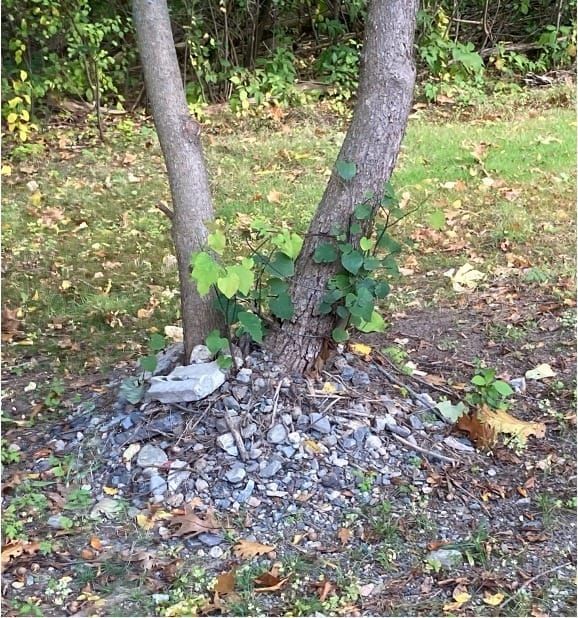
Look closely at the trees in these photos: two grew up on their own; two were planted and mulched by human hands. Notice anything different? It turns out the human-planted, mulched trees are actually more likely to die young than the ones nature planted itself — and a devastating loss in my own yard taught me that lesson the hard way.
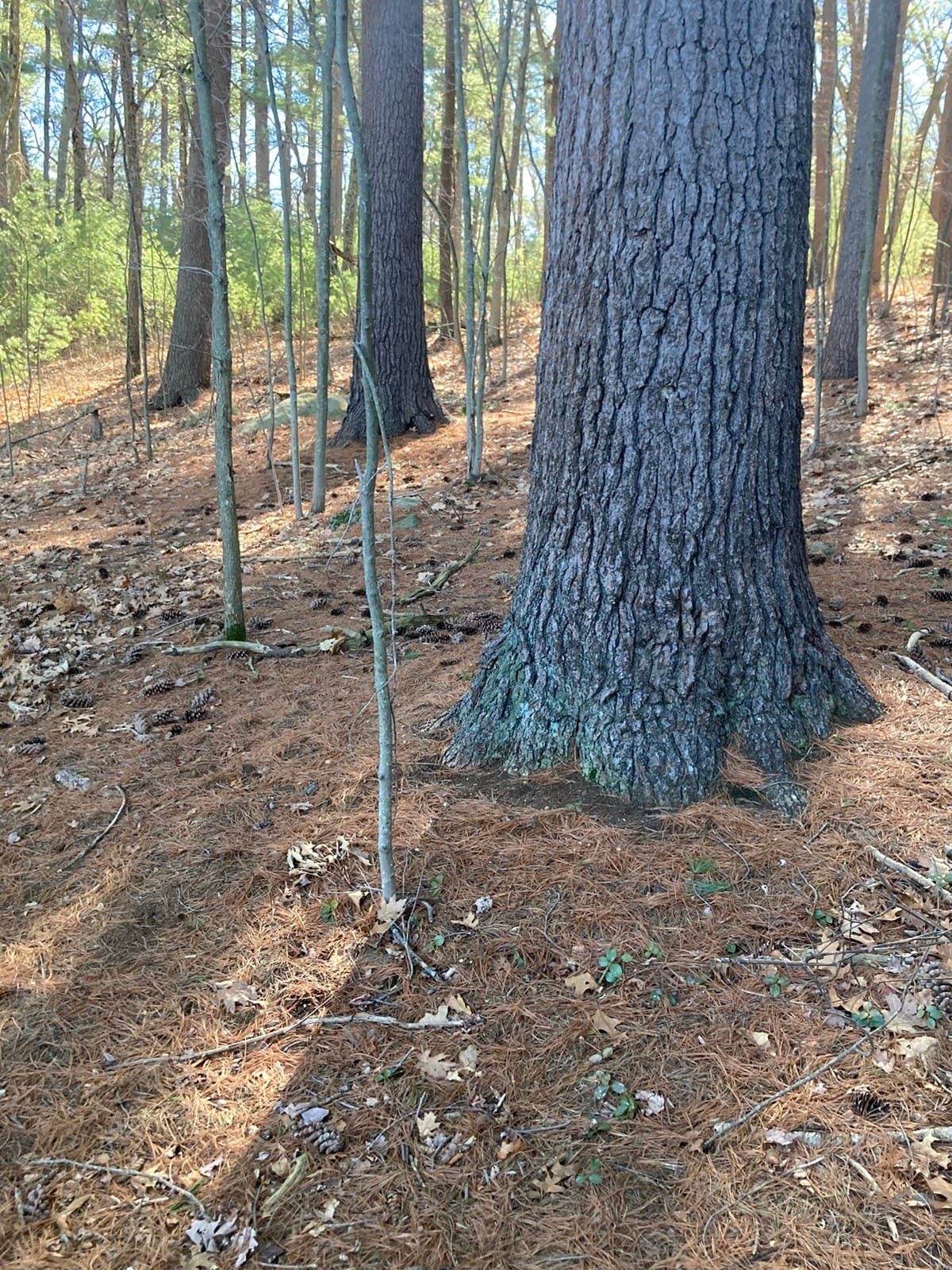
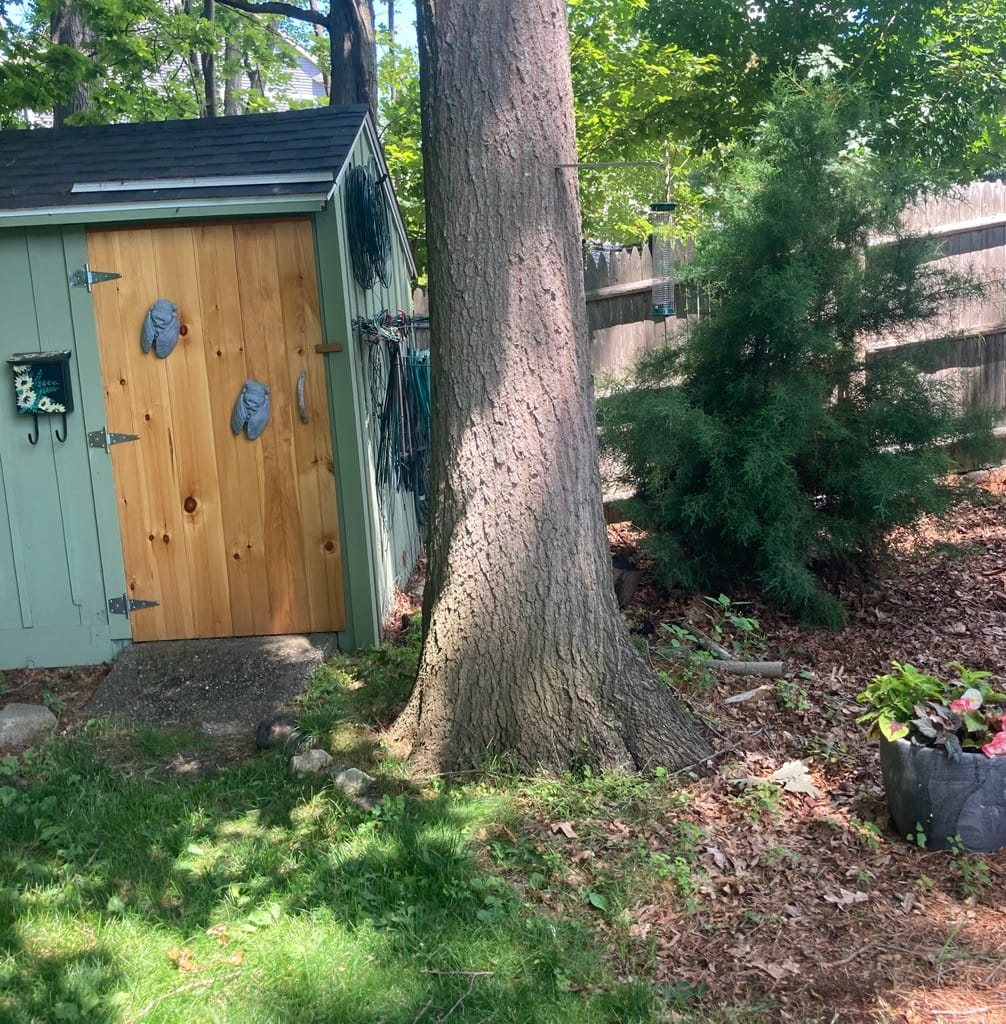
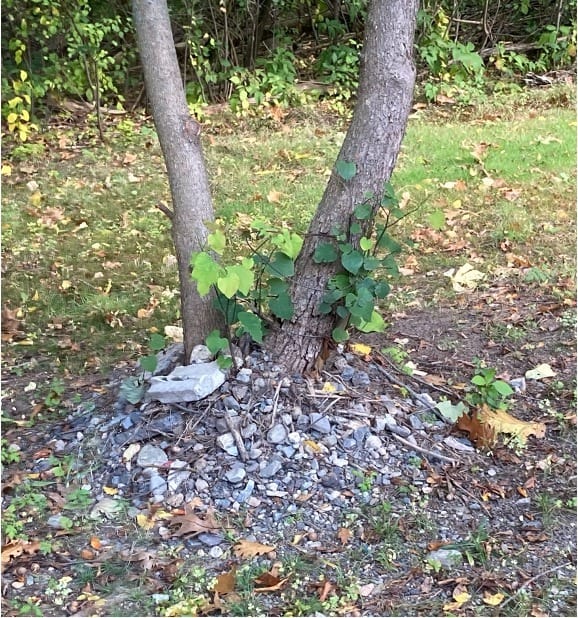
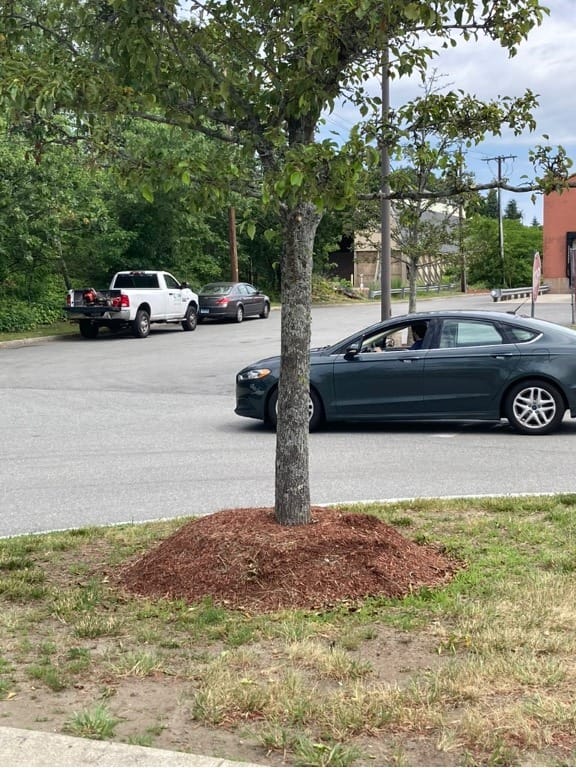
Two naturally-grown trees (above) and two human-planted and mulched trees (below).
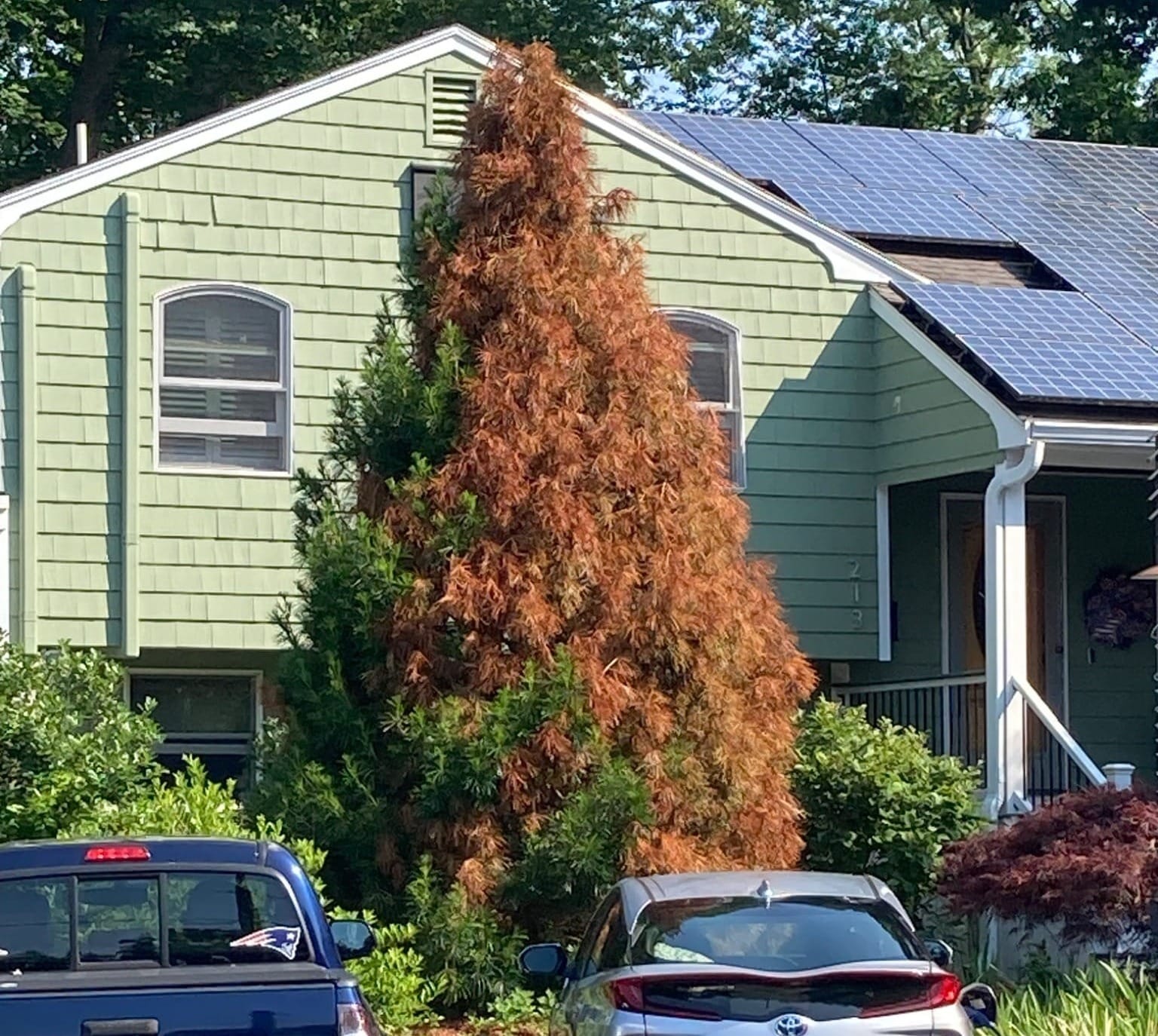
This spring, I noticed the foliage turning brown on my beautiful Japanese umbrella pine. We’d had that tree planted fifteen years ago, and it had grown into a big, beautiful showpiece – one that, by all outward appearances, was perfectly healthy. Little did we know, those first traces of brown were outward signs of irreversible damage that had been slowly building for more than a decade.
Within two months, my entire showpiece tree was completely gone! After the dead tree was removed, I did a little post-mortem investigation to find the root crown buried under 10”-12” of mulch – a fact that explained everything.
A tree’s root crown is the area where the trunk meets the roots. It is also called the root flare or root collar. Though you may never have given much thought to this part of the tree, it is a crucial part of tree anatomy.
In a healthy, well-planted tree, the crown of the roots is exposed above ground. Exposure of the crown to the air allows the trunk and roots to breathe, exchanging gases like oxygen and carbon dioxide with the atmosphere.
A common practice in landscaping is to mulch around the base of a tree to “make it pretty.” However, too much mulch can be detrimental to the tree’s ability to function as nature intended.
If excessive mulch is surrounding the tree so that its crown is buried, the crown stays moist and deprived of oxygen. This affects important tissues of the tree, the phloem and xylem, which act similarly to arteries and veins in animals, transporting oxygen and nutrients up and down the tree. If these tissues get compromised, water and nutrient flow can be impeded. Excessive mulching also creates a constantly moist environment where rot-causing fungi can thrive, resulting in tree stress, structural weakness, canopy decline, and ultimately catastrophic failure.
My Japanese umbrella pine may have been originally planted properly, but because the lowest tree branches touched the ground, the root crown area was not visible and had little air flow. After years of mulching and needles being shed, unbeknownst to me the crown got buried. By the time we knew there was a problem, the tree was unsalvageable because the root crown had rotted, destroying the xylem and phloem lifelines.
Picture a little tree seed falling on the ground in the middle of the forest. With just the right conditions, that seed sends roots down and the tree stem up, leaving the intersection of the two – the root crown – right at ground level, where it stays throughout the life of the tree.
But often in commercial nurseries, the entire root ball gets dug up and bagged in burlap, root crown and all. Then, the tree goes to its new home where a hole has been dug. In goes the burlap bag. Perhaps the burlap is cut open to allow the tree roots to grow easily. Frequently, however, the bag is buried in its entirety including the root crown. When that happens, the little tree is doomed. After a while, the root crown begins to rot and the entire tree suffers. Symptoms can appear within months to several years depending on tree species, soil conditions, and how long the collar has been buried.
And the problem can occur in other circumstances, as well. Even with trees that are planted correctly, years of mulching and covering the crown can result in the same crown rot.
One of my Norway maples had a similar demise. The tree was huge when we bought the house 32 years ago and was likely planted when the house was built around 1960. After 60 years of mulching the gardens around that tree, the tree started to fail. Three years in a row we lost about ¼ of its canopy each year. Then we saw this:
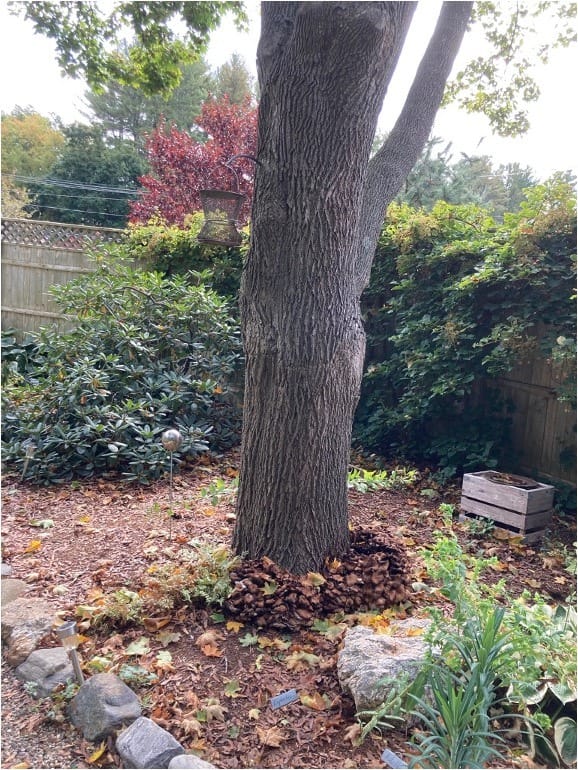
Fungus was growing around the base of the tree, and bark was peeling off in that area. Fungus feeds on dead, wet wood; that fungus was a clear sign the tree was dying. We had to have the entire tree cut down, losing all the shade and wildlife benefits it had provided. My shade garden suffered, and my air conditioning bill went up.
Now I realize that over several years we had slowly been burying and gradually been suffocating the root crown while keeping it constantly moist and susceptible to fungi.
The oldest and strongest trees in my yard have had their root crowns properly exposed for 75 - 100 years, allowing them to flourish.
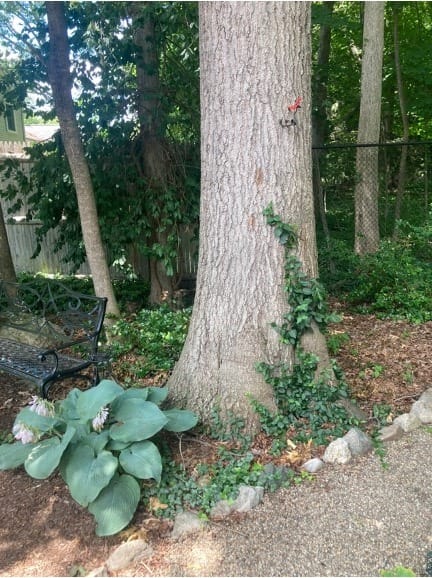
Now I see improperly planted and mulched trees everywhere I go. Next time you walk in the forest, check out the base of the natural trees – in every case you will see the root crown exposed. Look back up at the natural trees from the beginning of this story, taken from Mill Pond and my own back yard. In each picture, root crowns are exposed. The two trees on the bottom row, however, have suffered insults including the deposition of construction debris and volcano-style mulching, both of which cover the trees’ root crowns and will likely cause health problems for the tree if not removed.
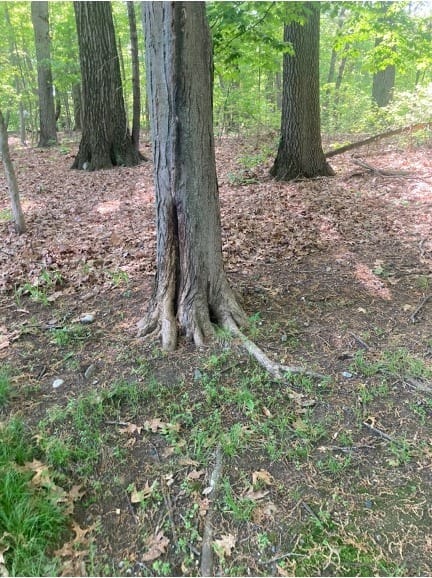
Every tree in this forest picture has its root crown exposed — nobody had to teach it that. Nature already knows how to plant a tree; we're the ones who keep getting in the way. So next time you're out for a walk, or eyeing that bag of mulch in your own yard, take a second look at the base of the trunk. It might just save a tree like mine.
Bill Boivin is a scientist, retired from 30 years of active duty with the United States Public Health Service. He is a Burlington Town Meeting Member and Conservation Commissioner. He and his wife, Jane, grew up in Lynn and now live in Burlington with their 2 mini dachshunds, 7 chickens, and Maya, a ball python. Bill and Jane have shared a love of nature, gardening, and wildlife for over 50 years. They have fostered, healed, raised, and loved a remarkable variety of animals in their time together. Learn more about Bill.