
PODCAST: Meet the Primary Candidates for the Massachusetts 6th Congressional District
Seven candidates are running for the open Massachusetts 6th Congressional District seat. We sat down with each of them to hear directly from the people asking for your vote.

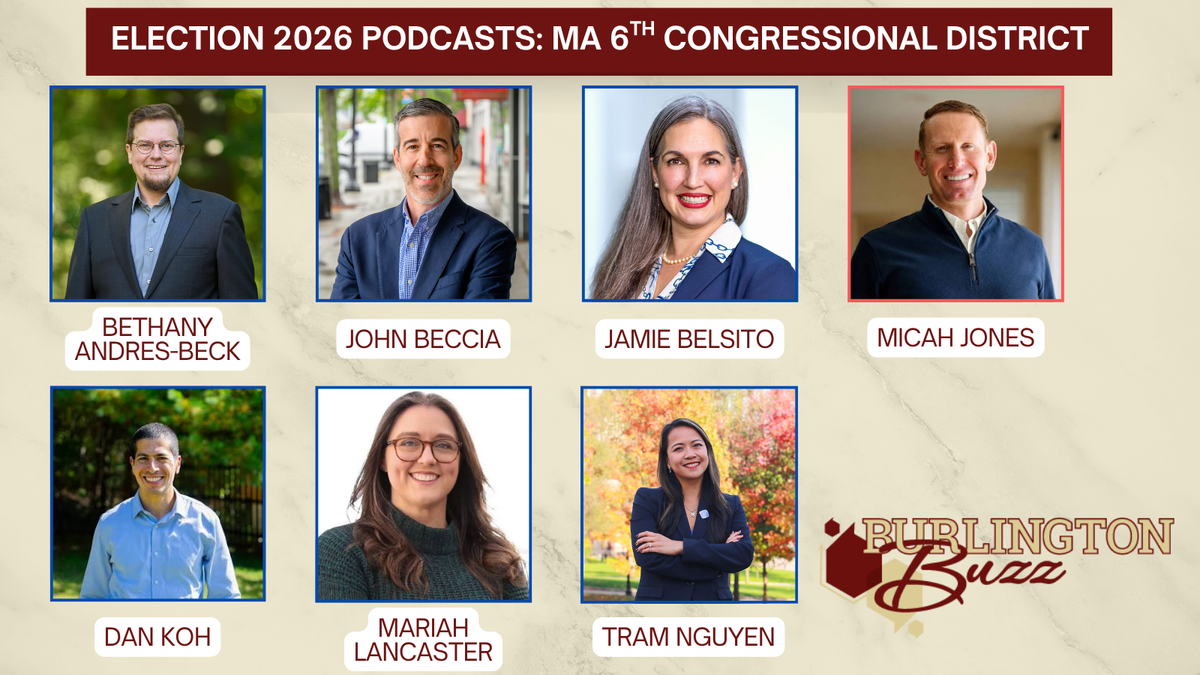
In 2026, Burlington Buzz is introducing readers to the candidates seeking to represent the Massachusetts 6th District MA-06 in congress.
This year, six Democratic candidates are running for the single open seat; the winner of the September 1 primary will be on the general election ballot in November. A single republican candidate is on the primary ballot and will be going up against the Democratic primary winner in November. We encourage you to listen to all seven podcasts. Thanks to Erika Brown with the Manchester Cricket and Monica Sager from Swampscott Tides for supporting in the development of these questions! The views and statistics cited in these interviews are those of the candidates.
The Massachusetts primary election will be held on September 1 all across the Commonwealth, and there will be early in-person and vote-by-mail options. The general election is November 3. Find Burlington-specific information on the Burlington Town Clerk website, or check with your own city or town clerk.
A note on transcripts: These transcripts were generated using AI transcription tools and have been lightly edited for clarity. While we've done our best to ensure accuracy, some errors may remain. If you spot something that doesn't sound right, please let us know at hello@burlington.buzz.
Prefer YouTube? Listen here.

If you like being informed and connected to your community, sign up for the Daily Buzz newsletter now!
Bethany Andres-Beck is a software engineer from Middleton who has been involved in local government through their town's affordable housing trust and master plan committee. They are running for the MA-06 congressional seat with a focus on AI regulation and making technology work for everyday people.
CONNECT WITH BETHANY ANDRES-BECK
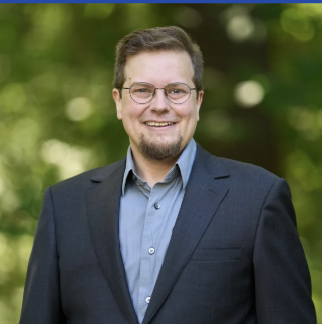
Bethany Andres-Beck for MA-06 Transcript
Nicci: Hello. Hello. It's Burlington Buzz on the Mic and this is Nicci and I have here Bethany Andres-Beck. Bethany is running for Congress this year in the Democratic primary in the sixth congressional district which includes Burlington and lots of other towns including towns on the North Shore. Bethany, thanks for being here today.
Bethany: Thank you so much for having me.
Nicci: I'd love for you to just introduce yourself a little bit to our listeners.
Bethany: Sure. I'm a software engineer. I'm not coming from professional politics. I'm from Middleton, which is near Danvers for people who haven't driven down 118 and gotten stuck in traffic in our downtown there. I have been involved in local politics there. I'm on our affordable housing trust, master plan committee, been involved in the Democratic town committee, and now I'm running for Seth Moulton's old seat, and I want to make sure AI works for all of us.
Nicci: Okay, wonderful. So that actually just brings us right into our first question, which is — you were the first candidate to announce that you were running for this seat. Why that seat? What made that moment happen for you?
Bethany: Yeah. Well, why that seat is because this is where I live. This is my district and I was really frustrated with the way national politics are going. You know, I think we've seen Trump get reelected and a Democratic party that's not keeping up with the way politics has changed in my lifetime. I think we're still — they're still preparing to like argue against Mitt Romney. And that's just not the world we are living in right now. And we're seeing these new technologies take off while the politicians who have spent their careers in politics don't have the kind of background I do with 20 years plus building software.
Nicci: Okay. And so one of your main focuses then is going to be sort of taking that software development background and that technology background and using it to sort of bring us as a political body into the 21st century and beyond.
Bethany: Yeah, which is a lot of what I do at work also — in these sort of senior leadership roles in software companies — is talking to executives and helping them understand what they're asking for. And the programmers writing software were giving them exactly what they asked for, it wasn't what they wanted. In explaining technical tradeoffs and giving them the background they need to make good decisions from those positions, because it's not automatic that someone who understands the technology can explain it well.
Nicci: Yeah. And I think too my reflection over the last two to five years with technology is that it has leapfrogged our ability to control it and harness it.
Bethany: Yeah. And they did that very much on purpose. We used to have environmental regulations on data centers and they rolled those back, right? And we've watched politics that let that happen — most people didn't notice that we stopped doing that. They noticed that data centers started popping up everywhere, right? And so I was frustrated by my representation and decided to do something about it and challenge Seth Moulton. And then when he dropped out to run for Senate, I was unopposed for like 20 minutes, I think, before a whole bunch of other people jumped in — because it's been 30 years since the last time we had an open race here where people got to choose what kind of Democratic party we want.
Nicci: Okay. All right. So you were talking about national politics and that really segues nicely into the idea of the local reality versus what's happening in Washington. The conversations that our political leaders are having are not necessarily the conversations that people are having around their kitchen table, as they say. Voters often feel caught between the national debates and their local realities. What is something in this region, in the sixth district, that you feel like is getting ignored or not being addressed properly in Washington?
Bethany: Traffic.
Nicci: Traffic.
Bethany: Like, we've seen — I mean, partially it's living off of Route 118. I see how much of our lives we're sacrificing to traffic and the way it limits our life. I don't go to concerts in Boston because that's too far. Not because it's too far, but because it takes so long to drive. It definitely takes at least an hour to get back from Fenway, you know, in Burlington, which is only 19 miles away from Fenway.
Nicci: Right. Like that's ridiculous.
Bethany: And it's also something that's kind of specific to a region like ours. And so when we have urban areas represented well, we have rural areas represented well — areas like ours that are in between may not. Our issue — people are like, well, why don't you just move to the city, or why don't you just give up and move out into farmland. And I really like living in places where I can have a garden and I have trees and I'm close to the Harold Parker State Park and also I have neighbors and I have community and can do things. And I think it's a product of policy choices. Some of them are local, some of them are state, some of them are national, but we chose to push people out of cities and into these suburban areas. We've chosen to have people commute, have long commutes, and those commutes fill our roads. And then people spend more and more of their time — and it's a pay cut.
Nicci: Yeah. Right. For the hours that you're spending getting to and from work. And in Burlington, we hear the T-word all the time. There's traffic on 128. There's traffic on Route 3. There's traffic on Cambridge Street. There's traffic on Middlesex Turnpike. And we just had a repaving project last year that some would say made that Route 3A on Cambridge Street narrower. And now traffic times are increased — people say traffic times are increased. I don't have data for that, which is why I say people say. But I drive on the streets too. I see this happening. I do think traffic is one of the biggest concerns that comes up when there's a new housing development or a new retail development.
Bethany: And we haven't gotten the buses that the 2021 bus study said we should have, right? We know what investments we would need to make to support the growth that we want to have, the small businesses we want to have. I mean, businesses love when people can walk past them and spontaneously go in. That's a lot harder to do when you're in a car on a trafficky street, right? And if you are going to be stuck in traffic for an hour, are you going to stop? It ends up hurting our local economy.
Nicci: Yeah. Well, and so you're talking too about housing — about people kind of being pushed out of the urban areas and the cities because I would say one reason is that it's not affordable to live in the city anymore.
Bethany: Absolutely.
Nicci: So housing affordability is one of the biggest issues facing towns in the sixth district from Burlington to Swampscott to everywhere. Young adults can't afford to live in the town where they grew up. Seniors can't afford to downsize and get a new place in the town where they've lived for most of their lives. What federal actions would you take to make homeownership more attainable, and what changes for somebody in Burlington or Swampscott or somewhere in the sixth district?
Bethany: Yeah, I support a lot of the things that have been proposed for housing. Things like helping states have sort of pre-approved plans so that you don't have to wait a year before you can start building if you want to build a house or add an ADU to your property. And some of those are going through Congress right now. But the thing that I support that hasn't gone through Congress and isn't being pushed right now is the government being part of the solution. In the '90s, they passed a law that said the government isn't going to build more housing than we've already built. And we should just repeal that. It's clearly been a failed experiment. I don't think anyone thinks houses are more affordable now than they were in the '90s. And we could then have the federal government build houses where jobs are and make those traffic problems better. We can look at the entire country and see where commute times are longest. We have data that can drive these decisions instead of it being about who has the most friends in Congress.
And we see right now in Davis Square, there was a proposed apartment — they were going to add layers of apartments on top of some existing retail. But there's an old bar there. And people are like, this is going to change the character of the neighborhood.
I'm like, it's Davis Square. It's one of the densest parts of America. Apartments have been there my entire life. It's not a change to have apartments in a downtown urban district. And we see that same resistance no matter where you try to build houses. And then young people feel like they're not welcome in this country because no place is welcoming them. So the government could be part of that solution — could build things that are affordable to people and not just like affordable housing, but affordable to everybody, where as you grow you could still keep living in nice apartments that are where jobs are, that make strong communities. And I think it will help all of these downstream issues that we're seeing.
Nicci: And I'm sure that you are familiar with the housing life cycle. Our housing partnership did a housing needs assessment several years ago and it mentioned the housing life cycle — how since seniors are not able to downsize, they're not opening up those sort of full-size single-family homes so that young families can move into them, and that's creating this sort of bottleneck effect.
Bethany: Yeah. And I think we saw for a long time young people adapted. I've had roommates most of my life. I talked with my father who was complaining about the cost of housing. I was like, well, why don't you just get roommates? And he was like, I haven't had roommates since college. I was like, really? Because that's just a fact of life for a lot of people my age.
Nicci: I mean, yeah. And my kids are almost 15 and 13 and six. And it's hard for me looking ahead to my 15-year-old going to college and moving out and thinking — you're just going to live here forever, right? I love my child and I want them to live with me. And also I want them to have the opportunities that we had.
Bethany: Having people just get those opportunities — I think we lock things down for so long and that's been a problem across America. We just stop building things. It's like — when they say housing inventory is low, it would mean that it's not a stagnant state, that we could fix it, that something would change. And it seems like it just hasn't. Either that, or there's just way more people — which, both of those are true. And hopefully those are true, because otherwise we have fewer and fewer people trying to support our economy. The only way that the economy grows is that we have more people, right? Workers are what's generating our society and our community. And I don't want our society to be in decline. I don't think it is in decline. And I think you need the people to make the money to spend the money to support the businesses. It's that virtuous cycle.
Nicci: Let's talk a little bit — since we're talking about cost and money — let's talk about inflation. We all see it in our checking accounts at the end of the month. Groceries, childcare are costing more than they did two years ago. What is the federal piece of that story? What can Congress do to support a fix for that? And what is not up to Congress?
Bethany: Well, Congress should never have let Trump launch this ill-conceived war — that's a huge part of it. And it should have impeached him the first time that he illegally bombed Iran. That's where our gas prices are. And then gas, of course, trickles down to everything that has to travel by car and truck and is shipped across America or international shipping — all of those things. We also have the disastrous tariffs. That's a federal issue. That is Congress's job and they've just not been doing their job because they're so worried that someone is going to criticize them. I think we saw with the Iraq war back in my college days — people are still holding politicians accountable for that disastrous pro-war vote — and the lesson Congress learned was we should just never vote on anything ever again. And that didn't work. But there's also the side of it of how are we managing the national debt and how does that influence interest rates and then how does that influence prices. Responsible fiscal management has positive — we get into virtuous cycles. Or if we do it badly, if we blow money, if we cut programs that end up with all of these pointless lawsuits. We watched Elon Musk just run through the government like throwing things in the air like he was in an 80s movie about the kid becoming president. We have watched really irresponsible governance and we're seeing the consequences of that in our day-to-day lives.
Nicci: And what can be done in the next — you know, this is the midterms. We've got two more years of the current administration in office. What can be done in those interim two years?
Bethany: Well, with a simple majority we can take back control of tariffs. We can end the war. There are some proposed ways of dealing with the Supreme Court that we can do with a simple majority.
Nicci: And do you want to talk about any of those in particular?
Bethany: One idea is that Congress decides what the Supreme Court can make judgments about — lawyers call it jurisdiction stripping. Basically Congress can say we are passing this law and it's not actually in the jurisdiction of the Supreme Court to decide that this doesn't apply. And I think the place to do that is with campaign finance reform. Because we've seen the impact money has on politics. It's not a left versus right issue. Nobody likes that these corporations are going around funding both sides of politics.
Nicci: And you hear that in campaigns on both sides too. It's like, oh, I won't let special interests influence blah blah blah — but then that's how things get done in Washington and elsewhere. It feels like a catch-22, doesn't it?
Bethany: Yeah. And it's a way to put — you know — tell those people you have to put up or shut up. Here is the opportunity to do the thing you've talked about doing, that you've raised money for, that you've sent us texts saying you're going to do. So now it is time for you to actually vote and make it happen. And it's so much easier if they can just say, well, the Supreme Court told us that we can't — keep giving us your $5. And that's what we call legislation from the bench, which is something that is also criticized. Both sides criticize it when the other side does it and seem to love it when they do it. And we were watching just this week — we had justices refuse to — like four out of five justices were like, eh, the Constitution isn't really the Constitution because I don't like it. And it's so frustrating to watch people ignore the plain language of the Constitution. But it's been a long project, funded by really big donors, trying to move us away from democracy. The same way that we get big companies that are trying to build monopolies and have market power and undermine capitalism — we get that same thing in political parties that want to have one central party and not have actual democratic input. Because it's cheaper. It's easier for them to raise money from five people than it is to appeal to thousands of voters.
Nicci: And we were talking about campaign funding before we turned on the microphones — there is something to be said about the difference between folks who are raising money from a few big donors versus grassroots. It's just a different kind of campaign, a different kind of support. And I feel especially — somebody who, you know, my business has members, they support what we're doing, I know most of them by name, I could greet them when I'm out at public events — I feel like that's a similar story. You can just get closer to people.
Bethany: And I think the other thing I think about is how do we run efficient campaigns so that we need less money, so that money has less of an impact overall.
Nicci: Yeah, that's been a criticism here locally as well. I know one of our planning board candidates last term was saying, I don't think it's fair that people should have to spend so much money to campaign. So yeah, it's not just a federal or even state issue — it definitely trickles down into local.
Bethany: And I think it's where if you build lasting movements, if you build relationships with people so that you have your group of friends you talk about politics with — maybe only one of you has time to pay lots of attention to it, but you all get that information — and outlets like yours that can present that to people. Those are the backbone of democracy. But in Middleton, we saw that our local newspaper got bought up by private equity.
Nicci: Yep. And then they killed it. And that's what happened here too. That's why Burlington Buzz exists — 2022. Anyway, yeah.
Bethany: Right.
Nicci: All right, so we're going to switch gears a teeny tiny bit and talk about jobs. Let's talk about AI and jobs. Many voters worry that AI is going to replace jobs in lots of different fields — from our teammate Monica over at Swampscott Tides — customer service, finance, healthcare administration, education. I can think of lots and lots of different places where AI seems to be wanting to do the job of a human. What policies would you support to help workers, students, seniors, anybody else adapt to this landscape?
Bethany: Yeah, we're not even walking into it — it is being built around us, that we have been dropped into. But I want to protect people, our environment, and our future. And I think we need laws that are going to protect all of those things. It's moving so fast that I see some of the proposals that are very specific or tailored to the current technology and I don't know that that's going to be relevant two years from now. So the policies I'm putting forward are things that will work no matter what technology does. We need to have our consumer protection laws apply to software. It's been exempted from those for the first 70 years and that let it grow and innovate. But now we're selling it to everybody in the world — not just highly sophisticated corporate buyers, not just nerds like me. Everybody is now being affected by software, and so software companies should be responsible when that software hurts somebody.
Nicci: Can you give an example of that — something a Burlington voter might have seen in real life?
Bethany: Yeah. One really heartbreaking example is that there are teenagers who are interacting with chatbots and the chatbots end up encouraging them to harm themselves instead of sending them to get help, talking to somebody, telling somebody. Like if you were talking to a friend and the friend gets worried about you, they're going to tell their parents, right? And the chatbot is just — it's not even a person, it's a robot. And you wouldn't have your child talk to some random person on the street, or some random robot. And these companies aren't taking responsibility for the conversations that the robots are having. They just want to say, well, you can't trust it, you should research everything it says. But then why are you saying it at all if it's just lying, right?
Nicci: And children especially don't have the media literacy or even the prefrontal cortex development to be able to make those decisions.
Bethany: And kids have different levels of maturity. And to that point about protecting children — sometimes people talk about protecting children and it's really a way to distract from the harm it's also doing to adults. We saw there's one man who bravely came out and talked about how he went down this path of thinking he had invented a whole new form of math because he asked ChatGPT to help with his kids' homework and he ended up obsessively writing letters to people all over the world saying, I have invented new math, because the robot told him he had.
Nicci: Wow. Okay.
Bethany: And then we also see things like it denies our medical care. Insurance companies are using it to decide whether or not they'll pay for the care we need. We see it being used to set housing prices. It's part of why rents go up so much — companies use these algorithms to set their rents.
Nicci: So they're kind of using it as like an actuarial service.
Bethany: Right. Anything else about AI policies?
Nicci: I've heard you talk about a few things, so I just wanted to give you a little space for that.
Bethany: Data centers. We need to put the environmental regulations back. And they should be building the green energy infrastructure that we need. They can make our electricity cheaper instead of more expensive. And we don't need to build them in places where they are going to drain the salt lake. We can build them in places that make it easier to keep the computers cool, instead of building them in places where people have the weakest democracy — which is what's happening right now. They are building them in places where people have the least power to push back.
Nicci: Which is a civic engagement issue. The empowerment is part of the job of all of us — to make sure people are informed and know how to be engaged. And it's really predatory to try to do things in a place where you know you're not going to get any pushback because people aren't as informed or as engaged or don't have the time to engage with government.
Bethany: Absolutely.
Nicci: One last big question before we wrap up. Immigration. Burlington has an ICE facility — that's Immigration and Customs Enforcement. It's a processing facility, but it's definitely been criticized from one side and heavily supported from another. Many residents have strong feelings about this regardless of whether they're Democrat, Republican, or however else they identify. What is your position on that facility? And what can a member of Congress actually do about that versus what is state and what is local?
Bethany: That is a federal issue because it's a federal policy, a federal agency, and they are ignoring local engagement processes in order to push this through. And calling it a processing facility I think is a little bit of a misnomer when people are living there for days in places that are not prepared — that's not a place that was designed to house people. They're sleeping on the floor. I think regardless of whether you think we should have a detention facility, we could all agree that if we are going to detain someone, the place we're putting them should be reasonable. That's just a fundamental principle of society — what we do as a society, what we're asked to do by our government, is a reflection on us. And when our government asks us to do inhumane things, it undermines the humanity of our society. What Congress people can do that nobody else can do is go into these facilities and actually see what's going on. And I think the secrecy behind it tells us they know they are doing things that are wrong. The only people who can look past what they're hiding is Congress. In some of these situations, they aren't letting people have access to lawyers. And we've seen some Congress people who go in and bring out messages for people who are being detained who don't have access to lawyers.
Nicci: I see.
Bethany: And so there are some things we can do immediately. And then long-term — ICE has been a failed experiment. It's not been around that long. It was part of George W. Bush's post-9/11 thing. The same way that the Patriot Act currently lets the government spy on all of us. And that was never what it was supposed to do. I would want to restore our Fourth Amendment rights. Getting back to a world where we do things that work — I want an immigration system that builds our working class instead of undermining it. And we aren't going to get there just by yelling at each other. We're going to get there by agreeing that we should be treating people well no matter who they are, and that we should be building workers' power and not trying to drive wages down as far as possible. We should have the conversation about what we're actually trying to accomplish instead of just about whether or not people should be sleeping on the floor with a space blanket — which I think if we all took a step back, we'd all agree that's not what we want in America.
Nicci: Yeah. I think it's easier to zoom in on the immediate tiny thing that we like or don't like or support or don't support. But having a goal-setting conversation is the first step to getting anything done. A goal without a plan is a dream or a wish. It makes sense to have a bunch of people who want reform together in a room to talk about what that reform will look like at the end — what does it mean to have accomplished our mission?
Bethany: And that's where my professional experience is really relevant, because I've gotten to work in areas that aren't just politics — where it's not about denying the other side a win — where we all agree that we want better outcomes. And I trust voters that they will reward people who do the job well.
Nicci: Great. Well that was a nice way to sort of wrap that up. What is your most important issue and what does that look like for an actual Burlington resident?
Bethany: I've talked about AI regulation already, but one thing I didn't talk about is the way that interacts with our taxes. Right now a lot of the things the government does that matter most to us — education, Social Security, Medicare — those are also what we're paying for directly through payroll taxes, and those support those programs. And AI, if AI replaces a worker, we lose that support for those programs. I want to fix the tax system so that a company that employs no people and only robots is still paying into society, is still supporting those programs. And we aren't just pushing more and more burden onto fewer and fewer people who are working the jobs that can support those programs. Or depleting the programs — which is the other alternative. We have to keep our promises. I want a government that is trustworthy, that keeps its oaths, that follows the rules it set for itself — where crimes send you to jail, where corruption is bad and illegal. And all of that is going to take some changes. But I think we've seen the energy. We've seen the local power. We've seen protests across the district that aren't left versus right, Democrat versus Republican. It is people demanding that we get our democracy back. And that's why my website is bethfordemocracy.com — because the solution to these problems is not less democracy, it is more.
Nicci: Well, thank you. And thank you for shouting out your website. Everybody, please visit Beth's website to learn more about the campaign and what Beth is trying to accomplish. The primary is September 1st, and registered Democrats and registered unenrolled — i.e. independent — voters can vote in that Democratic primary. Thanks for listening. We'll be back with more candidate interviews for the Massachusetts 6th District Congress seat.
John Beccia is a Lynnfield attorney and financial services executive who started a compliance consulting firm after careers at banks and fintech. He is running for MA-06 as a self-funded outsider focused on the economy, housing, and campaign finance reform, drawing on his background in financial regulation and his experience teaching regulation at Boston University School of Law.
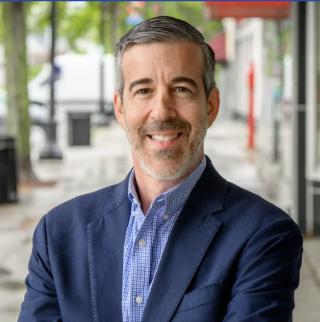
John Beccia for MA-06 Transcript
Nicci: Hello. Hello. It's Burlington Buzz on the Mic again and I am Nicci. I'm here with John Beccia. He is running in the Democratic primary for the sixth congressional district here in Massachusetts. John, welcome. How you doing today?
John: Doing great. Thanks for having me, Nicci.
Nicci: You're welcome. It's a pleasure. All right. So just to get listeners oriented to sort of who you are, why don't you introduce yourself?
John: Yeah, so great. I grew up in Milford, Massachusetts. I've been in Massachusetts all my life. Been in the district here over 20 years, but I grew up basically in a working-class family. My grandparents came from Italy in pursuit of the American dream like everyone else. And I put myself through law school at night working insurance during the day.
Nicci: Nothing more humbling than that, trying to sell insurance. Oh, man.
John: And then built a career in financial services. So I've been in the private sector most of my career working as a lawyer and compliance professional. I've worked for banks, I've worked for fintechs, basically working in consumer protection, fighting fraud, protecting the financial system. And then I started my own business. I started a consulting firm back in 2018 and built that up to over 60 people. And I've just been thinking about how do we do better within the financial services system, but now I'm looking at public service and government. And why I'm in this race is because I feel like everything is broken. Our government is not working for us. And certainly as a Democrat, very frustrated with the Trump administration — something new every day, whether it's rogue agency and ICE, whether it's a foreign policy that just is misguided, or the economy that just never gets better. And then you have career politicians. We keep sending the same people to Washington and the status quo just doesn't work. There's so much corruption and we need to reform the system, number one, but we've got to start helping working families. That's my real thing. I've been fortunate in my life. I've lived the American dream, but we need to give people opportunity. There's no more middle class. There's the high end and there's folks that are truly struggling. And I'm spending my time visiting the 39 cities and towns in this district, including Burlington, and learning that young people are leaving the state because they can't afford to live here. Older people can't find housing, they're stuck in their homes. Can't get access, making difficult decisions between groceries and gas and all these things. And meanwhile the government is not focused on these issues. So my agenda is really simple — it starts with the economy, then building out education and healthcare. And one more example on education: you can't get into a vocational school here, there's a lottery system, and we need to create different pathways for people to have opportunity. That's what I'm all about.
Nicci: Let's talk first about you. You donated your campaign a little bit of money. Can you talk a little bit more about that and what it says about access for candidates?
John: Yeah. I think we have six people in this race, but I think frankly we'd have more if not for the campaign finance system. I think we need to reform the system. We need to overturn Citizens United. There's too much corruption in politics — people answering to donors, answering to special interests. So one of my big things is reforming the campaign finance system and setting term limits and banning stock trading, things like that. But in terms of myself — I'm betting on myself here. I'm so appreciative of everything I've had, coming up from a working-class family and then being able to achieve some level of success. And I want people to have the same opportunities. That's why I'm excited and that's why I'm betting on myself and putting in my own resources to run in this race. And two — I'm not beholden to anyone. I'm beholden to myself and the voters. Frankly, this is all going to come down to what the voters want. And I think they want someone like myself — an outsider with experience who can get stuff done. People always want to label you. I consider myself a common-sense pragmatist get-stuff-done Democrat, and that's what we need right now.
Nicci: So speaking of the national landscape versus the local landscape — Burlington Buzz is a local civic news organization. We do civic engagement, community engagement. We do not use the P-word at all, the P-word being politics. We don't talk about national politics. So this is relatively new territory for us. But we do think it's important to introduce the candidates to the people who are going to be voting for them. That all said — the conversations that are happening in Washington don't seem to be matching the realities and the pinch points that are happening locally within towns and cities. What do you think is one issue that Washington is overlooking? Just one.
John: Okay, there is a lot. Well, I would just preface this by saying the federal government doesn't need to balance their budget, but state and locals do. And right now we have a national debt where we're paying $88 billion a month in interest payments alone.
Nicci: Wow.
John: And the federal government does have the money — we've seen it with bipartisan legislation on different issues when we need it, like during COVID. But yeah, all these cities and towns including Burlington are really facing issues because we're dismantling agencies like the Department of Education. But the probably the lowest-hanging fruit one for me is food insecurity. 40% of families in Massachusetts suffer from food insecurity. I go to the food pantries — whether it's the Open Door in Gloucester, Beverly Bootstraps, or Salem Food Pantry — and it's an issue we should be able to address. And meanwhile the president is bragging that he cut SNAP benefits. So we're going to see a big impact from the Big Beautiful Bill that will really have a negative impact on MassHealth and SNAP. That's day one for me — fighting back on that along with the rest of the list.
Nicci: Well, so now we're going to talk actually about inflation. It's no secret that things are more expensive now than they were two years ago. Childcare is more expensive, groceries are more expensive, gas is more expensive. What can Congress do? What would you support as a member of Congress to help alleviate that pressure from folks, and how would somebody on the ground here in Burlington feel that?
John: Everything is really difficult. Like I said, young people are leaving the state in record numbers — you can't afford to live here. And tariffs are adding about $1,700 per year for a family. There's a lot we can do at the federal level. One is reflected in taxes — we need to reform our tax code to make sure that corporations and the rich are paying their fair share, and that will help fund additional programs. And then we ought to provide tax credits for those who need it. I'm a big proponent of — look, one of the biggest costs for working families is childcare and preschool. Whether it's universal pre-K or some kind of childcare tax benefit, that's important. Same thing around housing. We just keep building single-family homes. We don't have housing for lower-income folks, housing for the elderly — many older people are stuck in their homes. Veterans, we need to build different types of housing, build into our communities and improve our infrastructure. That's a big issue where at the federal level we can act. And we actually just passed some bipartisan legislation in housing that's being torpedoed unfortunately by the president. But this shouldn't be a Democrats-versus-Republicans issue. This is an issue everybody at the end of the day cares about at the local level. And here in Burlington — you care about being able to have the job, live in a house, get access to education and healthcare. And those are the things I want to focus on from a federal level.
Nicci: Yeah, in Burlington housing is always an issue. There's low inventory. You already mentioned the housing life cycle where seniors can't afford to downsize, so they're living in their big single-family homes, and that doesn't open up a home for a young family who is ready to move into it. And it creates pricing issues and there's just not enough inventory. Try to build multifamily and then there's problems because of density and traffic and all that. What are some specific things that can be done to support housing?
John: Yeah, there's a lot, and some of it's federal, some of it's local. Some of the zoning requirements are difficult and we need to create a higher floor there. We need to make sure that we're lowering the cost of building — again I mentioned the tariffs, but the cost of building these complexes is very high, even single-family homes. We've got to get more creative around the housing supply. We need to look at mixed-use housing, which will also bring in businesses. We need to look at auxiliary dwelling units. We need to look at repurposing existing structures to make sure we have an adequate supply. And then we've got to figure out this transportation issue because we have a lack of connectivity, especially within the North Shore. Burlington, as we know, is difficult sometimes to get in and out of.
Nicci: Traffic's always a thing.
John: And also creating more help for our business community. Small business — 80% of the businesses on the North Shore are small businesses. So we have to help them, give them capital to build their businesses, help alleviate some of the costs. Healthcare costs are killing them. And then continue to bring in innovative businesses, because that's going to bring jobs, bring corporate tax revenue, and help win this issue around housing as well.
Nicci: The economy really is just this kind of cycle — people being able to be in a community, contributing to the economy, that bolsters businesses, transportation helps that. It is a big virtuous cycle.
John: Yeah, it is. And it has to be done in a holistic manner. I think one of the problems is we try to just keep putting band-aids on it or looking at it in a silo. We say we can deal with this one issue, but it's really a holistic thing — we need to revitalize the economy. So my approach is to really look at these things holistically: increasing minimum wage, increasing SBA lending for small business, helping with transportation renovations, building out our infrastructure. It has to be multifaceted. It can't just be one or two things because that won't get us where we need to go.
Nicci: And it requires people to be talking about it, prioritizing it. You can't get something done if you don't have a goal. That's the problem — in DC right now we're all focused on the wrong things. Certainly with the Trump administration — some of these senseless wars, the Save Act and this voting bill that's derailing our housing legislation. We should be focusing on the kitchen table issues and prioritizing that.
John: Right. And it requires long-range planning and working together and building coalitions. And that's what I've done in the private sector. People tell me, "Well, we can't work with the Republicans." Yes, we can. We've got to find common ground. There's a time to fight — we need to fight to protect our democracy. I am as outraged as anyone in terms of what the Trump administration is doing, whether it's free and fair elections, voting rights, the wars, ICE — which I know we'll probably talk about since we're here in Burlington. But we're not going to get anything done if we don't focus on the things we talked about.
Nicci: So since we're speaking about the economy — AI feels to a lot of people like a threat to the economy right now. It feels like it's going to be usurping jobs that people rely on for their income, and a lot of people are not sure what they will do if their job is replaced by AI. Can you talk about what kinds of policies you would support to help us adapt to this AI landscape?
John: Yeah, there was a recent Tufts University study that said Massachusetts is at the highest risk of job displacement because of AI. So that's not a comforting place to be. But again, technology cuts both ways — there are good things about it, it can help our lives and create jobs, but there are also risks. And I spent my career dealing with risks and regulation in financial services, and I got involved in things like cryptocurrency. When I first came from the banking space and was thrown into it, I was like — how do we make sure this is safe, how do we make sure there's regulation to protect consumers and make sure there's no fraud in the system? And that's going to be the same thing here with AI. I also teach regulation at Boston University School of Law, and I tell my students — how do you regulate something? Well, you have to understand the activities and the risks. And many people in Congress don't even know what AI does.
Nicci: And frankly it's developing faster than our ability to understand it anyway.
John: And once we think we understand it, something new happens. But the biggest risks around AI are job displacement, data centers, concerns around electricity and environment, and concerns around social media and the impact on kids specifically. And those are areas we need to regulate. It can't be a one-off either — we need to create an office of innovation at the federal level, have certification programs, have ongoing guardrails, and make sure we're not having negative impacts on the environment or on costs. We don't want taxpayers bearing the cost for data center usage and things like that. I use the term responsible innovation — that's what we need to focus on when it comes to AI. We need to be very thoughtful and careful, and looking at it on an ongoing basis, because the technology is always going to move faster than regulation and legislation. Right now it's very, very concerning.
Nicci: And since we're in Burlington and since you mentioned cryptocurrency — we just passed a cryptocurrency ATM ban here at Burlington Town Meeting. There's nothing at the federal level, which is why we had to do it here locally. Would you support some kind of regulation or ban at the federal level for cryptocurrency ATMs specifically?
John: Well, ATMs are regulated as what's called a money services business, money transmitter. And so they're required to have certain programs, required to be registered with FinCEN, and in certain states they have to actually get state licenses. I think we need to look at the risks and the use cases. I also don't see the use cases for crypto ATMs.
Nicci: That's what our lieutenant was telling me — the fees are so usurious that it really doesn't make sense to use a crypto ATM for legitimate purposes.
John: Yeah. And so you really need — I'm someone who spent a lot of time on anti-money laundering regulation and compliance, building out compliance programs that basically monitor transactions and report suspicious activity to the government and work with law enforcement to find bad actors. And that's why you want all these things to be regulated. You want things to be in the financial system so you can detect bad activity and work with law enforcement. Same with banking — you see these big fines against the largest banks in the US because it's hard to monitor this activity. You're making sure you're ahead of it. You can never eliminate the risk, but you try to mitigate it as much as you can.
Nicci: Great. All right. Well, we have one more question until our time has come to an end here, but it's about immigration and the Immigration and Customs Enforcement facility that we have here in Burlington. It is a processing facility, or that's in name at least. A lot of people have a lot of big thoughts about it from both directions. What are your thoughts on specifically this facility and what Congress's job is versus local and state authority?
John: Well, as a lawyer, I'm concerned about the rule of law and protecting the rights of all individuals, and that's not happening right now. When you look at immigration and what's going on with ICE, it is outrageous and appalling. I'm for abolishing ICE, certainly in its current form. We're seeing people getting ripped away from their families who are members of this community. These aren't criminals. And the detention center here was never meant to be for human detainment. And they're looking to build other detention centers — a big one in New Hampshire and other areas — and again I don't think that's the right approach. Most of us, our families were immigrants who came to this country and built a life here. The folks that live in our communities have families here, are working in the community, and we need to support the people who are doing the right thing, playing by the rules, and want to be part of this country. So I was excited to see the Supreme Court ruling on birthright citizenship. I think this is still the land of opportunity. We need to make sure there's a pathway to citizenship, but we also need to make sure that we're protecting the rights of individuals. Certainly, if people are criminals or there are other issues, they should be prosecuted and there are laws around that and we need to go through the proper process. But right now, things are done so arbitrarily. We need to really get back to a sensible approach on immigration so we don't get to this level where people are afraid to walk their kids to school or are detained and we don't even know when they're coming back, if they're coming back. That's not the America that I want to live in.
Nicci: So what is your sensible approach — if you were elected, what would that look like?
John: I think obviously we need border security. Obviously, we need a pathway for citizenship, but we also need to make sure that we're reforming the system we have now — whether it's the asylum system, the visas, making sure that people who are here are protected, their rights are protected, that they're able to work here fairly, able to live here. And making sure the rule of law is followed in terms of how folks are treated if they're detained, and making sure there's a process around that. It's more about making sure we have a more legal process like we've always had in this country and getting away from the arbitrary way that ICE is facilitating this. We did have bipartisan legislation on immigration and we know who torpedoed that — he's currently in the White House. But I think we need to get back to looking at these issues in a way where America is the land of opportunity, people want to come here, we should allow that — but we also want our communities safe and our borders secure. And there's a way to do both. There's a way to do this that's humane, sensible, and practical. And that's what we need to get back to.
Nicci: Great. John Beccia, thank you so much for joining us today. Listeners, stay tuned for more interviews with congressional sixth district candidates. John, thank you for being here and for sharing a little bit about your story.
John: You betcha. Thanks so much.
Nicci: Thanks to John Beccia for that lively interview. In all the excitement, I forgot to ask him for his website address. So here it is now — it is becciafor congress.com. And that's it for this episode of Burlington Buzz on the Mic. I hope you'll take the time to listen to all seven of our sixth district interviews. The Massachusetts primary is on September 1st, with early voting taking place August 22nd through August 28th, and the general election is on November 3rd. Anybody who is registered Democrat or unenrolled can vote in the Democratic primary. And anybody who is registered Republican or unenrolled can vote in the Republican primary. Check the Burlington Town Clerk's website linked in the show notes for details on how, when, and where you can vote.
Jamie Belsito is a former state representative and Topsfield town moderator who has spent 30 years working on maternal health, immigration, and reproductive rights. She is running for MA-06 on a platform of Medicare for All, housing reform, and getting corporate money out of politics.
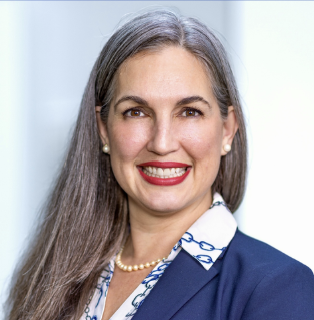
Jamie Belsito for MA-06 Transcript
Nicci: Hello. Hello. This is Burlington Buzz on the Mic and I am Nicci. I'm here with Jamie Belsito. Hello.
Jamie: Good morning. Great to be here. Thanks, Nicci.
Nicci: Thanks for joining us. Jamie is one of six Democratic candidates for the sixth district Massachusetts congressional race. The primary is going to be on September 1st.
Jamie: That's right.
Nicci: And Jamie, thanks for coming. Give us a little bit of a background on who you are and why you chose to run.
Jamie: Sure. First and foremost, I am a working mother of two. I have a 13 and 16-year-old. It's a big part of why I'm running. I am equipped to run for this position because I have been out there calling for a lot of what we need right now — and that's access to healthcare, affordable housing, strong transportation, and as a woman, we need access to reproductive rights. All these issues I've been working on as a locally elected leader, as a state elected leader, and as somebody who is a leader in the healthcare space in Washington DC in the halls of Congress through my nonprofit on maternal health.
Nicci: And you mentioned that you're a local and a state elected leader. Can you talk a little bit about that?
Jamie: Sure. I will speak to the fact that I've just rolled off my elected position in Topsfield where I was the town moderator. So we definitely respect and appreciate town politics — they are meaty, they are divisive at some points in time, and they also are the recipient of a lot of broken parts of our federal government. And I say that because we cannot Proposition 2½ override our way out of everything that our towns and municipalities are absorbing right now. And I am a former state representative. I did flip a seat to Democrat up in what was formerly the fourth Essex on the North Shore that's now been gerrymandered out to Lawrence. So I was gerrymandered out of my district, but did serve for 14 months in the state legislature and went to work on a lot of issues for our communities at the local and state level.
Nicci: Great. So talking about the state level, the local level, the national level — I think a lot of local voters at times feel like the conversations in Washington, the conversations the legislature is having, are not necessarily indicative of the problems we are facing on the ground here. What do you think is something that Washington has been overlooking that you would want to act on as a congressperson?
Jamie: First and foremost, they've just forgotten about the people they're supposed to represent. And that is not what an elected leader is supposed to be doing. You're supposed to be representing the 800,000 plus folks that have put you in that position. It is not a queen or kingship position. It is a public service position. And I know the importance of that having been at the local level and at the state house — you work with your elected leaders in Washington to say, hey, we need a new water tank because we have PFAS, we need infrastructure money because 128's falling apart or Route 3 is falling apart, we need affordable housing because the majority of our communities are unable to afford a million-dollar house. And I think when we take a look at the communities that are now even more sprawling outside of Boston — that includes the sixth district — folks are just coming in and buying houses that you or I grew up in, bulldozing them, and building a new home. And I don't think any of us that grew up here who are just trying to look at our Market Basket bill, make sure we can afford camps for our kids during the summer, or afford our utility bills, are even remotely near a lot of what Washington focuses on. And so this is why I'm running — to keep the focus on the people here.
Nicci: You mentioned housing. I got a text from a friend this morning that said this one company has bought up three houses on my street in the last month that they're going to knock down and build — you call them McMansions — large square footage, very high dollar value homes. So let's roll right into talking about housing. It's no secret that everywhere in the sixth district there are issues with housing inventory, with housing costs. Younger people can't afford to live in the communities they grew up in. Seniors can't afford to stay, or if they do they're in that big house they've been in for 50 years, keeping that locked up. What do you think can be done and what would you support nationally to sort of move that housing cycle along?
Jamie: I think there are opportunities to be talking about programs within Housing and Urban Development. That's an administration that's supposed to help facilitate housing access for folks. We've not had adequate federal senior housing being built in this district for — I don't even know — we'll say 50 years. And our senior population is the biggest it's ever been. We're seeing that here locally, that our Council on Aging is serving more and more people every year. And it's combined with food insecurity. It's combined with lack of access for healthcare. It's combined with lack of access for transportation to get to healthcare. If we're saying to seniors, you bought your house for $40,000 in the '70s and now it's worth $850,000 to a million dollars — where are you going to go? And now you're being continually taxed by Prop 2½ override taxes, so you can't even pay based on the set income people are getting every month. So I think access to senior housing is a big thing. I also think the state could really be leaning in on home rule petitions to say to Rep. Gordon or Senator Friedman, listen, we need to be taking a look at how we can support our seniors that are staying in their homes and capping what that tax rate is. And then another thing, as far as affordability goes — no one should be able to just pay two times the amount for a property that's listed just to get it off the market and do what they want, because that sets the precedent for what that neighborhood's cost is. We did see that there's a housing bill that did get enacted — the president did not sign it, because he doesn't want to allow the Save America Act voter ID bill to be separated from it. And there was some prohibition in that bill around what you just spoke about — having big real estate or Wall Street entities come in, buy up houses, redo them, sell them, flip them. And there was some innovation in what the housing market can look like — is it community housing, community senior housing, first-time buyer programs? Governor Healey put forth a $25,000 down payment program.
Nicci: Right. Well, you need a 20% down payment to avoid PMI. That's right. And 20% of what is $25,000? That's a $125,000 house, which does not exist.
Jamie: Right. It just isn't economically feasible these days. So unless you have parents who can give you money or you can take out a loan against investments — and that's not the majority of people — Housing and Urban Development can do things to say, okay, if you qualify as a first-time home buyer, let's give you $50,000 to match. There is more money in this country than we've ever had. We have trillionaires right now. And it is becoming the haves and have-nots. So it's the prohibition against Wall Street entities coming in and just buying houses in our own neighborhoods with no stake in the community. And that also goes back to the local — what is the zoning committee talking about, what's the select board talking about, where do your state reps stand on this? Are there laws that can be passed at the state level to prohibit or curtail some of this? And then how do you partner with the feds? I look at it this way — I am a conduit to ask for the needs of the district in DC. And it's always been that way and should always be that way. It shouldn't be about who's writing me checks. I bring that up because I've taken a people's pledge not to allow outside influences be a part of my campaign. Those folks don't represent me or my constituents at all. The community needs to say this is what we need, and then it needs to be the work with the select boards, the town managers, and the state reps to say, okay, here are the issues — how can we help? I really do look at it as allowing there to be more building zoning that needs to be locally authorized and taking off some of the prohibitive requirements that are in some ways hamstringing local development. And how can the feds support that? It's access to programs and taking care of people. Because where are we going to move?
Nicci: I was just actually talking to somebody a week ago who said they have to move out of Burlington because they need a bigger place. They're renting down at The Reserve and it was just too expensive to get a two-bedroom. So they have to move to a different town. And when you've already established yourself in a community, you have friends, you have places you go — it doesn't feel great to have to move because of cost.
Jamie: Not at all. And then where do you go?
Nicci: Yeah. All right. So let's just stick with cost for a few minutes. You mentioned grocery prices and other things. There is this inflation that has impacted everybody. Groceries are more expensive, childcare is more expensive, gas is more expensive, and anything that needs gas to get from one place to another is also more expensive. So what is the sort of federal, congressional part of that story? What could you do about that in office?
Jamie: Well, I would first and foremost take a look at who the lobbyists are for a lot of the background on this. Who's driving the costs? And let's be frank — a lot of this is fake taxes that this administration has literally saddled regular everyday people with. So it's having the administration pay the money back to the people on these tariffs that have been inflating everything since COVID. And then taking a look at — if somebody's making $8 million a year as a CEO while we're all clipping coupons — where do you say, when a company hits a certain amount of profit or the CEOs are making a certain amount of money, that that money is going to go back into the communities to reduce our costs? There is no social contract at this point. It's who can make the most money and I wish you the best. And even taking a look at our food banks — all of our food banks are completely overutilized at almost three times the rate they were during COVID. We have to take a look at what I call the present-day robber barons and put those taxes back on them and have the fortitude as a Congress of the people, by the people, for the people, to provide for the people. And part of the issue — I've said this several times now — is a lot of these seats are being bought and paid for by companies and by special interests. And if we want change as a district, we cannot elect folks who are part of that process or part of that problem.
Nicci: Economically, AI is another thing that people are talking about. It is having some impacts already on the economy, but a lot of people are concerned about further impact especially with job loss. What kind of policies would you support to help this country adapt to a world where AI is just a part of it?
Jamie: You know, I think our age group of Gen X saw this with the internet as well, and a lot of it was fear because nobody knew what this was going to look like. And yet we've been able to accommodate for it. So I think there's reason for us to be nervous about this, and we also know that it will shake out and that there will be a day where this is integrated into our workforce because there are some positives in regard to the capabilities that are available. I'll go back to Congress — this has been on the radar for regulation for a decade and they've chosen not to do anything about it, because the same companies they're looking to regulate are allowing PAC money to help them keep their seat. Same thing we were just talking about. For the human element component of this — garbage in, garbage out. Like even just fake news or algorithms — we need to straighten a lot of the components of this discussion out at the state level, which our state legislature has been working on, and the federal government including our current administration — who is using AI to kill people in the Middle East and profit off of it — who is allowing companies to scrape people's data and really become a force that has insulated the Mark Zuckerbergs, the Peter Thiels, the Elon Musks from paying their taxes. And there is something to be said — if we are at this crux where there needs to be a particular — we need tax reformation — but if there needs to be a common dividend that everyone receives monthly because of this very big change in our global and local economy, we need to take a look at that as well, to keep people in their homes, allow them to have access to their healthcare, allow them to put food on the table. These are discussions we need to have at the same time as having regulation that works. But nobody wants to do this right now. We have a very low bar where we could have been doing something for a long time, and we cannot take the human out of that equation. And we saw that with outsourcing in the high-tech industry — we saw so many of these companies collapse, so many of these call centers come back to the United States, so many things that looked on paper like they would work but in application they didn't. So we still haven't made the changes for this to settle. Will it continue to change exponentially? Yes. Am I an AI expert? Hell no. But I see my kids using it. I see it being integrated into our schools and into our daily lives. And the people that can help make these decisions — there are bills in Congress that just sit there, and there are folks who know what needs to be done. The political will to do this is lacking. But I don't have that appetite to just let it sit. It's something our federal legislature needs to work on, and that impacts even the larger workforce we have here in the Route 3 corridor.
Nicci: Yeah, absolutely. There is concern for sure amongst people that are working at Microsoft and at Salesforce and at Nuance and all of the other — there are so many technology companies just right here in Burlington.
Jamie: That's right.
Nicci: Let's switch gears a little bit and talk about Immigration and Customs Enforcement. Since we are in Burlington, there is an ICE facility here. It's gotten a lot of attention, and there are people with opinions one way or the other. What are your thoughts on that particular ICE facility and its activities? And what do you feel is the job of Congress versus what is left to state and local authorities?
Jamie: Sure. So it's a federal issue — there's only so much that the Healey-Driscoll administration can do around this, or the state legislature. And from a local perspective, we've seen that city councils and town councils have said that ICE is prohibited at public buildings — you can't go into a school, you can't go into town hall or city hall, you can't go into anything that is a city property. And I really do appreciate that, because we're seeing people be arrested at school picking up their kids or family members. That's not what this is supposed to be about. But again, it ends up being a federal issue because immigration is a federal program. And this has always been — this concentration camp that we have down the street from us — the juxtaposition of being over there speaking while watching a mom bring their infant child in to see their spouse who's incarcerated for coming here for a better life and working, while I can look over at Macy's — it is an alternate universe. It is jarring. People are just going about their business while our tax dollars are paying for incarcerating people who — 95% of these people are here because our government has interfered in their government and their government is going out of their way to murder them because of our policies and our foreign policies that have been so disruptive globally. And on top of it, these are humans. Other than the Wampanoag, the Pawtucket, and anyone who's an indigenous community member of Massachusetts, we are all here by colonialism and by immigration. And when I started working in immigration in 1996 as a constituent services intern at Joe Moakley's office, it was fascinating to me because we have a system that sets up how many people are allowed in per country. And there are backlogs — for instance, for India, China, or the Philippines — where folks are waiting upwards of two to three decades to get here the legal way.
Nicci: Wow.
Jamie: Which is bananas to me. We have a negative population growth right now. And Massachusetts has unbelievable needs for workforce in our healthcare community, our biotech community, our IT, and our services. If we were to go down around the mall or Route 3 and say anyone who is pending status or is waiting for status is out of here — our hotels would shut down, our restaurants would shut down, our healthcare industry would shut down. And we saw that same exact impact when two weeks ago our Supreme Court made the decision to say anyone who's pending temporary protected status — a legal status — will no longer have that status as it is related to the Haitian community. That is going to completely wipe out our nursing homes and our rehab facilities. And this has become — and it's also racist. If you're brown or black, we don't want you here. That's it. And it's been very clear. We just saw another Latin American person get shot to death in Bedford, Maine.
Nicci: Yeah. Right. That is within a two-hour drive from here.
Jamie: And this happened in Portland as well. And it's happening right here. So we have to continue to put the pressure on our congressional representatives and our senators. And I have to say to the folks who love to troll on Facebook — are there criminals? Yes. Are there criminals everywhere? Yes. Is there an actual criminal running the country right now? The answer is yes. So stop conflating the idea that there are criminals who are here without papers with the fact that there are criminals here who were born and raised here and they are in the White House as we speak. The work I did for 15 years before and after 9/11 — we took a system that processed people and gave them access to legal status here in the United States, and turned it into a seven-branch Department of Homeland Security where we are literally funding a military operation that has guns and is murdering people. That's not an immigration system. And Congress has not done the hard work of immigration reform. We had a Democratic Senate, a Democratic House, and a Democrat in the White House, and we could have done comprehensive immigration reform because it's been sitting there for two decades. So that's on us.
Nicci: You challenged Seth Moulton for his seat before. What would you say is different now? What did you learn from that experience that has informed your campaign this time around?
Jamie: Two things. The Democratic Party turned into a party of elites — hosting $10,000-a-plate fundraisers in Nantucket for candidates that weren't from Massachusetts, meanwhile asking me for my vote as a working-class person in the now slipping-away middle class and telling me they're going to help, meanwhile not doing it. And what have I learned since then? It's only gotten worse. At the time I ran, the maximum donation I could receive was $5,000 combined — $2,500 toward the primary and $2,500 that you can only use toward the general election. Right now it's $7,000. What is it going to be next time? Ten? So it's a pay-to-play system. And the congressman and I have a good relationship and I admire him as a dad — he's got a great family, and I'm sure running for Senate's not easy. But the reality is the amount of time that's paid toward raising money, money, money. My donors — I have over 1,200 donors from last quarter, average was $71. How many one, three, five, and $7 donors do I have? I'll get you the figures, but it was a lot. I'll be like, "Oh, look, I got 20 new donors today." And I'm like, "Why did I only raise $52?" It's a pay-to-play system. And it's gotten worse. The people that have money have more money than they ever have, and the people that don't — it's like that cat hanging on the screen with its nails.
Nicci: That's what it feels like some days.
Jamie: And it goes back to what we were just saying — childcare is unaffordable, housing's unaffordable, tariffs are impacting our food, gas is out of control. We have a man-made war. And something else I'll say that I've been very outspoken on and that the congressman was not — that I've always known as an Arab American and just as an American, especially as a mom. We're spending — I think almost every day it's at least like $20 million to Israel to murder people, to literally livestream a genocide. And then we turn around and say we don't have money for healthcare. And the country that we're sending this money to has free healthcare. It's very hard to reconcile that human loss as part of my taxpayer dollars. We need to get our house in order. It's out of order. And even right now, I'm not taking AIPAC money, I'm not taking corporate money, I'm not taking super PAC money. And the congressman made a commitment in the beginning of his campaign not to take AIPAC money, because now it's very fashionable not to take it, but he's not returned any of the money that he got up until that point. So there's still that influence that has no place in the sixth district.
Nicci: Jamie, what is your most important issue and how will you champion that, and how will people on the ground here in Burlington see it?
Jamie: There's a lot of issues to be championing. What I see as the most relevant right now — and it's very hard because they're all screaming relevancy — is Medicare for All. People are going bankrupt or going without health insurance. I talk to a lot of families in their 30s and 40s who aren't even bothering with coverage — they're having catastrophic health care coverage because our children here in the Commonwealth have access to MassHealth, and that is a lifesaver. And our federal government, you know, as a penalty to having a bold LGBTQ woman governor and another badass woman lieutenant governor, is pulling our money from our healthcare programs. And so people are not going to the doctors, they're not being taken care of. Someone was diagnosed with breast cancer — okay, the screening was paid for, but they can't afford to treat it. And so we are creating our own death sentence by not having a public health model.
Nicci: All right. Well, on that bright and sunny note...
Jamie: I'm inspired. Woo! Yes, I'm running into a burning building, folks. But I've been training for this for 30 years. Get me in there. I will be in there working my butt off for us. This is what it's all about.
Nicci: All right. Well, Jamie, thank you so much for joining us today. I really appreciate you taking the time out of your day to come and chat with us.
Jamie: Burlington matters. I really appreciate it. Thank you.
Nicci: This is Nicci saying goodbye. We'll catch you next time on Burlington Buzz on the Mic...Once again, my excitement got the better of me and I forgot to ask Jamie for her website address. So, here it is: jamiebelsito.com.
Micah Jones is an Army veteran and attorney from Essex who practiced securities law at Morgan Lewis. He is the only Republican running for the MA-06 seat and is campaigning on accountability, opportunity, and security, with a focus on bipartisan issues like banning congressional stock trading.
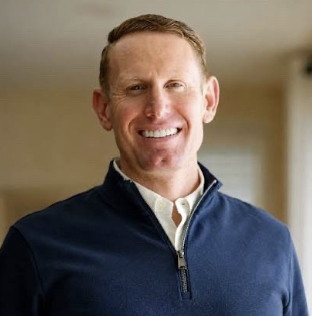
Micah Jones for MA-06 Transcript
Nicci: Hello. Hello. Welcome to Burlington Buzz on the Mic. This is Nicci again and I have Micah Jones here. Micah is a Republican candidate for the Congressional 6th District seat. Micah is the only Republican running. So Micah will be on the ballot in the September 1st primary, but also in November. Micah, welcome. Thanks for coming.
Micah: Thank you so much for having me on, Nicci, and really appreciate the opportunity to be here.
Nicci: Great. Well, why don't we start by just getting to know you a little bit. Tell us about yourself.
Micah: Yeah, thank you so much. So my name is Micah Jones. My family and I live in Essex on Cape Ann. And I'm running for Congress because I deeply love the United States of America, the Commonwealth of Massachusetts, and the greater communities of the North Shore Valley that make up the Massachusetts 6th Congressional District. Above all — and I say this as a young father, I have two little kids, my son's three and a half, my daughter's seven months, my wife is a saint for letting me run in this moment — I say this as somebody who really has skin in the game. We have a mortgage and we feel the weight of federal, state, and local regulations. And to me, this is a moment to be involved. I'm really worried about how polarized our country is. I feel like in running for office, I want to lead by example, really try to turn the temperature down on our politics, and do the best to make the Mass 6 the best place for not only my family, but everybody's family.
Nicci: Wonderful. Well, so because you're the only Republican running, you have this unique — I don't even want to call it a challenge — you have the benefit of really being able to speak to every voter now, rather than kind of battling it out with other Republican candidates ahead of the primary. What's your sort of lane to reach voters that are both Republican voters and also potential Democrat or independent voters that may find that your message resonates?
Micah: No, thank you Nicci. And to me that was a huge part of wanting to run in this moment. And as you and I were talking before we started recording — just for the folks listening — this is an open seat and this is the first time the seat's been open in 47 years. An open seat means that there is no incumbent. Congressman Seth Moulton, who has been representing the seat since 2014, has vacated the seat to primary Senator Markey. So truly a once-in-a-lifetime opportunity with it being an open seat. And so that was a main reason why I jumped in. But in addition, not having a Republican primary is really special in that I get to focus on not only hopefully winning over the Republican votes, but really getting to connect with the 63% of the district that are independents, as well as many Democratic voters who I think may have, for example, voted for Governor Charlie Baker based on his fiscal policies — those folks who I think will be at least intrigued or interested in the message that I'm bringing. Which, if I can highlight my background — I'm a US Army veteran and I served five years in the US Army, predominantly in the 82nd Airborne Division out of Fort Bragg, North Carolina.
Nicci: I have a friend who was in the 82nd. Airborne all the way.
Micah: Felt very lucky to serve in the 82nd. I did one tour in Afghanistan from 2014 to 2015, almost a year to the day, serving in different capacities there. Left the Army as a captain, and then after my wife and I moved to Massachusetts over a decade ago, I enrolled at Northeastern for law school. After graduating, I practiced for six and a half years at the international law firm Morgan Lewis in their securities litigation practice, representing broker-dealer clients — Merrill Lynch, Fidelity, Schwab — in high-stakes litigation as well as investigations with the Securities and Exchange Commission. And I highlight those experiences both in the military and in the financial services industry — really a regulatory practice — as why I think I have the resume, the skill set, and also the message that I think is going to resonate with folks, particularly in the Mass 6 and in Burlington especially. I think Burlington really is part of a community — a suburb north of Boston, a lot of professional class, we have the high-tech corridor close by, a lot of industry, a lot of lab space — and so I think a lot of the issues at the federal level are really going to affect Burlington in different ways.
Nicci: Yeah. Okay. Awesome. So yeah, let's put a pin in that and come back and talk about that in a little bit. In this heavily Democratic delegation, what can you realistically think that you might accomplish in the first two years of being in office?
Micah: So, having been a taxpayer in Massachusetts for ten years — and again my family and I live in Essex, but we love the greater North Shore Merrimack Valley and we spend a lot of time in Burlington — for me, I personally feel that Massachusetts suffers when we have a one-party congressional delegation that, in my opinion, is less inclined to work across the aisle and engage with the administration in a way that I think is beneficial for Massachusetts. I always like to cite Governor Gretchen Whitmer of Michigan. Governor Whitmer and President Trump disagree on all policy, but to Governor Whitmer's credit, I think she has done a very good job in maximizing federal dollars back to Michigan and really connecting with the administration in a way that — she again disagrees with the administration — but she's doing what's best for Michigan. And sometimes that requires working with the administration, pushing back when it doesn't, but maximizing federal dollars back to Michigan. I personally don't feel that the Massachusetts congressional delegation has done that, and has taken a resistance-only mindset, which I think has at times really hurt Massachusetts as a whole and our district in particular.
Nicci: So speaking of national politics — voters a lot of the time feel torn between national politics and local realities. It's not always clear that the conversations going on in Washington are really representative of the pain points we're feeling here on the ground in local municipalities. What is one thing that you think Washington is ignoring or not addressing sufficiently that impacts us at a local level here?
Micah: So yeah, there are many. But I think for Massachusetts in particular, it really is using an across-the-board assessment for what cost of living is in different parts of the country. I think you could say the same thing about other high-cost states, whether it's California, New York.
Nicci: We were just talking about us both having lived in California. I was in San Francisco, highest cost of living, and then we moved to Boston, second highest cost of living.
Micah: So the example I want to cite here is that I'm a strong supporter of increasing the state and local tax deduction — the SALT deduction — which actually, with the working families tax cut that was passed last year, also known as the big beautiful bill, they did increase that SALT deduction cap. In my opinion, however, I don't think they went far enough, because I think Congress is looking at what on paper people need to be considered middle class, upper middle class, wealthy, etc. I don't think it takes into account the reality of how expensive it is to live here in Massachusetts and in particular the Mass 6 congressional district and even more specifically a town like Burlington. And so I think especially when I look at what are the levers at the federal level that can really lower costs here in the district — the SALT deduction is a great one. So much of our costs are state and local taxes, local property tax. That's a state issue — I'm not able to affect that as a federal politician. But increasing that SALT deduction would allow you as a taxpayer to deduct the amount that you are spending in property tax, state tax, from your federal income tax bill, which in Massachusetts would go such a long way.
Nicci: You talk about local taxes — that is something that has been very salient in conversations in Burlington over the last couple of years, where we have a bunch of capital projects that are in various stages of being completed. We have a new elementary school being built to the tune of about $70 million. We have a new police station being built to the tune of about $40 million. And then a high school project that was squashed at a special election in November because it was going to cost too much — I think it was $330 million — and taxpayers were like, I don't know how I would be able to afford this. It was another, let's say, $1,100 on a tax bill when fully bonded.
Micah: That's a lot. And I think what you're mentioning about a deduction for state and local taxes could soften that blow a little bit for folks.
Nicci: All right. Well, speaking about costs — groceries are costing more, gas is costing more, childcare is costing more. What can Congress do to support the cost of living? You already mentioned the tax deduction, but what are some other levers that could be pulled to ease the tension, and how would a Burlington family feel that?
Micah: So this is where — and I just want to thank you again, Nicci, for the opportunity to have me on and the fact that you are interviewing all of the Democratic candidates. I want to really remind the listeners that this is an open seat and I really encourage folks listening to this podcast to hear all the candidates, hear our positions, and understand how we're focusing on making the district a better place. So I preface that by saying that when I look at how to lower costs, I'm a strong supporter of really trying to lower energy costs overall. And I think that especially in New England, in Massachusetts, that would be a huge way to lower costs. Although I am a strong supporter of continued innovation and green technology, I am also I think the most bullish candidate when it comes to nuclear energy in particular, as well as expanding the natural gas pipeline infrastructure throughout New England. I know there's been a lot of friction points at the state and local level when it comes to that. But I think Massachusetts is an importing state — we export ideas, we export technology, we export innovation, but we import everything else. And so we are paying an additional cost when it comes to refrigeration for groceries, Amazon delivery, transportation, heating bills. Even though I know it's going to be a hot Fourth of July weekend —
Nicci: There's an air conditioning bill coming too.
Micah: Exactly. But it's like — if we can lower those energy costs at a level that is really going to make a significant impact. And looking at a triad — where can we fit in green and clean energy, but also being honest about the amount of energy required, and we're going to talk about AI here in a little bit, but artificial intelligence is requiring so much more as well. I want Massachusetts to maintain its competitive edge. That's a big reason why I'm jumping in at this moment. And in order to do that, we need to have the energy ecosystem available to support that. And so in expanding natural gas pipeline infrastructure, I would really want to work with regional, state, and local partners and be that conduit to provide greater infrastructure for not only Massachusetts, but New England as a whole. And then when it comes to nuclear energy — yes, very concerned obviously with Three Mile Island, Fukushima, we have to be serious about that. However, I think with innovation when it comes to small modular nuclear reactors, especially in a dense state like Massachusetts, a dense area like New England, having that new nuclear technology will really benefit our overall energy abundance and lower energy costs overall, which will help working families in Burlington.
Nicci: Great. Still talking about cost — housing is another big concern everywhere, but housing availability and housing cost are super important. Young adults exiting college or starting a family can't afford to live where they grew up, and their parents, once they're ready to downsize, can't afford to downsize either. It kind of creates this choke point in the housing pipeline. It makes everything more expensive, there's no inventory. What can be done at the national level to support housing costs in a way that would really tangibly impact people in Burlington and in the sixth district?
Micah: Yeah, thank you Nicci. It's a very important, very salient question. I want to break my answer down into two parts. First, and this is a big part of my platform — I really believe in trying to increase public service opportunities for young Americans that are outside of the military. And I'm going to tie this all together. I've been very fortunate, having served in the US Army for five years. I got out as a captain, probably in the 82nd Airborne Division, and one tour in Afghanistan. But I felt so incredibly lucky after my service to use those post-service benefits — in particular the GI Bill to attend law school, as well as the VA home loan to put the down payment on my house. And I'm the first to say, although I loved my military service, that military service is not for everybody. And so I really would like to see those types of benefits — GI Bill-type benefits, VA home loan-type benefits — for other types of public service, whether it was Peace Corps, Teach for America, AmeriCorps, City Year. I would also love to see the return of the Civilian Conservation Corps. To me, I think we're at an inflection point in America. I'm very worried that so many young Americans — I'm a millennial, I have a lot of Gen Zers interning with my campaign this summer who are upping my social media game — but I'm very worried about just how discouraged and disaffected so many young Americans are. And I think a lot of that comes from the idea that they haven't had a chance to really serve their communities, serve their country. And I think when you are able to do that, you come away with such an appreciation for how lucky we are to be born in the United States and to have the opportunities we have here. And to answer the question directly — how do we think creatively in order to either incentivize service but really provide those types of benefits for a greater amount of folks? At the federal level I would love to see, whether it's through the Small Business Administration or other access points, where people can have additional access to capital in order to have that down payment for a house — to allow young people to either have a lower cost loan, a lower interest rate, that would allow them to get that toehold they need to build their foundation. But really, why I started with the service side is that I love the idea of incentivizing service to have a benefit at the end. I don't believe in just giving away things for free without some sort of — I believe young Americans should have to serve and give back and then be rewarded and incentivized for that service. And so that's really something I would love to see. And then the second part — at the federal level, where is there federal land and a partnership between federal and state authorities in which we could open up federal land that's not being utilized to allow for expedited zoning for housing in areas? I think we forget just how much land the federal government owns and how that could be potentially beneficial, again with grants and access to capital tailored to the individual family so they can access it through administration.
Nicci: And yeah — I mean, you mentioned Teach for America. I sort of knew where you were going. Because I was in Teach for America way back in 2004. And the reason I'm not paying off my student loans anymore is because I had federal loan forgiveness through that program.
Micah: But you served! I love that — thank you for bringing that up, Nicci, because to me it's like you served. You served a community. You served people who really needed your expertise and you really changed the lives for the better of a lot of young students. And I think that's incredible and I wish more people had that opportunity. Teach for America is incredibly competitive, it's an awesome program, I have many friends who did that. But I really view your service in the same light — you gave back, you took time out of your 20s and your career to do that, but you gave back and you made a difference in somebody's life. You made a difference in the country and you should have the same opportunities that I had to advance your own career.
Nicci: Yeah. And I think too, it's just more money in the economy, right? When there's more capital available for young people to buy a home, when there's less student loan debt because something like the GI Bill will pay for education — it's just more of an ability to contribute to the economy more quickly and to get into the housing life cycle more quickly, if that's what people choose to do, which I think benefits the economy.
Micah: Yes.
Nicci: What about AI and jobs? People are worried that AI is going to usurp lots of different jobs — customer service, technology, and other industries where AI is trying to do the job that a human now does. What policies would you put in place or support to help workers, young people, seniors, anybody else who's in this landscape of uncertainty around AI?
Micah: No, thank you for the question. And I think we are in such — it's hard to actually capture just how dynamic a moment we are in. The regulatory environment cannot keep up with the current momentum and development that we're seeing.
Nicci: Every day there's a new thing.
Micah: Correct. And something I want to highlight — and I know I'm giving these wind-ups, I just really appreciate the platform — where I'm focused on AI in particular is I'm very worried from a national security perspective. Having been a soldier, I look at what's happened as we've seen in Iran and Ukraine and really worry about AI from a national security perspective, because I do believe that we're in a Manhattan Project 2.0 when it comes to AI. I think it is paramount that America maintains its qualitative military edge when it comes to AI, because I really view it in the same way as the nuclear arms race — if the United States were to lose that arms race when it comes to AI, we would be at a significant strategic disadvantage. To answer the question for Burlington — I think it's really the responsibility of federal, state, and local lawmakers to realize that AI is here to stay. And I think really encouraging folks of all different skill sets and backgrounds to have the access to understanding what AI is and how to apply it in their career. But then also I would really like to see at the federal level — whether it's the Small Business Administration — what are the open workshops, tutorials, pathways, apprenticeships in which AI is discussed directly? And if it looks like an industry is going to be negatively affected by AI, what are pathways in which people can have access to opportunities and understand how the skill sets they have can be applied in a new direction shaped by AI, or how to help people pivot from industries that become obsolete because of AI — and to be very direct and deliberate in trying to help American workers pivot into new industries in a way that is respectful to their career and also provides them with the next opportunity.
Nicci: So how can Congress do that?
Micah: So again, I keep coming back to the Small Business Administration. I would love to see, if I were on the federal delegation, working with the SBA to talk to small businesses here in Burlington. There are so many small businesses in Burlington — a lot of large businesses too, but a lot of small businesses. And people forget that a restaurant is a small business. Small insurance agencies, dry cleaners, tailors — all sorts of different kinds of industries.
Nicci: Who cares. Correct.
Micah: And so I think with the Small Business Administration, whether it is training seminars, webinars, in-person discussions — who is the local SBA point of contact for Burlington, for the area? And how can we, whether it's via federal resources or some sort of quarterly meeting — I say this from a VA patient side, where I've been involved with the federal agency I've interacted with the most, both as a former soldier and as an attorney, and it's like I've been to presentations that the VA has put on about new developments. I'd love to see something like that for the SBA — here is where AI currently stands, this is how we think it's affecting industries, these are training and courses available paid for by federal dollars that people can access in order to help pivot their careers, here are opportunities that could be available to you.
Nicci: Wonderful. Last big question before we have to round it out for the day — immigration. Burlington has an Immigration and Customs Enforcement facility here. Lots of people have big opinions about it one way or the other. I'd love to know what your stance is on this particular facility, and what it is that Congress has the ability to do versus what's state, what's local.
Micah: So let me actually start from how you finished the question — what can Congress do? We are in a moment in time where Congress really needs to step up and do its job. Congress needs to engage in comprehensive immigration reform and do it in a deliberate, fair, humane, and transparent fashion. With that, I believe I am somebody who does not support illegal immigration. I think it's important to secure our border from a national security perspective. I also think we need to be very deliberate and have true due process — via an increasing of administrative law judges and other opportunities — in which folks who have been here who may have come here illegally but who have subsequently built their lives, may now have American children, and are in a gray area to say the least. Those are the folks who really need to be able to have due process and have a clear pathway in order to either apply for a green card or citizenship, or if it's determined via that due process, to be able to re-enter the immigration pathway. And I say this — although my law practice was focused on securities litigation, my pro bono practice did include a number of immigration cases, including a green card case start to finish of a former Afghan colleague of mine. He and his family successfully immigrated to the United States and earned their green cards, and I saw firsthand as his attorney just how convoluted, complex, and difficult that process was to do correctly and legally. It gave me a deep appreciation for that. I think to answer the ICE facility question — for 50 years Congress has delegated, in my opinion, too much authority to the executive branch regardless of administration. And with ICE in particular, ICE is being tasked to enforce immigration laws that are currently on the books. They are a law enforcement entity. And so it is up to Congress, and we as citizens — if people are not happy with the current immigration law, then it's up to Congress to change those laws and to engage again in that deliberate, comprehensive immigration reform, and not just blame the law enforcement agencies that are tasked with enforcing that law. So in the sense that I do support federal law enforcement — I think they are in a very challenging position — I also fully support the difference between state and federal entities and the fact that the federal government cannot demand that state authorities work with federal immigration officers. I personally would like to see greater coordination between state and federal in order to do the exchange of custody in a safe way, so that it's not in the streets as we saw in Minneapolis at the start of the year. I think that creates a dangerous situation for everybody involved — people who are protesting, the ICE officers trying to enforce the immigration law, as well as the individual being apprehended. Being able to do that change of custody, whether in a courthouse or at the ICE facility in a secure way, is safer for everyone. But to be clear — I do believe in the difference between state and federal rights, and the federal government cannot demand that Massachusetts law enforcement help them with immigration enforcement. I want to make that very clear.
Nicci: So all that being said — I think this really comes back to Congress doing its job. And again, the importance of having more than one voice in the congressional delegation, in which you would hope to act as that liaison between the town of Burlington, the Massachusetts congressional district, Massachusetts, and the federal government. And in particular articulate that yes, I understand what the current administration's policies are when it comes to immigration, and the tactics and techniques that may work in Texas are not what's going to work here in Massachusetts. And can we find some sort of compromise to do this in a way that's best for our communities?
Micah: Exactly. And the difference between federal law enforcement versus housing people in a facility that's not meant to house people — that is another question. And that's really the big sticking point for folks who are protesting that facility. Part of it is due to the fact that with the newer immigration laws and the ramp-up of ICE activity, there's just more people in the system. And what do you do with those people when you've got — I'm just making up numbers here — a hundred appointments in a day and you only have time to get through 80 of them? Where do those other 20 people go?
Nicci: So I don't know. Do you have any thoughts about that?
Micah: No, I mean — I think state and local and federal authorities need to communicate. And when they are refusing to communicate with each other, that doesn't help anybody. That doesn't help the people who are being directly affected by those policies. And so I think that's where it's up to state authorities and the federal government to be like, we need to make sure that we have humane conditions for people who are being detained, and to have a deliberate process in which either they will be able to stay in the country or be deported, but to do it in a fair, deliberate, humane way. I feel very strongly about that. And so when Massachusetts is in the crosshairs of the administration, that doesn't help anybody. It doesn't make it easy for the federal law enforcement who's been tasked by Congress to enforce this law. It doesn't help the state authorities who are trying to keep the peace locally and who are in a friction point with federal agents. And it doesn't help the town, it doesn't help the state, it doesn't help the feds. More dialogue is important, more transparency is important, and we really need to make sure that we're doing this in a humane and respectful way.
Nicci: All right, we are nearing the end of our time here together today. I'd like to let you use this opportunity to close — what is your most important issue, Micah Jones, as a congressional candidate, and how will you act on that issue in a way that's going to be visible to people in Burlington and in the sixth district?
Micah: Yeah. So if I were fortunate enough to represent the district and could wave a magic wand and get anything done — I think it's highlighting again just increasing the public service opportunities. I really admire you having served in Teach for America. I really believe that the more young Americans have an opportunity to serve, the better they'll be personally, and our communities and our country will be. But I think a big thing — I encourage folks to check out my platform.
Nicci: Tell us all of your info. Sorry.
Micah: Yeah. So please, if you're interested in learning more about me, please visit micahqjones.com to learn more about who I am, my background, and my platform. But my campaign is based on three core pillars — accountability for members of Congress, opportunity for the greater communities of the North Shore and Merrimack Valley, and security for the country. But that first one — accountability for members of Congress. If I get one thing done day one — and I know some of the Democratic candidates are talking about this too, which I think is great — it is preventing members of Congress from trading individual stocks. I feel very strongly about that, having just come from a securities litigation background in which both my wife and I were prevented from trading individual stocks since I started practicing at the firm. To me, that is a bipartisan issue. It's an issue that has absolutely gotten out of hand on both sides. And I think that's something that in this moment, when the country is so fractured and so polarized, we can agree on. And that's what I'd like to focus on day one.
Nicci: Wonderful. Micah Jones, thank you so much for joining us today. Listeners, stay tuned for more interviews with congressional sixth district candidates. Thank you so much for being here.
Micah: Thank you so much, Nicci. Really appreciate the opportunity.
Dan Koh is an Andover native who has served as chief of staff to Boston Mayor Marty Walsh, chief of staff to Secretary of Labor Walsh in the Biden administration, a White House cabinet affairs official, disaster response coordinator, and on Vice President Harris's presidential campaign team, in addition to serving as a selectman in Andover. He is running for MA-06 on a "No More" platform focused on capping childcare, housing, and utility costs for working families.
Dan Koh for MA-06 Transcript
Nicci: Hello. Hello. Welcome back to Burlington Buzz on the Mic. This is Nicci and I have here Dan Koh with me. Hi Dan.
Dan: Honored to be here. Thank you.
Nicci: Yeah, thanks for coming. Dan is one of six Democratic candidates for the congressional sixth district — little mouthful —
Dan: It is.
Nicci: — that will be on the primary ballot here in September. Dan, just to orient our listeners to who you are, could you introduce yourself very quickly?
Dan: Yeah. So my name is Dan Koh. I grew up in Andover, Massachusetts, from a family of Korean and Lebanese immigrants. If you know any other Korean Lebanese people out there, really tell me, because I've been looking my whole life besides my brother and my sister. My first job in politics was actually I was a narc for the Andover Police Department at 13.
Nicci: Whoa.
Dan: They would send me in an unmarked police car to try to buy cigarettes at local convenience stores. And actually it's how I got into politics because I was surprised how often people sold me cigarettes even though I look 13 now but back then I really did look 13. And it was just an amazing experience for me to know that the whole notion that the private sector regulates itself wasn't true. So I got involved in that. And back then, you know, you'd walk into a restaurant and "smoking or non-smoking" would be a very typical question. And over the course of the last 10, 20 years especially, that entire notion of someone lighting up in a restaurant is totally gone. And it's a lesson that change can happen, healthy change can happen, if people band together and be a part of it. So long story short, from there I ended up working for Ted Kennedy as an intern. Went to business school, spent some time in the sports industry. And then out of business school, worked for Mayor Menino, who was the mayor of Boston at the time — I was 18 years old when he was first elected, so having a chance to work for him was inspiring. And then I was in New York working for Arianna Huffington as her chief of staff.
Nicci: Okay. Huffington Post.
Dan: And then Marty Walsh — state rep Marty Walsh — became Mayor of Boston and asked me to come back as his chief of staff. Long story short, when President Biden got elected, they asked then-Mayor Walsh to become Secretary of Labor. And I came down to be his chief of staff in DC and then followed on to join the White House in what's called cabinet affairs — a little-known office within the White House that coordinates all of the cabinet for the president. And then I was the disaster response coordinator for local governments afterwards. So every time there's a hurricane or a shooting, it was my job to get all of the necessary resources to mayors, governors, select people. And then finally in the last 107 days, they needed people to help the vice president — because as typically happens, there's a much longer process to figure out how to support a vice president who decides to run for president, and in this case it was overnight. So I spent 107 days with the vice president's team. It was an absolute honor to be a part of that. And in between all of that I was a town selectman in Andover. So I've been fortunate to have experience in the public and the private sector. My experience is grounded in my local government experience and I think we need someone right now with the experience of all levels of government to not only take on the president but also to be able to deliver locally. I respectfully feel like I'm the best person to do that.
Nicci: Great. So you kind of built into my first question — you've got a lot of establishment backing behind you, some big names in Democratic politics. Tell the listeners why they should see that as a pro and not as, like, ah, business as usual.
Dan: I understand that. Look, I think we're in a once-in-a-hopefully-once-in-a-generation moment — hopefully once in the history of our country — where we have a president who has done exactly what we had feared he would do when it comes to destroying our democracy, what's happening with Americans being assassinated on the streets, with kids being separated from their families, with all the things that we were worried we would see. And we just can't afford to have somebody right now who's learning on the job. I completely understand people's concerns — oh, he spent time in DC, is he establishment, all those things. My respectful response to that is: I grew up in this district, fourth generation in this district. I spent the vast majority of my career in local government. I was a select board member in Andover for two years. I just happened to be very lucky to have the opportunity to serve in a presidential administration. And I think the combination of the local experience and the federal experience is what makes me somebody who's able to be effective on day one. And I've just been very, very fortunate along the way to have met some incredible people who have mentored me — whether it be Marty Walsh, who has endorsed our campaign, or President Joe Biden, who's endorsed our campaign, as well as Vice President Kamala Harris, as well as Secretary Buttigieg. I'm honored to have their support and I've learned so much from their ability to lead.
Nicci: Great. So now let's talk about DC versus home. The sixth district has voters from Burlington, Andover, the North Shore, Swampscott — all different places around here. And I think one thing that all of us have in common is that it feels like the conversations happening in Washington don't necessarily mirror the conversations happening locally at our dinner tables, at our select board meetings. What do you think is something that Washington is ignoring that is a local reality you would want to do something about as a congressperson?
Dan: I get very frustrated by both parties on this question, especially as someone who was a select board member. I think both parties have this perception of voters — and every voter is local because they're living in their locality — of just these kind of nebulous people that you can talk high-level talking points to and that they don't have the sophistication to understand what's happening in DC. Can I swear on this show?
Nicci: That's BS.
Dan: That's good. I get really, really frustrated about that because look, there's a lot of division in this country, there's a lot of Trump voters in the sixth district. I don't hate people because they voted for Trump. And I think part of the reason why so many people have voted for Trump is the Democratic Party has not done a good enough job showing what the alternative can be. We have a contingent of our party where if you voted for Trump or even if you just identify as a moderate, you're judged and you're screamed at — no, no, no, how dare you. It is a failure of the Democratic Party not to convince those voters that the Democratic Party has a better way. And so my perspective is that instead of just calling Trump a dictator all day, instead of saying he's destroying our democracy all day — which I believe he is, but I realize there are other people who don't — let's give people a compelling alternative to vote for the Democratic Party. I'm calling this the "No More" agenda. If you have kids, which I do — I have a five and a three-year-old — you should pay no more than $10 a day for your childcare. If you have utility bills, which all of us do, your utility bill should be capped at 6% of your income. There are states that have those programs. It should be a nationalized program. If you have housing costs, which we all do, if you buy a house you should get down payment assistance — there are proposals out there for $25,000 or more. If you're renting, no more than 30% of your income should go to rent.
Nicci: That's a tough one here in Massachusetts.
Dan: Huge, especially in places like Burlington. When it comes to healthcare, we need Medicare for All, but even more so we need primary care accessibility. A third of Americans don't even have a primary care doctor because it's too hard to find one. We need a radical transformation of how we deliver primary care. I have a proposal for that. And then finally, we just need to take care of the next generation and take care of people who have children. We are deserting parents in this country and then judging them for not having more kids. In the Biden administration, we had — this is a terrible moniker for it — but it's called the child tax credit, where we basically gave a little bit more income for people who had kids. The Republican administration repealed that. As a result, child poverty went up significantly. We need to restore that. We need to give parents what they need to raise their kids. That should be a bipartisan issue. And talking about it like that, I think is far more compelling. And by the way, all of that can get paid for by repealing the tax cuts that are given to people like Elon Musk, the world's first trillionaire, as well as corporations that are already seeing lower tax rates under the last few administrations. I think most Americans can relate to lower childcare costs, lower utility bills, lower housing costs. I think less of them relate to hyperbole on either side. And I think we do a lot of the latter and not enough of the former.
Nicci: Yeah. And a lot of straw man arguments as well. You know, we don't talk about national politics here — I don't talk Democrat, Republican in general. But you know, there are certain things that have been made into issues that the average voter is not even thinking about. They're thinking about how to pay for their groceries. I mean, me sitting here right now — I have eight hours of childcare this summer per week. And it is not possible to both be a business owner and have childcare for my six-year-old. And when you have childcare, you get a call that your kid is sick or something happened with the childcare provider and your entire day is blown up. As a matter of fact, before you got here — I'm not joking at all — I got a phone call that said your kid hit his head at the pool.
Dan: Yep. And it is insane that this is still the case in this country, where we have such little support for parents. And let's be honest — it disproportionately affects mothers. And then we also turn around — especially candidly Elon Musk himself — constantly judging parents, and again let's be honest, mothers, for not having more children. We don't have the support system in this country. It's no surprise that people are having fewer kids in the United States.
Nicci: We have no village anymore.
Dan: We have no village anymore. And look, I'm lucky that my parents are still alive and still healthy, and in a crunch they help me take care of the kids. But there's this heart-wrenching image that I saw on social media a year ago of someone who worked at a Subway and they had their five-month-old strapped to them.
Nicci: Oh my gosh.
Dan: And they were serving sandwiches. And you just knew exactly what had happened — every parent knew exactly what had happened. You do not need a caption for that image. And it's just so painful that in a country that's supposedly as wealthy as the United States, we're not taking care of parents who are trying to raise the next generation.
Nicci: So we touched on housing. The life cycle of housing is broken in Burlington and the surrounding areas. You've got folks coming out of college who can't afford to live in the towns where they grew up. You've got seniors who can't afford to downsize their home, so they're staying in their large single-family homes and that doesn't open them up for young families to move in. Inventory is shrinking, costs are rising. What is something you would do or support as a person in Congress and how would we feel that here in Burlington on the ground?
Dan: So, a few things. I've been very fortunate to have worked at various levels of government, and to solve housing you really need experience and collaboration at all levels of government. At the select board level, you need to make sure you're creating the right opportunity from the land in the town, zoning it correctly so that people can build. At the state level, it's working with the cities and towns to make sure they have the funding to then build on that. At the federal level, there's a lot of things to do. One of them is creating the incentive for developers to build housing. There's a thing called low-income housing tax credits — essentially it just makes the numbers work for people building.
Nicci: And that's what we hear a lot — the numbers just don't work for us. We have to build more density, bigger buildings, and things like that.
Dan: Yeah. And there's no magic bullet for this. But the vision at the highest level is: whether you are paying rent or buying a house, the government should assist you with that. At the federal level, you create the incentive to make it easier to build. At the state and local level, you relax the zoning requirements to make sure people are able to house themselves in a cheaper way. An example of this — when I was in the city of Boston, we made it easier for people to build what's called ADUs, accessory dwelling units. So if you have a backyard and you want to convert something into another bedroom, a city or town should not say, "Oh, you're not allowed to do that because of some arcane rule." A nickname for this is in-law suites — you want your parents to be with you and live with you, you should be able to do that. And it's really a collaboration at all levels of government. A member of Congress in this district should understand what local electeds and people in the district are going through and pride themselves in collaborating with them — knowing their names, knowing the issues, and saying, what do you need, let's all work together. When I was working for Marty Walsh as chief of staff, I worked very closely with Charlie Baker's administration. We brought GE to Boston as part of that collaboration. That was a Republican administration. I didn't care. My goal was to make sure there was good economic development happening, good housing policy happening. I didn't care what the party affiliation was. And neither did Charlie Baker, and neither did Marty Walsh. And I think every person who's voting in this race just wants to see people work together and get good stuff done.
Nicci: We all want good things for the communities we live in. It doesn't really matter what color tie you wear.
Dan: That's right.
Nicci: Speaking of money — inflation. Things are more expensive than they were two years ago. We've already talked about childcare and housing, but gas and all of the other things that require gas. What's the federal story behind inflation? What can Congress do, and how are we going to see that in our checking account balances in the next couple years?
Dan: So the five things I outlined in the No More agenda — no more than $10 a day for childcare, the primary care aspect of it, housing costs, etc. — that proposal will save a Massachusetts 6th District resident $23,000 a year.
Nicci: Wow.
Dan: So that is just money back in your pocket. But as a larger point, I think Democrats with their policies are really bad at attaching them back to what you feel every single day. For example — the war in Iran. We say, "Oh, Trump's horrible because he started this war in Iran and it's an illegal war." And I believe it is an illegal war, let me be very clear. But as a direct result of that war, people were paying 50 to 60% more on their gas than they were before the war started. And by the way, it's still not back down yet. That is money out of your pocket subsidizing a war we should have never been involved with in the first place. But a lot of times Democrats just say, "Oh, Trump's terrible because he started a war" — but they don't make it clear why people should care for their pocketbooks. Or when it comes to climate change and renewable energy — we're investing in renewables because we don't want to be in a situation like we were with Iran, where because we're dependent on foreign countries for our energy, every time there's a conflict somewhere, all of our utility bills and prices go up. We tend to not talk about these things in the context of kitchen table issues. I think that's a huge mistake.
Nicci: Yeah. There's always the what and then there's the so what — why should I care. I think about that as a writer. If you want people to read it, if you want people to vote for you because of whatever XYZ issue, you've got to really tie it back to the so-what component.
Dan: Exactly.
Nicci: AI and jobs. There's a lot of concern that AI is coming for lots of different jobs. One of the other candidates here said that Massachusetts is at the highest risk of losing jobs to AI. What would you support? What policies would you support to help people adapt — whether it's workers, recent college graduates, seniors, anybody?
Dan: So worker transitions is something I'm very familiar with, having been chief of staff of the Department of Labor under President Biden. There's a couple of things to think through here. There's no perfect analogy to what's happening with AI, but there are corollaries in terms of industries that have been affected by technology — or candidly things like coal mining, when a coal miner works in West Virginia and then the life of the mine goes away. There are things called worker transition grants that the Department of Labor would administer to give people a bridge and assistance as they're trying to find new work, being retrained, those kinds of things. That's kind of a baseline. There's a lot to think through with AI and anyone who tells you they have completely figured out where AI is going is lying.
Nicci: And AI might not even know.
Dan: If you ask GPT, they probably have no idea. But it is clear that there will be disruption and it is clear that we need a proactive plan. First of all, we need a plan for the technology itself, and that is going to require making sure that we have regulations in place to mitigate the downsides — especially when it comes to children. Something like one out of every three kids under 18 are using AI as a replacement for a human in some capacity — a therapist, things like that.
Nicci: And by the way, terrifying.
Dan: Exactly. And there have been documented cases, unfortunately, of kids committing suicide because ChatGPT told them to. So we have to regulate this. And anyone who's telling you we should have no kind of regulation is not someone you would want in government. But we also need to understand that there are opportunities with AI when it comes to curing disease. The woman who ran the Office of Science and Technology Policy in the White House under Biden — Arati Prabhakar, one of the smartest people I've ever met — I asked her: if ChatGPT is six out of ten advanced to where it will be, where is AI right now in disease research? And she said one or two out of ten — but it's going to get to ten out of ten. And if we harness that capability, some of the most challenging diseases, cancers, autoimmune diseases — we could cure them. So there are some people who say AI is horrible, there's nothing good about it, we need to shut it down. That in my mind is a mistake. But we have to be really thoughtful about mitigating the risk and be proactive about it. That comes with how the job market will be affected too. We need to be ready with retraining grants, we need to be closely monitoring how this is all happening, and we need to make sure we are training people to be prepared for that transition in any way possible. There's a lot we still don't know. But there are some models to follow from the past, both from regulating the risks and from how we transition people, that we need to be heeding as we move forward.
Nicci: So what do you think that regulation could look like, especially for minors?
Dan: There are a number of different proposals on this. And again, someone who tells you they have it completely figured out doesn't know what they're talking about. But I think every model created by any of these entities needs to have safety and vetting as part of it. We could talk about whether that is a government agency or the companies themselves and what the regulations are, but not having any plan on safety is my primary concern. And it's not just our children — though as a dad of a five and three-year-old I get pretty concerned about that. It's also when it comes to our defense. Pete Hegseth and the Department of Defense recently authorized OpenAI to have fully autonomous weapons based on their models. Anyone who's used ChatGPT for five minutes should have some concerns about that.
Nicci: Yeah.
Dan: And anyone who's seen The Matrix should be pretty concerned about that. You think about Anthropic, which is another company in the AI space. They had a version of their model — I believe it's called Claude — that they had been testing, and it showed that it could hack into bank accounts and things that were considered very tough from a security perspective that they were able to do easily. And basically if they just let that out in the wild it would have caused utter havoc. We are already at a point where I do not believe our current system is fully equipped. We need to start holding organizations accountable. And on top of that, the valuations of these companies are astronomical in ways we've never seen. The money being made is unfathomable to the average human being, and the taxes should reflect that. That is not something we are anywhere near thoughtful about yet.
Nicci: How would the taxes reflect that? Do you have any ideas?
Dan: There are various proposals out there, but an analogy is what Jake Auchincloss is doing with social media. Jake is the congressman from the fourth.
Nicci: Yeah.
Dan: He has a proposal around social media companies and taxing the amount of time people spend on social media, the proceeds of which would help with research around youth addiction —
Nicci: Oh, interesting.
Dan: — as well as local media, actually, to help local media in places like this.
Nicci: I watch as my ears perk up.
Dan: Yeah. And what I really respect about a guy like Jake is that he comes into DC and he's proposing thoughtful ideas that fit the moment. And what frustrates me is there's this kind of mentality in DC that's been there for a long time — you get down there, you do a town hall once a quarter, you do an email that goes to spam once a month, and as long as you vote relatively the right way, you just keep getting reelected for 30 years. And people lose touch with their districts real quick. It's unacceptable. It's especially unacceptable in this era when there are so many ways to communicate with your voters. I've been lucky to have learned from Arianna Huffington and these new media folks who have in unprecedented ways been able to reach people. There's no excuse anymore. AOC will come home from a session and sit on her couch and just go live on Instagram and answer questions. That's because she knows and prides herself in accessibility. Every single member of Congress could be doing the same thing if they wanted to. It's just a question of priorities. And I've been fortunate enough — when I left the administration I started this podcast called the People's Cabinet. We've had 7 million people listen to it. The idea is: let's have an honest conversation on a fact basis about what Donald Trump is doing to, for example, the Department of Education. First of all, what is the Department of Education? Most people don't know what it is. And then why is it so serious that it's going away? I had Miguel Cardona, the Secretary of Education under Biden, on to talk about that. We need to have these discussions and we need to reach people. I worry so much that there's a lot of complacency in DC about the existing channels, and if anything we need new channels.
Nicci: Yeah, I've experienced that just trying to find information about a bill — okay, the full text of the bill is available online, all 272 pages. That's not what I would spend my time doing.
Dan: And look, I pride myself — when I was in the White House or when I was in city hall — that when someone had an issue, they could call me and I would get them to the right place. "Go to the website" is like the death of curiosity. You go, you click five times, you submit a form, you never hear back.
Nicci: Go to the website is like the death of curiosity. Absolutely.
Nicci: All right. So here we are in Burlington. Burlington is home to an ICE facility. A lot of folks have opinions about that, on both sides. What are your thoughts about that specific ICE facility, and what do you think Congress needs to do versus what's local and state responsibility?
Dan: So I actually went to that facility and spoke outside at the demonstration that was there. It was very humbling for me to see it. Especially what was very sobering was seeing the folks who were showing up to their appointments and you just see in their eyes how scared they were. Hearing the stories about how you go inside — especially with Mark Wayne Mullin who's the new DHS secretary. For people who don't know, you have ICE — Immigration and Customs Enforcement — that sits under Department of Homeland Security. DHS is a huge organization with 50 plus thousand people. I worked with Alejandro Mayorkas who was the secretary under President Biden. And to see the inhumanity of it all. What's so horrifying too is that you have these people — many of whom have been in the country for decades, never committed any kind of crime — and they've been living in this uncertain world for a very long time, not knowing when they pull up — and by the way, these are people who are playing by the rules, they are showing up to their appointments — whether they're ever coming out again. I just can't imagine the kind of fear, especially when it comes to Dreamers and kids who have no idea and through no fault of their own came to this country. So look, I think we need to start with humanity here and common sense. If you've committed a violent felony and you are undocumented, I do not believe you should stay in this country. But that is not the vast majority of the people we are talking about here. We should not be separating children from their parents. I don't want to get into specifics, but I have loved ones who are Dreamers and who tell me firsthand what it feels like right now. I talked to a couple in Wenham recently — a Caucasian man, a Latina woman, a mixed-race kid, five years old, born in this country, who goes to school every day with a passport in his pocket. Just in case something happens. You're five years old — your main goal should be to watch as much Bluey as your parents will let you watch.
Nicci: Play Minecraft.
Dan: Yeah. Not to have to be talking to your parents about what happens if you get stopped by ICE because you look different. It's horrifying. So we need common sense. When I was in the Biden administration, we worked on a proposal that was bipartisan — Senator Lankford of Oklahoma was the Republican sponsor — that had three main tenets. What happens a lot of times is that people cross the border and try to claim asylum, and in order for that asylum hearing to be adjudicated, they need a hearing with a judge. The problem is there are just not enough judges. So the first tenet was: hire more judges and fund more judges. The second was: more border patrol agents, so people who are trying to cross the border illegally are humanely stopped. The third was: taking care of the Dreamers and making sure we had a clear path to citizenship for kids who came here through no fault of their own. The only reason that died was because Donald Trump killed it when he was running because he didn't want a win for Joe Biden before the election. Now there are other versions of this we can proceed with. The reality is — and to the point of partisanship in this country — a reasonable path to citizenship for nonviolent folks has 80-20 positive support in the United States regardless of party. Most people want a pro-humanity, reasonable solution to this problem. It's the politics that causes so much division — the radicalization and people just using immigrants, not just undocumented but immigrants in general, as boogiemen to sow division and racism. We all know people in this country who are just trying to do the right thing. And it's so horrifying that instead of trying to solve the problem, we're being split on racial lines, gender lines, or whether or not you were born in the United States. And to me — as somebody who's only possible as a Korean Lebanese dude, whose German, Irish, Italian, Lebanese, Korean-American kids are only possible in a country that welcomes immigrants — that's the kind of country I think we should aspire to.
Nicci: Great. What would you say is your most important issue and what does that look like for voters in the sixth district?
Dan: My story, as I said, is only possible in a country like this. I believe the country that so many Americans aspire to is a country where you can provide for your family, where you're proud of your community, where your neighbors take care of you, where regardless of your political leanings you know the neighbor you see come out the front door — you wave to them and they will be there for you and vice versa. Where you're not waking up every day stressed about whether you can afford groceries or gas. And where you believe that the people you elect to the select board — which I was fortunate enough to be a part of — or to DC are genuine people who want to see good things happen to you and will be there for you, from the biggest issue that comes in DC to the point where you need a passport renewal. I was lucky to work for Ted Kennedy as my first boss, where I saw the best of that kind of elected official. Marty Walsh and Tom Menino were like that too. For me it's about whether you have an elected official who shares that dream with you and wants to see you succeed and will be there for you when you need them. I pride myself in that. My cell phone number — I give it out to everyone. I'll give it on this podcast. 978-225-7455. I will respond. I will get you the help you need. I will be there for you. You will see me at the Burlington Little League games. And it's really important. Former select board chair Mike Espejo recently endorsed me — I believe it's because I care a lot about making sure that DC is working for you while also being visible and effective locally. I respectfully believe I'm the best candidate for that in this race and I'd be honored to have the vote of anyone listening.
Nicci: Great. Thank you. And do you have a website?
Dan: Kohforcongress.com. Interestingly, when I was filming an endorsement video with Vice President Kamala Harris, she said, "You need to spell your name because no one's going to know." And I realized that this is a woman who, up until the point where she ran for president, won every single race she ever ran. So in honor of Kamala Harris, I will say kohforcongress.com is my website — K-O-H-F-O-R-C-O-N-G-R-E-S-S dot com. Please check it out, learn more there. And my email is just dan@kohforcongress.com as well.
Nicci: Wonderful. Thank you so much for joining us today.
Dan: Thank you.
Nicci: And stay tuned for more interviews from congressional sixth district candidates on Burlington Buzz on the Mic.
Mariah Lancaster is a veterinarian and former federal worker living in Salem who spent five years in Washington as a State Department diplomat and science policy adviser in the US House of Representatives. She is running for MA-06 on a platform centered on counter-corruption and healthcare reform, with a focus on breaking up monopolies and making care affordable for working families.
Mariah Lancaster for MA-06 Transcript
Nicci: Hello. Hello. Welcome back to Burlington Buzz on the Mic. This is Nicci and I have here with me Mariah Lancaster. Mariah is one of six candidates for the sixth congressional district Democratic primary here in Massachusetts. Welcome, Mariah.
Mariah: Thank you so much. It's good to be here. Thanks for having me.
Nicci: So nice to have you. Why don't we just get started orienting listeners to who you are? Give us a quick introduction. Tell us who you are, why you're running.
Mariah: Yeah, absolutely. So hi everybody. Mariah Lancaster here. I am a veterinarian by training, but I've also spent the last five years working in federal government. As a veterinarian, I was working in small animal emergency medicine all throughout the Commonwealth, but mainly in the greater Boston area. And in 2021, I transitioned from doing clinical medicine and volunteering in policy on the side to being full-time in federal service. So I got a post-doctoral fellowship at the State Department. I spent two years there as a program officer and worked in combating environmental crime around the globe. I managed about $20 million a year in federal aid and managed programs in South America, Africa, Southeast Asia — really all over the world — on counter wildlife trafficking, timber trafficking, illicit mining, and illegal fishing. Those are the big four. But of course it overlaps with every other type of serious crime. So the same people that are trafficking in natural resources are trafficking in arms, drugs, people. So it was really an incredible opportunity to use my skills in the environmental crime world to aid in combating international organized crime more broadly.
Nicci: It sounds like it was an opportunity to collaborate with different departments.
Mariah: Absolutely. Yeah. And the interagency — which is basically the word for, you don't just work with your department when you work in federal government, you work with folks all across. So I worked with folks at USAID, folks at even DHS that are working in combating crime around the globe. So it was a really interesting experience and I learned a lot. And I also got the opportunity to serve as a diplomat for a period of time. Obviously pretty much everybody that works at the State Department is working in foreign affairs to some degree or another, but I got the chance to work in a diplomatic office and backbench — which basically means you're advising the people that are on the ground for the treaty negotiations. So I got the opportunity to basically be the person on the other side of the phone with the people that are on the floor — like, oh, okay, so Iran doesn't like that language, let's figure out different language that we can suggest. So it was really, really cool. I got to do that for two years. And then I went and I worked in the US House of Representatives as a science policy adviser to a Democratic congresswoman in the House.
Nicci: Okay. All right. That is a lot of things.
Mariah: A lot of things. So yeah, that's my quick bio. I'm also — I grew up here in Middlesex County. I am, as Nicci and I have shared before, I'm a singer.
Nicci: Something that we share in common.
Mariah: Yeah, exactly. And if I could spend all of my time outside in my garden, I would probably do that.
Nicci: We all contain multitudes, right?
Mariah: Yeah, definitely.
Nicci: Well, so let's kind of talk about the moment you decided to run and sort of what's happened since then. You're — some would say a long-shot candidate for polling and fundraising and all that.
Mariah: Honestly, every single candidate right now is a long-shot candidate. The most recent poll, I think, is 47% undecided. Every time I talk to anybody, they go, "It's anybody's game right now."
Nicci: Well, so make your case here for the Burlington voter.
Mariah: Yeah, absolutely. So the beauty of having worked in the US House of Representatives is that I know what that job looks like inside and out, and I know how to get the job done and deliver for this district, and I'm ready to do that on day one. The other piece is that — unlike some folks that get to all these different places based on connections or whatever — I am somebody that grew up here and really kind of fought tooth and nail to get the experience and the opportunities that I've had. I grew up — I'm not shy about it — I was diagnosed with multiple disabilities as a kid. I went to UMass Amherst for undergrad, Tufts for veterinary school, and spent the pandemic as an essential employee working as a veterinarian, keeping those emergency hospitals open day in and day out. And it is an incredibly important thing to have representation that knows what lived experience is like on the ground. Even during my time living and working in DC, I was still working nights and weekends in the local emergency hospital.
Nicci: Oh wow.
Mariah: And volunteering at the local wildlife hospital. And when I talk about why that matters — it is because when you start working in government, you immediately start managing millions if not billions or even trillions of dollars, which are numbers that studies show are literally unfathomable to the average person.
Nicci: It's monopoly money.
Mariah: It's monopoly money. Exactly. Like it just immediately becomes something that you get really acclimated to — oh, these are these enormous numbers — and they start to feel normal. And then you go and you work in the hospital and you're showing a family an estimate for surgery for their cat or their dog and it's $3,000, $5,000, $6,000. And it was a really great way to ground myself every single day and remind myself what $500 means to somebody and what $10,000 means to a family that loves that family member and just simply can't make that happen in their budget. And so then going back and working in the US House or working in the State Department and dealing with millions, billions, trillions of dollars — you see how much that money is of direct importance to people and the difference it can make in lives, and the fact that those are all taxpayer dollars.
Nicci: Right. And so every dollar you have to be really responsible about using.
Mariah: And so I talk a little bit sometimes on the trail — honestly less than I should — about how Democrats as a party really ceded the ground in a lot of ways in terms of messaging on financial responsibility to the Republican party. I grew up in the '90s here in Middlesex County with it being like, oh, the GOP is the party of financial conservatism. And it's like, well, actually, no. We can actually be the party of fiscal responsibility — where we're watching this Republican-controlled House, Senate, and White House just spend billions of dollars in illegal war overseas. And that's our money. We should be the party of saying we're going to put our money where our mouth is and deliver for the American people.
Nicci: Well, since you started talking about money — pretty much everything that people are talking about comes back to money and the economy. Let's actually start with the realities from Washington DC to on the ground here in Burlington or in wherever in the sixth district. What a lot of people have expressed and what I personally have felt is that the conversations that are happening at a macro level aren't really matching what we're talking about here in our homes and in our communities. What do you think is something that Washington is overlooking that you would want to act on and address here in the sixth?
Mariah: It's an interesting thing because I think Washington often talks about things at this 10,000-foot level, but don't — and for good reason, because it's different in every district and every state across the country in terms of how things manifest. And I think it's not just a matter of what Washington is overlooking. It's also what we as a society are in some ways being manipulated to pay less attention to. So obviously there are the very important kinds of kitchen table issues that are relevant to each and every one of us in terms of being able to put food on the table and feel secure in our jobs. One thing that I would say is so incredibly important right now is the labor movement. When our parents and their parents were building their careers, they had strong union labor — and it's why you talk to so many people that say, "Oh yeah, my dad or my mom or my grandma or my grandpa was in their job for 30 to 60 years, an entire career."
Nicci: Yeah. And in our generation that's just not the case anymore.
Mariah: Because we don't have the same kinds of protections. We don't have the same labor standards. And we don't have an economy that rewards you for staying in a job. And so often in order to get promoted or get a pay raise, you actually have to change jobs. And so making sure that we are building an economy that doesn't work for shareholders — that's not measuring success based on the net worth of Elon Musk that day — but is truly grounding itself in making life better for the people that are driving the economy forward, that are actually going to work every day, coming home, needing to put food on the table. And that is things like the PRO Act that do have a presence federally but don't get the kind of attention and noise that they deserve in terms of the national media and in terms of the narrative that's happening in Washington every day — but that would make an enormous economic difference for people here on the ground. The other piece that we are watching actively happen — we all know that even as recently as five to ten years ago, climate change was on the tip of everybody's tongue. And it is still just as important, if not more important, that we be talking about it. But because we've watched our national media get consolidated by frankly interests that don't want climate stories being run, all of the climate teams at all of these national media companies have gotten slashed. And because the day-to-day lives of people are so hard right now, the idea of thinking about the existential issues of climate change becomes almost like — well, we can't even talk about that right now because I can't afford to put dinner on the table, so how can I think about global warming? But then you think about this kind of district and the fact that we have housing issues here in Massachusetts that are only going to be exacerbated because people in not just the global south but in the actual south of the US are going to be moving north because it's going to be too hot to live in — and they actively are right now. We are seeing two different types of domestic movement. One is obviously people that are moving because of climate, starting to move north into more hospitable climates such as Massachusetts. But also frankly political refugees that are fleeing from places where they don't have care for their kids that happen to be gender non-conforming or trans, or they don't have access to reproductive rights and they are of reproductive age, thinking about building a family, but they know that if they start trying to get pregnant in Texas or Alabama, they're not going to have the same level of care that they would have here. So we have families that are looking to move to the Northeast. And yes, we had an existing housing crisis and we have an affordability crisis when it comes to housing. But it is only made worse by all of these other issues that we are not really discussing as much as we should be nationally.
Nicci: So, housing — you mentioned all of the questions on my list pretty much.
Mariah: I'm sorry, I'm jumping the gun.
Nicci: No, I mean, I think like you said it's involved in everything. Money and economy and affordability is really the thing that I think people are most concerned about right now. Of course. So housing is a difficult conversation around here. The life cycle of housing is pretty much broken.
Mariah: Or bottlenecked.
Nicci: Yes. We have people graduating from college not being able to move back into the communities where they grew up. We have people who are seniors and ready to downsize who can't because they can't afford it. So they're staying in those single-family homes and it creates that bottleneck where we're not moving people through the housing life cycle. What is something that you would support federally that could ease that stress a little bit, and what would that look like for a family trying to own a home here in Burlington?
Mariah: Yeah, I have some creative ideas around this. I'll ground this in the fact that this is exactly my lived experience. I grew up in Lexington — which everybody goes, "Ah, fancy community." And I go, "Yeah, absolutely. I grew up as a working-class kid in an affluent town." And I truly have never been able to imagine a world in which I could ever afford to live in my hometown, and that's a wild thing.
Nicci: But it's the millennial story for sure, right?
Mariah: Yeah. And so I live in Salem now. I love Salem. My fiancé and I are super happy there. But within all of that, we see how every community throughout this area — and Burlington especially, even though I have seen through my lifetime Burlington have development, apartment buildings go up, the development that is happening here — we didn't used to have a Wegmans, we've got a Wegmans now, we didn't used to have almost any multifamily, now there's the Tremont and other places.
Nicci: Absolutely. Yeah.
Mariah: And so there is progress being made. I'm never somebody that's going to say there isn't progress being made. It's just that it is not always at the speed that we need it to be made, but also you're exactly right that we're not unlocking the existing housing. And so when I think about what we need — why is it that people aren't able to sell their homes and shift into senior housing? Why is it that families can't upgrade from the space that they're living into a home that actually accommodates their growing family? So much of what's happening is it's not just that people want to age in place. But it's also that even when they do want to move, if they have a mortgage rate of 3% and the current mortgage lending rates are 7% —
Nicci: You'll double your mortgage.
Mariah: You'll double your mortgage. Like it doesn't make any fiscal sense even if you're downsizing. So what I would like to see is the federal government putting pressure on banks to make mortgage rates more transferable, so that we can have systems that make it so that let's say we've got an empty-nesting couple that's ready to downsize but their five-bedroom home is at 3%. To borrow today it's just unfathomable. Not to mention that when they bought their five-bedroom home it cost something and now the two-bedroom home costs the same thing.
Nicci: Yes. There's that part too. The inflation costs of housing for sure. But I do think — if now a two-bedroom home is going to cost — let's say they bought their house at $500,000 in the year 2000, and now that two-bedroom condo they're looking to buy is $500,000. So presumably their five-bedroom home has now gotten to a place where they would get themselves a nice tidy nest egg to downsize. But in order to incentivize that, you do need to make it so that they can actually afford to rent at that price.
Mariah: And the place that you could do that is through government subsidization. And I don't mean — well, we pay the banks that difference in the interest — I do not want to say, oh yeah, let's just line the pockets of the banks. But if we create a federal lending program to essentially do federally backed mortgages for folks that are downsizing, I think that would be incredible. And so that's the kind of creative thinking that I want to bring into the housing space because you're absolutely right — especially in times where the economy is already struggling, we end up with this very broken life cycle. And the other piece is that what happens when mortgage rates drop or the interest rates drop? We see a housing boom. We see housing prices suddenly skyrocket because everybody's looking to sell and everybody's looking to buy. And so it also artificially creates this very perverse up and down in the housing system and really breaks the continuity of the ability — a pendulum effect almost every time. And it means that people buy at these insanely inflated rates when the interest rates are low. So then when the interest rates are high, their home value bottoms out. That's the rabbit hole of this. And the ability to use all of that power and the federal resources that we have to actually make it easier for families to buy and sell their homes when they're ready to do so — that's how we change the life cycle of the housing market. And then the other piece is making sure that as we develop — because we are going to be developing, there is need for development — we're not saying we're just going to keep building the same type of housing that communities have always had. We're not going to keep carving out half an acre to three-acre plots and putting a big McMansion on it. That's not what people need. What people need is multi-purpose, multifamily zoning that really allows for the kind of walkable communities that folks actually want, that is modernized for today's society.
Nicci: One other thing we couldn't not talk about today is inflation. You already mentioned it with housing, but everything is more expensive today than it was a couple years ago. Cars, groceries, gas, childcare, everything is going up. I even print my magazine once a quarter and the print prices, the paper prices just went up, and then the postage prices went up.
Mariah: We get it coming and going. We really do.
Nicci: What do you think is the federal part of that story, and what is just not Congress's job to fix or in its purview?
Mariah: I actually think a lot of this is within Congress's purview because the fundamental drivers of what we're seeing today are not actual economic resource limitations. Inflation is not this abstract — we talk about it a lot like it's this almost invisible hand — but it's economic drivers that are being decided by the people that are buying and selling commodities. And when they want the prices to go up, the prices go up. So we know that during the last presidential election, egg prices were high. Yes, there was an avian influenza outbreak that was contributing to that. But also we know that there was likely price fixing going on behind the scenes. And so when you have conglomerates, monopolies, major companies that own such a large market share that they are actually able to put their thumb on the scale and leverage prices against the American people — that is the role of Congress, is to step in and say absolutely not. We have antitrust laws for a reason. They have been used in centuries past when you see this type of corporate consolidation. And unfortunately, we were seeing some progress in the last administration, but this administration it is no holds barred, and this Congress has absolutely no desire to force the executive to actually put those laws into place and to leverage them on behalf of the American people. So the inflation that we're seeing — yes, it was influenced by the pandemic — but we were all told, okay, once the pandemic's gone, those prices will come back down.
Nicci: They have not.
Mariah: Nope. But it's not because they couldn't. It's because the companies benefited from that. And guess what — they're making more money than ever. And we are not. Our wages have not risen. We're making less effectively because we're paying so much more as a proportion.
Nicci: Absolutely. Yeah.
Mariah: And so for me, it's a matter of how does Congress — and this isn't just a how, this is Congress must — pass laws that further codify antitrust, breaking up the monopolies, the private equity companies that are raising prices for all of us, and also place pressure on the executive to actually enforce existing law. Because there's a lot that this executive could be doing to actually make life more affordable for American people, but he's not. One piece that I think is really important for folks to understand in terms of why I got into policy at all — in human medicine when you go to the ER, you may be insured or you may not be, you may be able to afford that care or not, but you're going to get treatment. If there's a life-threatening situation, the doctors are going to treat you and you might get a massive bill later. But you're not going to get left in the parking lot. In veterinary medicine, the structure that exists economically is one where it's payment at time of service. And so for families that show up with their pet — that beloved family member — in distress, if they can't afford to pay at time of service, they do not get care. And it is the frontline workers — the doctors, the technicians, the receptionists — that catch the flag for that. More and more, emergency medicine and veterinary medicine is not owned by the doctors. When I graduated school about ten years ago, it was about 50/50 how much emergency hospitals were owned by doctors versus owned by a corporate entity or private equity. Less than ten years later, it's over 75% owned by corporate interest or private equity. And while inflation has gone up about 30% across society in that period of time, it's been about 60% in veterinary medicine.
Nicci: Wow. Double the rate. I have noticed that when I take my dogs to the vet, you cannot get out the door for less than $250.
Mariah: So as the doctor working in those hospitals, I saw firsthand the patients that I couldn't help, that I wasn't allowed to help — or I would get in trouble. And so I started working in policy because I was right there watching how families couldn't access care. And that was before the pandemic. That was before the inflation that we're seeing now. But what happened especially during the pandemic was all of these companies — especially private equity — went, "Oh, essential services. Things that people will need to spend money on no matter what." And so they started investing in veterinary medicine. They started investing in childcare. They started investing in elder care. They started investing in all of these places that they realized through the pandemic were things that the average human being needs to survive. And they started raising the prices.
Nicci: Huh.
Mariah: And so we have seen enormous inflation in the absolute uncompromisables of life — the things that we will all need to depend on at some point or another. And we're over a barrel. And so it is going to take dramatic action at every level — local, state, federal government in cooperation with one another — to actually make life more affordable for people again. And it's going to take breaking up these monopolies and these private equity companies that are unabashedly making life less affordable for all of us.
Nicci: One other thing that folks are concerned about and that is putting additional economic pressure is AI — and not to mention the environmental impacts that are discussed a lot — but also just the potential for replacement of a lot of the jobs that people rely on. People are really not certain what's going to happen to their job in the next year, two years, five years, ten years.
Mariah: Pick a number.
Nicci: Yeah. What policies would you support to help people adapt to this changing landscape of job opportunity and availability amidst the AI revolution?
Mariah: Yeah, I want to challenge the premise a little bit. I don't think AI is as revolutionary as people say it is, to be honest. I think it's obviously an emerging technology and it's being broadly adopted by companies across the country and in many ways I think forced down our throats. I'm a firm believer in consumer choice. This is part of why having strong antitrust policies is so important to me. We all know that the bigger companies get, the more we all have to buy from the proverbial company store. You log onto a website these days and it's like, here's our AI assistant.
Nicci: Never asked for that.
Mariah: Right. Even the services that I pay for. Customer service — oh, it's an AI chatbot now. I open my Gmail, it's like, well, we've now integrated new AI tools.
Nicci: I don't want that. I never asked you to do that.
Mariah: No. I never asked for it. I don't want it. And if there was a button that said do not do this, I would click it.
Nicci: Same. Same.
Mariah: So I think that's a big piece of the role of government too — just like we're seeing folks try to adopt a click-to-quit, like a click-to-unsubscribe piece — as much as it's easy to click into something, you've got to be able to click to get out of it. I feel the same way about AI. We need to be able to opt in and opt out. And it's really tough when you also see folks in their jobs being told, "Use this AI tool or lose your job." It's like, well, that wasn't in my contract when I signed.
Nicci: Right. Well, right. And then like — oh, you've automated this thing, great, see you later. Or even like graphic designers — businesses that had graphic departments now they can just do everything using AI and they don't care that it looks fake because nobody else cares that it looks fake. It's bright and shiny, who cares. And if it saves them $10 they're going to do it.
Mariah: Right. And I was talking to somebody the other day up in Tewksbury and we were talking about how he now, instead of doing the coding at his job, he's managing all of these AI structures that are doing the coding and he basically just gets to supervise them. And I was like, "Oh, okay. Are you getting paid as a supervisor?" Oh no — you're getting the same pay that you were getting to do the coding in the first place. Like, congratulations, you've been promoted to manager with no pay raise. You're still working five days a week instead of four days a week, but you're five times as productive. How are you benefiting from that? It's just the businesses. The workers are getting — it is an extractive process. And so I'm a firm believer in making sure that any sort of AI policies are paired with strong labor protections. That we are making sure that if we're going to be talking about AI adoption into companies, that we're talking about a four-day work week — because if the productivity is going to skyrocket like you say it will, well then you don't need everybody there five days a week. So why don't we, instead of saying, yes, we can make society eight, ten, fifteen, thirty times more productive — say, you know what, we're going to make life easier for people. So that's one piece. The other piece is — obviously not just due to that but also due to all the environmental impacts and the consent pieces for communities — we need a data center moratorium until we actually get a handle on this. Because what's happening right now is all these companies are trying to get out ahead of government regulation. They're trying to build so fast that we have no choice. And so we need to press pause —
Nicci: Lock it down.
Mariah: Lock it down. And then have the conversation about, okay, what are the pieces of this technology that we want? Where do we want it? How much capacity do we really need? We also need to not be prioritizing the energy needs of data centers over the energy needs of communities. We cannot be having data centers getting a subsidized energy rate that are then taking all the water and all the energy from communities that are then having to pay a higher rate to subsidize that data center. Families and communities come first. Any sort of corporate needs have to come second to that and they have to pay a premium. And the other piece that I always like to talk about — because you'll hear a lot of people who aren't in medicine talk about how useful AI is in medicine — and I get really scared as somebody whose job in emergency situations was to read X-rays and decide whether or not surgery is necessary. And if somebody said, "Hey, would you like an AI tool at two o'clock in the morning when the radiologist is asleep to read that X-ray for you and tell you whether or not surgery is necessary?" — I understand why some people say, "Oh, that's a useful tool." But I as a patient and frankly as a doctor don't believe that something that is being trained on historical things — this is not an actual intelligent tool, this is an artificially intelligent tool — it only knows what it has been told. It cannot actually accurately predict anything going forward. It cannot invent anything new. It cannot do the things that a human mind can do of understanding the nuance and the complexity.
Nicci: But it wants you to think it can.
Mariah: But it wants you to think it can. And the people that are selling it to you want you to believe that it can. So that is the other piece — I just want us all to be very careful about where we are using these technologies, because especially in cases of life and death, I do not want to ever be pressured to utilize them in that way. The other piece that I find really interesting economically — when you talk to a lot of the business owners and economists talking about the rise of AI in the world of business — what they're talking about is not that it actually is this transformational technology, but that the investments in it from the corporate side have been so profound that now the companies that have bought all these AI technologies, signed all these contracts saying yes, yes, yes, we'll use the AI — are now in a position where if they don't lay people off, they won't be profitable anymore. So the structures for these companies — even if the tool isn't as valuable as they thought it was going to be, they're still in a position where they're like, well, we still have to fire people.
Nicci: It's a sunk cost kind of thing. Paid for it and they have to make up for it on the other end.
Mariah: So that's another piece of labor protections — that we're not allowing companies to just broadly lay off huge portions of their workforce just because they made a bad investment. So it's a much deeper and tougher issue to solve than just saying, oh well, we need moratoriums. Because the other piece is basically what's happened is there's been snake oil sold to a lot of the economy, and we're going to need to have really creative solutions for how to help a lot of our economy through what is essentially a boom-and-bust bubble.
Nicci: All right. On that note, we will shift gears a little bit and talk about immigration and customs enforcement. There's not a good segue for that — we're talking about economy. I suppose I could weave one in if we can talk about bad investments.
Mariah: Touché.
Nicci: So we're in Burlington. There is an ICE facility here. People have had opinions about that ICE facility and its actions on both sides. What are your thoughts and reactions to that particular ICE facility, and what as you see it is the congressional oversight aspect versus what is local and state controlled?
Mariah: Well, I'll start off by saying I support abolishing and prosecuting ICE, just out of the gate. I was the first candidate in my race to put out a substantial statement saying all of that. And I don't say that from just reactivity — I say that as somebody who worked in the federal agencies and worked directly with Department of Homeland Security at times. And so I can say with confidence that their reputation, long before just this administration, has been one of frankly being cowboys that have a tendency to overstep their mandate. And it is a very frustrating thing to see a federal budget come out of Congress that says, "Oh yeah, here's enough money to fund you for the next seven years at your current level of operations." It is an unbelievable waste of taxpayer dollars and it is not a responsible use of Congress's role. Congress's role typically is to fund things year by year. That is the job. You pass federal appropriations bills every year —
Nicci: It sounds a lot like town meeting here in Burlington.
Mariah: Absolutely. Yeah. Exactly. The administrator comes to the meeting and says, "Hey, this is what these things are going to cost." The meeting says, "I don't like how much you requested for, you know, garbage, but we think that you underestimated how much the dog catcher needs. So we're going to adjust these and give you the amount of money that we think is appropriate." And then it's the town administrator's job to go and execute that. And that relationship right now on a federal level is deeply broken. So we can kind of start there. But let's bring things back more local. The ICE facility that is here in Burlington — we know that Burlington Town government does not like or want it, and they have been getting stymied and denied access and essentially blocked every step of the way of being able to operate with autonomy as a town over what kind of facilities are here. We know that they are operating in a way that is actually not what they are zoned for. And the way that you enforce that in theory is to be able to prove that. But that's why they're being denied entry — so that they can't prove it. So part of the job of the federal counterpart is to go in and help the town document that so that the town can then enforce their policies and zoning laws and regulations on the facility that's located here in Burlington. It is a federal facility on municipal land owned by a private landlord.
Nicci: Exactly.
Mariah: And so the way that you do that is through cooperation at the federal, state, and local level. And unfortunately, I believe the last representative to go in and actually see it was Jim McGovern in April, who is from two districts over. So where is the representative who is actually supposed to be touring this facility and helping Burlington document what we know are crimes being perpetrated by the federal agency that are in violation of town policy and regulation? That is a role that I am running to fulfill for this community — where we are absolutely holding this administration to account and we are shutting that facility down. That is something I am deeply committed to. On a broader level, I look at the Department of Homeland Security as it exists today, as it was constructed following 9/11, and I don't understand why TSA shouldn't be in the Department of Transportation. We should be able to have these agencies that are currently tucked within this department — because of this hodgepodge that was put together following 9/11 — back where they belong, actually being structured and regulated alongside their counterparts. It is absurd that the Secretary of Transportation wouldn't have authority over TSA, the Transportation Safety Administration. So what I would like to champion in Congress is to not just say the rhetoric — which I think is not just rhetoric but is to some degree a bit of a buzzword at this point — of abolish ICE. It is: we are going to not fund what is currently being used as an extrajudicial paramilitary force by this president. We are going to take that funding away and we are going to then really deconstruct what is a dysfunctional department and put those agencies back where they belong. And we're going to re-evaluate how we create a streamlined, humane, civil pathway to citizenship, which is what we are supposed to have. We are all — unless you are Native American — immigrants here. And so making sure that we are building a system that is well funded so that we don't have a backlog of cases in front of these overworked, underfunded courts in the immigration system, and that we are able to welcome new citizens in day after day to build the country that we all know we could and should be living in.
Nicci: One last question. What would you consider to be your most important issue, and how does that impact Burlington residents, and how would you act and address that?
Mariah: There are a couple here. But the first one that comes to mind is healthcare. And the second piece — the biggest pillar of my campaign — is really counter-corruption, because until we deal with the corruption in our government, we're not going to be able to achieve the kind of healthcare reform that we need. So they kind of go hand in hand. But within the healthcare industry, we have seen — and I'm going to keep bringing it back to the corporate interests — this absolute capture of our healthcare industry by greed. It is ultimately meant to be a public service. I was raised by a mom who spent her entire career in healthcare data analysis. She earned her master's in public health when I was just a little kid. I remember running around when she was in class. And my sister became a nurse. My brother is an EMT. And I obviously chose the fuzzier pathway of medicine. But within all of that, we have seen every single one of us at various times in our lives how the healthcare system is failing us. Whether that's trying to get a doctor's appointment and you can't get one for over a year with your primary care doctor. Whether that's needing to ride an ambulance and understanding that it's going to cost you thousands of dollars even if you're fully insured.
Nicci: No, you're still going to get a bill.
Mariah: And you're still going to get a bill. Yep. And for the record, that's something Congress can change. That's actually something that I on day one would be looking to change. In 2022, I believe it was, Congress passed a bill called the No Surprises Act, which made it so that what we would call balance billing — basically, your insurance decided they're going to pay $10 of this and you're going to get billed for the rest — if you get airlifted in an ambulance, if you're in the woods and a chopper flies in to fly you out, you can't get balance billed that $15,000 anymore. That is a federal law.
Nicci: Oh, that is a federal law that made it so that that is not the thing anymore. Wow.
Mariah: But they left out ground ambulances. So for example — I think it was 2023 — I had a slip and fall and ended up in an ambulance going to a hospital for a head wound.
Nicci: No.
Mariah: Best doctor advice — if you get a head wound, go to the hospital. And I got a $2,000 bill in the mail after that. Fully insured, working in Congress, with federal healthcare. I got a $2,000 bill because the ambulance was quote unquote out of network.
Nicci: Which by the way, you don't get a choice in which ambulance comes and picks you up.
Mariah: Correct. And I did more digging — there was not a single in-network ambulance service at all. So there was no option for that. It was just, oh, you rode an ambulance, here's $2,000.
Nicci: Yeah. Exactly. So the whole concept that our system is driven by private profit and shareholder profit over actual provision of care.
Mariah: In a way that actually benefits people. And I say this as somebody who was diagnosed with epilepsy in high school. My first major seizure was in school and I was taken by ambulance to Boston Children's. And this impacts Burlington and everywhere in this district directly — of course we have our hospitals here. We've got Lahey here in Burlington. We've got Anna Jaques up in the northern corner of Essex County. We've got folks from the Brigham all the way up the North Shore. I was just on the picket line with the nurses in their strike earlier this week over in Beverly. We have healthcare workers across this district. We are honestly a really incredible place in the country for healthcare.
Nicci: Yeah, absolutely. And at the same time, it is deeply unaffordable for so many families.
Mariah: And what I learned when I was young was to tell people not to call an ambulance. Even if I had a seizure in public, the number one thing that everybody around me should know is don't call an ambulance.
Nicci: Wow.
Mariah: Because I can't afford it. And that is true for so many people — whether they have disabilities, whether they end up in a situation where whether they're a kid or an adult they need emergency care. People are calling lifts and Ubers to get to the hospital. People are getting in their friend's car while they're bleeding rather than call an ambulance. And no one should be afraid to call an ambulance. No one should be afraid of what it's going to cost to go to the doctor. No one should have to wait months to get an appointment. And that's when people talk about — obviously I'm fully for Medicare for All. And really when we say that, I more mean Medicaid for All — coverage for all things, fully subsidized through the federal government, without private insurance involved. Something that pays providers directly, prioritizes the actual workers in the healthcare industry rather than the executives in the boardroom, that actually puts patients first. That is a system that we could have. We've got the resources to do it. We just don't have the political will. And so electing folks that understand the system inside and out, that have seen what life is like for patients that struggle to afford care, that have the lived experience — that is how we get there. And right now, only 2% of Congress is folks that came from working-class backgrounds. Of course they're not going to vote for that. So we have to vote in a different kind of Democrat. We have to vote in a different kind of Congress.
Nicci: Mariah Lancaster, thank you so much for joining us here on the podcast. What is your website?
Mariah: Yes, mariahlancaster.com. Like Lancaster, Massachusetts.
Nicci: All right. Wonderful. It was great to have you here.
Mariah: Thank you. Also on socials, you can find me at Dr. Mariah Lancaster — Instagram, Threads, Facebook — or Lancaster for Congress on TikTok. Maybe that's the one.
Nicci: Great. We'll be checking it out. Please come follow along. All right. And stay tuned for more interviews from sixth district Democratic candidates and Republican candidates as well. Thanks and we'll see you next time.
Mariah: Thank you.
Tram Nguyen is a state representative from Andover who has served in the Massachusetts House since 2018. She is running for MA-06 on a platform of economic justice, drawing on her background as a labor and employment attorney, legal aid worker, and the daughter of Vietnamese refugees.
Tram Nguyen for MA-06 Transcript
Nicci: Hello. Hello. Welcome back to Burlington Buzz on the Mic. This is Nicci. I'm here with Tram Nguyen. Tram is running in the Democratic primary as one of six candidates for the sixth congressional district in Massachusetts. Welcome, Tram.
Tram: Thanks so much for the opportunity for me to introduce myself to your listeners and I'm really excited for this conversation.
Nicci: Great. Me too. So why don't you go ahead and take the opportunity. Who are you? Tell us all about you.
Tram: So I'm thrilled to be running for Congress. I am running because our federal government has failed us and it is time for us to have a progressive champion who has a record of fighting and winning for this district. I've been the state representative for the last eight years since beating a MAGA Republican back in 2018. I have worked with our community members and our community leaders to pass good legislation to represent the people, and now I'm looking to bring this work to the federal level. As much as we've been able to do at the state level and the local level, we need real partners at the federal level to achieve so many of the goals that we have — whether that is affordable housing, healthcare, childcare, bringing down costs for utilities and food, or even investing in our education, climate change, or infrastructure. All of these things can't be done alone without federal investment. And especially in this moment when we feel as though it's not just a disinvestment, but an active obstacle for so many of these things that we're looking to do here. I am very thrilled that I'm the only legislator in this race with that track record of passing legislation. I've passed over 13 bipartisan bills. I brought back over $500 million to my current district. And we need that sort of advocate and fighter and champion going to the federal level to be able to do the same. But not to mention, I came in right before the COVID pandemic. So we know what it's like to be there for the people, to meet them where they're at. And I would argue that we're in another crisis right now when people are struggling to put food on the table. And as the only immigrant from a working-class family in this race, I'm not just theorizing about how bills or policy impact people on the ground. I grew up in public housing. We came to this country with literally $100 to our name. My dad had served with Americans during the Vietnam War and was a political prisoner for eight years.
Nicci: Wow.
Tram: So we lived in abject poverty until we came to the US when I was five — right here in Massachusetts, to Lawrence, not too far from here. And I know what it's like to see my parents struggle. My dad was delivering pizza and Chinese food and doing whatever he could to provide for us. And that's the struggle that people are facing right now. And I think people want someone who understands what they're going through, who'd be willing to meet them where they're at and actually deliver and get real results for people, but at the same time to also fight to save our democracy. That's what we're hearing across the board. And as someone who literally moved across the world to the US for democracy and freedom and opportunity — we still believe in that America. I've been thinking a lot about this, especially now with the recent 250th birthday of America, about what it means to have this country and that American dream. And I'm living proof of what happens when investments are made in someone like me — who came here not knowing a word of English at five years old and became the first Vietnamese American to get elected into the Massachusetts House and now running for Congress. That is just something my parents could never have even dreamed of. And here we are because of that investment. And I want to keep that American dream alive for folks. And when we talk about saving our democracy, it's free and fair elections. It's sad that there are people asking me, will we have an election coming up? And that's something that was probably unimaginable years back. And what we're seeing too is that people feel like elected officials are detached from them. And I don't blame them. We continue to elect multi-millionaires and execs and people who are well-resourced into Congress — DC insiders playing by the same playbook. That's not working for any of us, and we wonder why there are no changes. So what we're hearing from folks is they want new voices, fresh perspectives, people who come from diverse backgrounds, who have the lived experience to relate to the people they serve and be able to be there and help people believe in our rule of law and our institutions again. And that's what I'm looking to do.
Nicci: Wonderful. So you have a voting record. You've helped pass legislation — bipartisan legislation. Is there one that you would say people in Burlington would have recognized the impact from?
Tram: Absolutely. As I mentioned, I came in right before the COVID pandemic. I got elected in 2019, COVID happened in 2020. It is very rare for legislators to get bills done in the first session, never mind the first year. And for me in my first session we were able to pass three bills related to unemployment. You remember during COVID the unemployment system completely imploded because thousands and thousands of people had to get access to that. And as someone who — I've been in public service my entire career. I worked at Greater Boston Legal Services prior to getting elected.
Nicci: Okay. Burlington is actually in our service area.
Tram: Yeah, I'm familiar. And so I did that work. I did a lot of work with low-wage workers, survivors of domestic violence, veterans, immigrants, etc. And in doing that work, I have done a lot of work in the unemployment system, but also just helping people navigate difficult barriers to access benefits. And so during that time, I worked with my colleagues to pass bills to expand access for thousands and thousands of people. And that not only helps them to pay for their basic necessities, but also it ensures that we got federal money that we otherwise would have lost — because part of unemployment is part state, part federal. So if people don't have access to unemployment, we're losing out on thousands and thousands of dollars from the federal level. And so a lot of the work that we were doing during COVID was to make sure that people get access to the benefits and resources that they need to provide for their own families, but also to serve as advocates — which I learned to be at Greater Boston Legal Services — meeting people where they're at, talking to them about the struggles they are going through, and figuring out how policies could work for people, how government could be a source of good rather than a barrier.
Nicci: Yes. What a world. How innovative, if you will.
Tram: Yeah.
Nicci: So, thinking about the conversations that are happening in Washington — they don't always match the conversations that are happening locally, at our select board, at our dinner table, in our community conversations. What do you think is something that Washington is sort of overlooking when it comes to communities like ours, and what would you do to address that?
Tram: I think this is exactly why people are looking for someone who has that lived experience to actually understand how difficult it is for people to live their daily lives. When we're talking about, say, healthcare — we need people who actually understand how the cost is really impacting people on the ground, that they're choosing between putting food on the table and accessing healthcare and medication and all the other necessities. And I know that intimately because my mom, who is retired on a fixed income of $1,000 per month, her health insurance went up to $235 this past January because the subsidies were taken back by the federal government. For her, that's almost a quarter of her income.
Nicci: Yes. Of her income.
Tram: So luckily for her, I'm able to pay for it. But what about the thousands of people out there who don't have support like that, who have to decide — can I afford health insurance? Do I get my insulin or do I have dinner every day? And this is the problem — we have to talk about the cost of health insurance, the cost of lowering prescription costs, and just making sure that people feel like government is working for them. And when we're talking about housing — as someone who grew up in public housing, I know intimately what it meant to have a roof over my head so I could learn, so I had that stability to then become the first in my family to go to college. And imagine — my family came over in 1992. My parents worked multiple jobs, barely making minimum wage, but they were able to buy a home in '98.
Nicci: Wow. Six years later.
Tram: That is unheard of right now. You wouldn't be able to do that today. And that's exactly it. So as much as we're able to do at the state level — we passed the Affordable Homes Act, investing seven billion dollars into affordable housing — that's not enough without federal investments. How are we going to get to the 220,000 units that we need here in Massachusetts by 2035, because we're about 40 years behind in production to even start to bring down costs, if we don't have the federal support that we need? Not to mention tariffs are increasing the cost of construction, which then affects all of this. And we also need to address some of the conversations around immigration — a lot of our construction workers are foreign-born immigrants, and if they're afraid to show up for work, that's also a barrier we need to address. All of these issues intersect. And as someone who's been doing a lot of this work, I sometimes feel like my hands are tied because immigration is federal — there's not a lot we can do at the state level. We really do need federal investment in reimagining a whole new immigration system that's not instilling fear in our communities — not only immigrant communities, but our entire communities. Because I had a constituent reach out and say, "My adopted daughter is trans and Asian American. She's afraid to leave the house because she's afraid she would get picked up by ICE." That breaks my heart. But these are the real things we're hearing on the ground, and we have to have someone who is willing to roll up their sleeves and actually get to work to find ways forward.
Nicci: So you did mention housing and that was kind of my next question. The housing life cycle is broken — we sort of know that already. But what do you think federally could be done? As a congressperson, how would you support a Burlington family trying to buy a home right now?
Tram: So I was talking about the investment in the affordable housing supply — that is something very concrete, we need funding for that. But also investments in programs like first-time homebuyer programs. That was what benefited my family when we first were able to buy that home. We need to make more of those investments. But also some of the work we've been able to do at the state level in terms of expanding transit-oriented development, making sure that we are increasing the low-income tax credit for deeply affordable housing units — that's drying up at the federal level — but also enforcing fair housing so that all families could have access to assistance and resources and that opportunity to buy a home and find that stability. And also — as someone who grew up in public housing — we need to think about public housing, workforce housing, different types of housing. More starter homes. More permitting for that. Some of that's at the local level, but partnership with the federal level in terms of tax incentives for that, so that older people can age in place. Some of them are saddled with huge houses they can't really sell because there's no option of where they could go. And also some families — I know my parents — they would love to have their grandkids nearby. And some families don't have that ability because their kids can't afford to move back home. So these are all options and collaborations and partnerships that should be stronger.
Nicci: And that you would help develop.
Tram: Exactly. And I think that's also the benefit of being the only sitting legislator in this race — I understand that partnership at the local, state, and federal level. And we've seen how that works not only during COVID but even more recently with so many of the other issues coming up. No level of government can really do this alone. We need to be rowing in the same direction. And this also speaks to how important it is to have someone who has the experience of building relationships and even being able to work across the aisle. We can't do it alone as Democrats either — even if we filled the House and Senate, it would be by a couple of votes. So how do we convince Republicans or even more conservative Democrats that these are common-sense issues we could be addressing together? Because whether it's housing or immigration, it impacts the people that they represent. It impacts their economy. It impacts whether or not they get reelected.
Nicci: We want to make it more intimate and immediate, right?
Tram: Exactly. And that's very true. If they are not delivering for the people the way that they should, they may not get reelected. And that's what we need to remind some of these folks — it's still a government for the people and by the people. Who are we representing? Regular people. And that's who we need to be paying attention to.
Nicci: Talking about inflation and affordability — this is another very common topic. People are getting their grocery receipts and going, "Wow, that was 20% more than what it cost a year ago for the same amount of food." What is the sort of federal part of that story? What would you support as a congressperson to help ease that impact here locally?
Tram: Well, some of the increase in costs relates back to immigration — we don't have enough farm workers, so some of those issues need to be addressed there. But also foreign wars are increasing the price of fossil fuels, etc. This has to go back to investing in the people here, whether it's the sixth congressional district, our commonwealth, or our country. We have to allow people to be able to put food on the table. I've said this across all the different events I've been speaking at — if people can't put food on the table, they're not going to care about anything else, including our democracy. Which is very concerning because without our democracy, none of this would matter. So how do we put more money back into people's pockets? And this is why it's important to have that advocate go to the federal level to bring back money for all the different projects and make investments in our infrastructure so that it doesn't fall onto people locally having to pay and be responsible for everything — and that will help put money back into people's pockets. But at the end of the day, it's really about making sure that people even know what resources are available. So it takes having a legislator who understands communication, who is the liaison for the people with government agencies and departments — that's the role of constituent services, to cut through red tape to help people get access to the resources that they need. And on the flip side of lowering costs, we need to protect workers. We need to pay people more. As someone who's done work as a labor and employment attorney, I know intimately how important that is. I'm also a union member as part of UAW. And it's very important to me that we continue to work on giving people access to paid family medical leave, increasing the minimum wage. How is it that certain parts of the country still have a minimum wage of $7.50? We fought hard here in Massachusetts to increase the minimum wage to $15, and I worked with my colleagues to try to bring it up even more — I was a lead on a bill to increase minimum wage to $20. It's still pending. There are discussions. But my point is that workers need to be paid more, to be paid living wages, and have access to benefits to give them the stability they need, especially right now when everything is so expensive. And it takes someone who actually knows how to build relationships and work with anyone who's willing to work with them to move things forward. I say this all the time — I am not one to compromise my values, but I'm willing to make compromises to actually get things done. That was how I was able to get those 13 bipartisan bills through. None of those bills looked like how I first introduced them. But it was because of conversations with people, especially people I disagree with, because I've learned a lot from them and incorporated their feedback into the bills to make them stronger. That's how those bills were passed. And that's the type of negotiation that's needed to get things done. And just look at the recent housing bill — finally Congress got their act together, they passed this bill, it is the biggest investment in housing at the federal level, and our current president decided not to sign it unless we allow for voter ID, which would limit access to the ballot box. Outrageous to me. But I am so thrilled that Congress is now recognizing housing as a bipartisan issue — they were able to come together and get this thing done. Again, our executive should not be an obstacle in that.
Nicci: It strikes me, you know, in all these conversations — you're here as the sixth out of seven candidates that I'm interviewing for this. And I've been doing Burlington Buzz for four and a half years. It's about wanting the best for your community. We never say the D-word or the R-word on Burlington Buzz. We don't talk about politics, we don't talk about national government. And the reason is because it's so important for us to come together for the good of the community. Once you start talking ideologies it just muddies the waters and keeps things from getting done. So I just want to emphasize the point that bipartisanship is the only way that we move forward as a society. I'm going to stop there because I don't usually get so pontificate-y. Another concern for workers is AI and its potential to take jobs away from people who need them. What would you support? What kind of policies would you support to help the transition from no AI to it feels like AI everywhere?
Tram: Absolutely. Well, we have to recognize AI is here. And as with all technologies, there need to be safeguards. And I'm of the belief that AI should be used to enhance our work, not to replace our work. Because especially for safety jobs and many other jobs, we need real people for oversight, and we need oversight of AI anyway. Some of the regulations that we need to implement are privacy protections. AI should not be used as surveillance against workers. I've heard horror stories of AI being used to surveil people outside of work hours — that is not acceptable in any way, shape, or form. And in terms of the usage of AI and the environmental impacts — these are things we need to think about. I'm the chair of the Climate Action and Sustainability Committee in the state house right now, and I take every issue with a climate lens. How do we make sure that the profits they are getting from AI are not then having the cost borne by regular people? How do we regulate that? How do we make sure that we put a pause on any new development of data centers etc. until we're caught up with the technology? Because right now frankly we have multi-millionaires and billionaires in tech companies really benefiting and not seeing any of the benefits going to the workers. So if AI makes something more efficient and more productive and the shareholders and the execs are benefiting from that, the benefits should be shared — given to workers in terms of better pay, better jobs, better benefits, etc. I actually think that the investments in people and lifting the most vulnerable people is how we're going to really strengthen our economy. And right now we just need to give our communities a chance to catch up. Community participation is so key — decisions are being made without community participation, without people being able to give their input into these matters. And that's what's important to me — representation and making sure the people most impacted by policies or any of these issues are at the table when we're having any of these discussions.
Nicci: You've talked a lot about immigration both today and in other times that I've seen you. In Burlington we have an Immigration and Customs Enforcement facility that has definitely been discussed. People have big thoughts about it on both sides. Tell me your thoughts about this particular facility and your purview as a congressperson versus what is state and locally controlled.
Tram: So I have gone to several of these rallies. The most memorable one was — I couldn't believe how many people were out there on Christmas Eve when it was freezing cold.
Nicci: That was one of the ones I went to.
Tram: And the dedication of the people — I have to commend folks for really being out there and being so outspoken about that. I definitely don't believe in making these investments. I also don't believe in how little accountability there is — the fact that they're able to keep out even congressional members looking to go in to see what's happening in there. We have to talk about the humanitarian side of this, where people are being held there under very concerning conditions — the lack of access to basic necessities, many of them not being given services or even interpretation, or allowed communication with family members. Those are all things that we have to talk about. But never mind the money that goes into this that should be used for other things. That's frustrating to me. But for me, as an immigrant, as the only immigrant in this race, as the only immigration lawyer, I've thought about these issues for a very long time. We need to reimagine an entire new immigration system that allows for more accountability. We should not have agents being able to grab people off the streets with complete immunity. We should not be investing $75 billion into an agency that seems to focus on law-abiding people rather than going after traffickers, going after transnational organizations, going after people who may be violent. Like those are the people we would not want in our country. But instead we now have a system where we're not processing applications, we're not processing visas, we're not processing asylum cases. I would argue that I want to invest more in those things — more judges, more adjudicators, more officers to process all the backlog so that people can actually have a shot at a path to citizenship. Right now it's all stymied at the beginning of the process. I'm still in contact with many of my former colleagues who practice in immigration law and the backlogs — people have given up. We don't even know how long the backlog is going to be anymore. And also — just last year I was doing some EB-1 visas. These are the genius visas for extraordinary ability. We essentially as a country would want people who are credentialed, published, top of their fields from other countries to come here and contribute to our institutions, research, businesses. And for a long while if you proved that you have all these credentials it was a 99% acceptance rate, but now we're down to 40%.
Nicci: Really.
Tram: We're literally rejecting people. And not only is that hurting our institutions — we have amazing universities here, and we have the life sciences and so many tech industries that are dependent on many of these investments. Not to mention graduates who we've invested in, allowed them to come to Massachusetts to go to school here, and we cannot keep them here. So we're losing all this talent. Not only are we losing the talent, we're pushing them to other countries that may not be so friendly to us. Those policies need to change immediately. And on the other side, we also need to make investments here. Why is it that 47% of our home care aides are foreign-born? Because we don't have the people to do that work. So if we don't have immigration policies that allow many of these people to come here, that's going to be a huge gap in our ability to serve our seniors, people with disabilities, etc. These are real impacts on our economy that we need to think about. And going back to talking to Republicans — Republicans and Democrats should both care about these issues because they're facing the same issues we are.
Nicci: We all live in a society. With people.
Tram: Correct.
Nicci: What would you say is your top number one issue and how would you address that in a way that is visible here in our community?
Tram: Economic justice has always been my priority here — supporting working families — and that stems from all the things I've said to you. That's why I fought for paid family medical leave. That's why I've fought for an increase in minimum wage. I want to support working people so that everyone should have a fair shot at success, a fair shot at opportunity and stability. And those are the things we're going to see impacting people immediately. And we're very lucky here in Massachusetts — we have these laws in place. These should be available to people across the country. That's why we need someone to go in there who's done this work and who's willing to work with others to push many of these things forward. But also we have to really help the most vulnerable among us. I was talking to you about the fear — it's not just immigrants. It's people with disabilities, people from the LGBTQ community who have felt so othered. My whole focus is on belonging. That is the definition of community — how do we create places where people feel supported, where their family members and their community members are behind them? That's why I've done legal aid work. That's why I focus on these issues at the state level. And that's why I continue to fight for human rights and civil rights at the federal level, because the most marginalized people need us the most right now — when they're feeling not only unsupported but persecuted, when we're dealing with a government that seems to rule by fear versus bringing people in. And so when I talk about representation, I'm talking about bringing people to the table who are most impacted, who feel unheard — to uplift their voices and make sure they get a say in how things play out at all different levels of government.
Nicci: Where can people find you?
Tram: If you're looking to get involved or want to get to know us more, please go to my website, tramforcongress.com. Also feel free to reach out to us by email at info@tramforcongress.com. But also we're very active on social media — look for Team Tram. We have volunteers going out and knocking doors, phone banking, people doing postcards, and lawn signs if people are interested. But also tell people about us. We're always open to ideas of events or other traditions here in Burlington that we should take part in — we'd love to hear from you.
Nicci: Wonderful. Well great. Thank you so much, Tram. I really appreciate you coming here.
Tram: Thank you so much for this opportunity. I really enjoyed the conversation.
Nicci: Stay tuned for more interviews with Democratic sixth district candidates and Republican ones as well here on Burlington Buzz on the Mic. Thank you for coming.
Burlington Buzz gives you access to candidates that you wouldn't have otherwise. That kind of reporting takes time, and it's only possible because of Hive members who believe this work matters.
Episode Notes:
Recorded at BCAT’s Podcast Studio - Thanks, BCAT!
Theme Music:
fight by urmymuse (c) copyright 2018 Licensed under a Creative Commons Attribution (3.0) license. http://dig.ccmixter.org/files/urmymuse/58696 Ft: Stefan Kartenberg, Kara Square