PODCAST: Meet the Four Candidates for Burlington School Committee
Four candidates are running for two seats for School Committee in this year's town election. We sat down to get a feel for who each candidate is and what they'd bring to the role.
This podcast series is part of the Burlington Buzz Election 2026 Series, in which we profile each candidate for Burlington's April 11 town election. Our mission is simple: make it easy for every registered voter to cast an informed vote by ensuring the community has access to information about the candidates on the ballot.
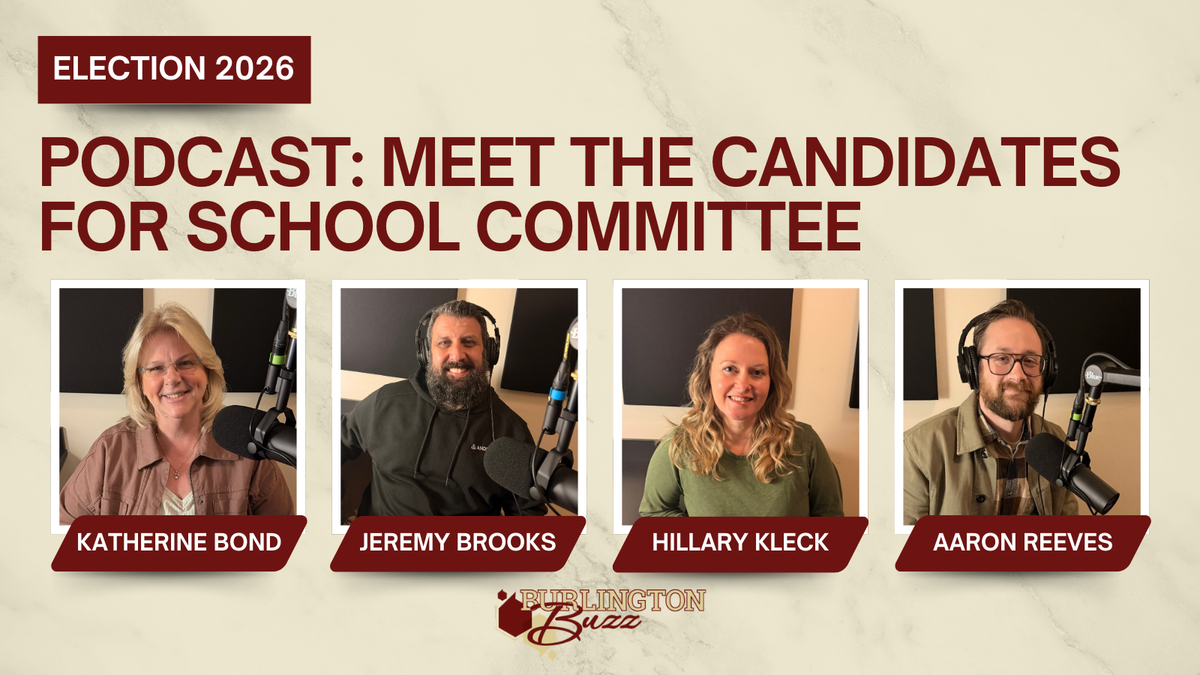
This year, four candidates are running for two seats on the Burlington School Committee: incumbents Katherine Bond and Jeremy Brooks, and challengers Hillary Kleck and Aaron Reeves. Below you'll find our conversations with each candidate. We encourage you to listen to all four!
NOTE: Ordinal numbers (first, second, third, fourth) are referenced in these recordings; this just refers to the order in which we recorded the podcasts. The candidates are listed below in ballot order.
BURLINGTON BUZZ ELECTION CORNER | BCAT ELECTION CENTER | OFFICIAL TOWN ELECTIONS PAGE
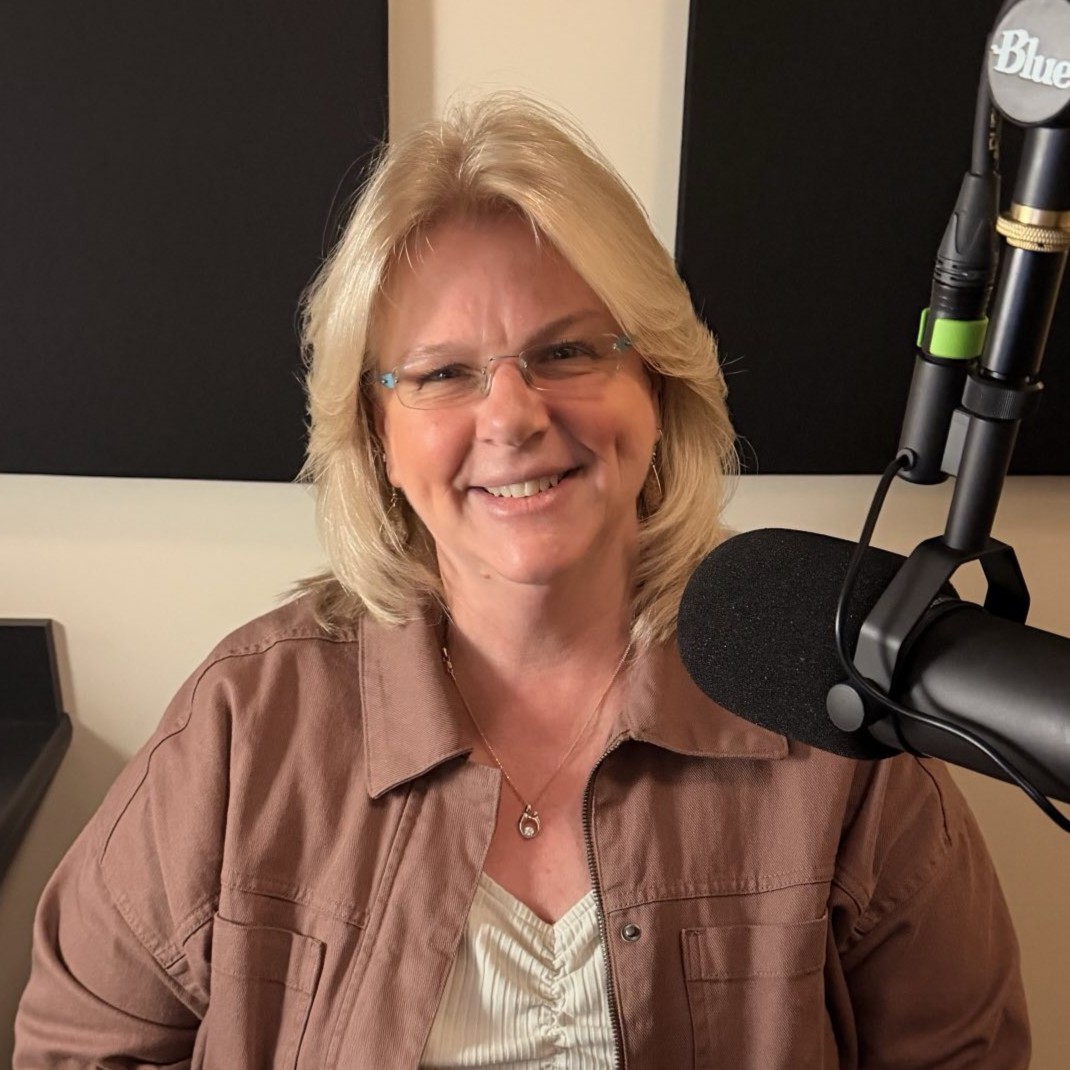
Katherine Bond is seeking her third term on the Burlington School Committee, bringing six years of experience navigating some of the district's most challenging moments — including her first year coinciding with COVID. A senior manager of manufacturing engineering in the defense industry, Bond has deep roots in Burlington's community life: She's coached Pop Warner cheer, served on boards for many community organizations, and raised her family here for 30 years.
Katherine Bond for School Committee Transcript
00:00:00
Burlington Buzz: Hey there. It's Nicci again with Burlington Buzz, and I am here with Katherine Bond. Hello, Katherine.
00:00:06
Katherine Bond: How are you today? I'm great. Hello.
00:00:09
Burlington Buzz: We're all great. Everything's great. And we're campaigning for school committee. So this is the third of four school committee podcast interviews. We have four candidates for two seats, and we have Katherine here today who is finishing up her second term. Am I right about that?
00:00:25
Katherine Bond: That is correct.
00:00:26
Burlington Buzz: Great. And so those are two three year terms that you've done , so six years total. And you're hoping to do a seventh through ninth year with the school committee?
00:00:36
Katherine Bond: Yes, I am.
00:00:37
Burlington Buzz: Okay. All right.
00:00:40
Katherine Bond: I'll say that with authority.
00:00:41
Burlington Buzz: Yes. All right. Gonna do it. Great. So let's just get started here with a little bit about yourself. Who are you? What brings you to school committee? And what is like that defining moment that was like, you know, what, I need to run for school committee?
00:00:57
Katherine Bond: Craziness. No, no. So I grew up with a family of teachers. My mother was a school teacher. My grandmother was a school teacher. My great aunt, whom I'm named after, was a school teacher. So I feel like I grew up understanding that strong schools are something that strengthen a community. Education is something that's, like I said, always been important in my family. You know, Elizabeth, my daughter, you know, I think when people decide to move. So my husband and I were living in Medford. I've lived in eight states. My husband's lived in several states as well. You know, we both ended up in Massachusetts and we were down in Medford. And we just felt like, okay, you know, we need to. We're gonna start a family. We're gonna get married. We need something more than a condo. So what do we do? We do what most people do. You go research towns. And what's the first thing people look at when they're researching a town?
00:01:52
Burlington Buzz: Yeah, schools. At least if they're. If they're young families are intending to have children.
00:01:57
Katherine Bond: Yeah, right. So you look at the schools, you obviously look at the commute, if you have one. My husband's been working from home since the 1990s when it was called telecommuting. So that kind of ages us. But anyway, we were looking at different communities and it had to be a good commute for me. But the schools were like one of the number one things we looked at. And, you know, Burlington had good schools. The, you know, taxes were very decent. Looked like there were a lot of, you know, a lot that our town supplies the garbage. We were very fortunate because there's A lot that our town supports with us, with the busing, everything that makes things run smoothly and makes it a more attractive town. And then we have the businesses that are in town that are always supportive of what goes on here. So those are all the things that we took into consideration. And then after, you know, Elizabeth was in school, like most parents, they get involved in whatever, you know, music, sports, you know, whatever it may be, an academic team. I don't know. And you start carting them to all these events, right? And, you know, people will approach you and, you know, ask, are you willing to volunteer? So I, you know, I said, okay. So I think the first thing that I volunteered for was Pop Warner.
00:03:20
Burlington Buzz: Okay.
00:03:21
Katherine Bond: And that's a huge.
00:03:21
Burlington Buzz: Pop Warner cheerleading.
00:03:22
Katherine Bond: Yeah, Pop Warner cheerleading. And that's a huge commitment. People know it's four nights a week of practice. There was tumbling on Saturdays and then the Sunday football games. So it's as a coach, you know, trying to get the kids there on time, the parents informed on what's going on, who's bringing snacks. You know, you have to really coordinate a lot. And then, of course, be there, you know, to coach and count and do what you need to do. And I kind of kid around. I had probably had the biggest purse on earth. I felt like Hermione Granger, you know, because the kids come. Do you have a band aid, Mrs. Bond? Do you have, you know. Yeah.
00:04:00
Burlington Buzz: Whatever it was. You had a juice box.
00:04:02
Katherine Bond: Exactly. So I just reached into that purse and pulled out whatever they asked for. But then I also. We joined the Burlington Swim and Tennis Club. I ended up on the board of directors for that. And again, that's a family thing with children. We had a really good experience there. My daughter started to figure skate. So BHSA needed a treasurer. I stepped up into that.
00:04:26
Burlington Buzz: I think maybe you are a member of a club that I belong to, which is people who don't know how to say no to things.
00:04:32
Katherine Bond: You're probably right there.
00:04:34
Burlington Buzz: Membership is free.
00:04:37
Katherine Bond: Exactly. And so that Winchester Figure Skating Club, just for people who don't know it, is run out of the Burlington Ice Palace. And a lot of kids in Burlington do skate in that program. And then also I was on the board of directors for bhsa, which is the Burlington Hockey and Skating Association. And some of those things crossed over. So I was doing two things at the same time and the treasurer position, which I think no one ever wants in any group. I continued to do it several years after my daughter graduated. So I stayed involved. And finally I just said, hey, you know, someone's got to take this over.
00:05:17
Burlington Buzz: The time has come.
00:05:18
Katherine Bond: Exactly. So, you know, once my daughter graduated, and it's a long story here, but it got to the point where, okay, now I'm not volunteering all those things, but I have more time now to do something else.
00:05:30
Burlington Buzz: Yeah.
00:05:31
Katherine Bond: So what can I do to give back to the community? My parents always gave back to the community. I mean, my mom was always involved. I mean, people know about it, Women's club, dar, whatever. And she, you know, you know, part of what they do is scholarships for kids. You know, some of that's the good work that they do. And so I felt like, you know, what can I do in Burlington? And school committee seemed like the next step for me to help volunteer and find a way to improve our schools. And do it from my perspective, having had a child who'd just gone through all 12, you know, grades, I've experienced each school at every level, and I felt like that could add value to everything.
00:06:13
Burlington Buzz: Yeah. All right, well, so let's talk a little bit about the school committee itself. What do you see as sort of the role of the school committee and. And what is not in the role in the purview of the school committee?
00:06:26
Katherine Bond: So the school committee, you know, kind of really what it comes down to is, you know, we hire the superintendent.
00:06:33
Burlington Buzz: Yep.
00:06:34
Katherine Bond: We evaluate our superintendent. We look at the set policies. I shouldn't say, you know, but we set policies, and then we also look at the curriculum. And we're always looking at ways to improve the curriculum. And then, of course, we need to make sure that our teachers have the tools, the building the curriculum, the books or the iPads or whatever it is that we have to do to support all of our students.
00:07:05
Burlington Buzz: Great. And we will get into curriculum pretty deeply here in a little while. But first, I want to ask about something that's near and dear to our hearts as we sit here in the BCAT studio. Burlington High School, you actually, it just occurred to me, you're the chair of the Burlington High School building committee. And so I have said this on every podcast. I think I just have to continue saying it. We've been through the ringer here at BHS over the last couple of years. There was a two year long process to try to get to some kind of solution for an aging school that the community could get behind. But in the end, the community didn't get behind it. So no use in rehashing those last two years because it's done and dusted. But what do you see as the next steps moving forward. And how will you shepherd that as a school committee member and potentially still the BHS building committee chair.
00:08:00
Katherine Bond: Right. So again, wasn't the outcome I had hoped for. But, you know, we heard that. We heard the community and I get it, you know, it may have been too much too soon as far as the tax side of things. So at this point, you know, we decided to continue the committee and I have been very vocal about inviting people to come in, you know, the people who maybe thought that we should have come up with a different solution or, you know, know, whatever. And I'm still going to invite people because I think we only had three new people. I was very surprised at that. So, you know, please reach out to me if you want to join. But right now our focus is again to something needs to be done. All right. Period. You know, we all know something has to happen. Yeah.
00:08:47
Burlington Buzz: I'm looking at my watch, as in it's been. It's a 50 plus year old school.
00:08:51
Katherine Bond: Correct. And when you look at trying to get state funding from msba, you know,
00:08:58
Burlington Buzz: the Massachusetts School Building Authority, reimbursing municipalities for new and renovation.
00:09:03
Katherine Bond: I appreciate you saying that, defining that. So anyway, you know, one of the number one things that they look at, and we were saying this in the past, is, you know, the enrollment. And our school, you know, is. Was built for 2000 and we're down to, you know, 9, 50 or whatever.
00:09:21
Burlington Buzz: Yeah.
00:09:22
Katherine Bond: And now we found ways to fill in that space, which is great. But when they're looking at it, we're not really outgrowing the space. And we have done, you know, in general, a good job of taking care and maintaining our buildings. But there are a lot of things that are aging and we need to deal with that. So right now our focus is the statement of interest, which is what you have to complete for the state to get funding. So we've kind of regrouped and said, let's focus on that. You know, we need to. We went through as a group, we have gone through with some fresh eyes, which is great. We've decided. Okay. I don't know if people are familiar, but there's an actual. I'll call it a rubric. It's not like you go in and you're writing a grant. Right. So there's seven different subject lines that you choose. And it's like, okay, are you outgrowing your school? No. Well, we can't write anything on that. So you go through and you evaluate all the things that you can focus
00:10:17
Burlington Buzz: on and this is an annual application. So if something doesn't change from year to year, you know, we still have 950 kids in this school last year, this year or next year.
00:10:26
Katherine Bond: Unless we combine with some other schools somewhere, that's not going to change. Or we have some, you know, it's going to take a long time. Even if we had some huge increase in births, it's just not going to happen soon enough. So we said let's go back and focus on the statement of interest. Let's maybe make things the wording stronger, change the focus a little bit in terms of how we're prioritizing things that we're talking about. And again, with some fresh eyes. So that's been really good. So we should be finishing up on that. But on the side, you know, we're, again, we're open to listening to anyone who wants to come to the meetings. You know, I really wish that we had more participation from people. I mean, I. My heart of hearts. I really do want to hear from people.
00:11:13
Burlington Buzz: Yeah, yeah. Because the only way that you. That this process moves forward is if the community is on board.
00:11:19
Katherine Bond: 100%. Exactly. So we are looking at a possible phased approach as well. And so once we get finished with the statement of interest side of it and submit to the state and then you have to wait for them to say yes or no, but then we can start maybe focusing and informing a subcommittee of our subcommittee. It sounds kind of funny, but a subcommittee of the subcommittee to look at that phased approach. How do we budget for that and how do we go to town meeting to see if it makes sense to do something like that? I mean, I know we kind of looked at that in terms of what the cost would be to phase something initially, you know, there was some concern with the whole group of people that it would disrupt the students a little too much. You know, possibly putting them out in pods.
00:12:13
Burlington Buzz: Yeah, no.
00:12:13
Katherine Bond: You know, and so there are all kinds of things that, you know, there are all kinds of things that I'm not sure that everybody knew had gone into the decision making process.
00:12:24
Burlington Buzz: Yeah.
00:12:24
Katherine Bond: You know, with the group of people who are a part of the original high school building committee. We did. For those of you who aren't familiar, we did follow the exact same process that we did. You would have to if we were an MSBA funded project. So we did nothing differently. You know, started out with, you know, 12 options and presented all the media.
00:12:49
Burlington Buzz: So at the risk of that, I don't want this to turn into BHS redux. So I Do have a question though about sort of, you know, widening the tent. I know that you were looking for input and there were public info sessions and whatever. How do we, how do we raise more awareness about this? Because there were still folks coming in at the 11th hour saying, what is this? How did you, you know, and not even how did you get here? Just like, I don't, I don't like this. So aside from going and knocking on every single door in the community, how do we make this a more collaborative process so that we don't risk the same thing happening again the next time we, we have a proposal?
00:13:31
Katherine Bond: And that is the loaded question, right? Because I, and I'll go back to what I said before. I would love to hear people's ideas, honestly. I mean, we, we, you know, filled people in, you know, through you. We had things on bcat. We, we did a mass mailing to every single voter in town, you know, that stated, you know, what the pros and cons and that's something that you have to do. And we thought about doing a separate mailer, but it's very expensive.
00:14:01
Burlington Buzz: They are indeed, can confirm.
00:14:03
Katherine Bond: Exactly. So, you know, we talked about it in our meetings, you know, they're advertised and posted on the town website. We talked about it in the school committee meetings. You're right. I mean, short of knocking on, you know, having hundreds of people going around and knocking on doors, my frustration is that maybe I'm a little old fashioned. But, you know, if we had, in addition to, you know, what you do online and what people see online and you know, what people, you know, the posts on Facebook and all the different places like that. Right. You know, I feel bad that a lot of the paper copies have gone away because I still think there are a lot of people who prefer paper and it's unfortunate that many of those have disappeared. So short of that, I really, I don't know what else to do, you know, at this point to get the word out. I felt like we had done what we could and it was a two year process and like I said, we had town meeting members that we are representing their constituents and hoping that people were approaching them and they were sharing as well. And you know, I, again, I'm all ears. I am not, I don't hold any harsh feelings about. It's just this is something that needs to be done and I'm very passionate about it and I welcome people to give me their give. Not just me, but the whole committee, your ideas and how to move it forward, you know, so it has to be something the town can support one way or the other. But we need to do it.
00:15:37
Burlington Buzz: Yeah. All right, well, let's shift gears a little bit to curriculum. You kind of hinted at some curriculum work before. The district is working on new literacy curriculum, math pathways, and then there's also kind of in preliminary stages for health and physical education standards or frameworks as well. What do you see as the role of the school committee in that process?
00:16:01
Katherine Bond: Again, we have an assistant Superintendent, Lisa Chen. Dr. Lisa Chen, and her primary. One of the primary roles for her is the curriculum. So as we have her go and investigate those types of things and then she comes to the school committee and presents what she's thinking. And so we'll get several different kinds of things presented to us. And as a school committee, we then ask a lot of questions, then help make that decision to move forward with the new reading program that we have in place. Or when you look at the Marshall Simons Middle School in math. So one of the changes that we made there is that we will have a full up algebra program that we didn't have before, which will make the transition into high school a lot easier. And if people have been looking or watching the meetings, Lisa Chen put up a very detailed graphing of all the different choices that students can make.
00:16:59
Burlington Buzz: And I have that screenshot on my phone somewhere from one of the meetings.
00:17:03
Katherine Bond: And for me, what's nice about it is again, it's something that is tailored for students, you know, to be able to move up, move down, because you don't. You want to challenge students and you want them to have the option to be able to move into something that challenges them. But also if they, they move up and they're like, ooh, I'm falling behind, you know, there's a way for them to move where they need to go so that they get that confidence again
00:17:28
Burlington Buzz: and they're not stuck in honors when
00:17:30
Katherine Bond: they're ready for honors. Right, right. And then again, because we have the teachers and administration in the middle school, it's going to be a much better transition into the high school because there again, it's back to communicating. It's having this group of people communicate with the math teachers and the administration up in the high school. So it's a program that you can smoothly move from one to the other versus oh, geez, they weren't prepared for what they were going to do at the high school.
00:17:59
Burlington Buzz: You have to do that or skipping one class. And they have 75% of the background, but they don't have the other 25% where you fit that in.
00:18:08
Katherine Bond: Exactly, exactly. So that's really our role, is to listen to what the experts are telling us, and then we, as a, you know, we ask those questions and then kind of guide and say, okay, here's how we're feeling about it. And then, you know, they test the waters and come to us and say, this is what we've decided on. And then we look on it.
00:18:28
Burlington Buzz: Wonderful. What do you think the school department has done well with implementation of curriculum? And what do you think? Where do you think there are some areas to tighten things up.
00:18:38
Katherine Bond: So I'll go back to. I'm going to talk more about, again, the more recent things that we've done, because the first year that I was on the school committee was dominated with COVID Right. And so I was very happy, reactive. That was all it was. It was, you know, are we going to be, you know, in, you know, in person, Are we going to be virtual, you know, you know, are we masks? No masks. It was just so dominated. We couldn't do anything really, with curriculum other than figuring out how to teach online.
00:19:10
Burlington Buzz: Right.
00:19:10
Katherine Bond: And, you know, so I'll say crisis tested because of that. But the second year, you know, that was where we're like, okay, can we get back into this? And that's why I think it was so important for us to. I think there were things that slipped through the cracks in the past, you know, from a past assistant superintendent, that maybe focuses were somewhere else and not as much as on curriculum as maybe when he first started out in the position. I don't want to criticize him in any way, but I feel like that we really needed to start pushing for, you know, fresh again. We always say it, you know, someone with new eyes and a new person. And when that person left, we had to find somebody that we felt could do that. And I think we've done a good job. When we hired, you know, Dr. Chen, she definitely has looked at everything, coming in with fresh eyes and, you know, looking at the reading program and looking at the math and listening to people who've been coming to meetings. Because math was one of the things that was discussed in one of the school committee meetings. Right.
00:20:06
Burlington Buzz: Math has been discussed since the dawn of time. I think I remember conversations about this the whole time I've lived in Burlington, so.
00:20:15
Katherine Bond: And even, you know, not that, you know, this, but my husband is a Ph.D. mathematician, and, you know, it's some of the things that you, as a parent, experience. And I think it was kind of mentioned in another interview process recently that when you roll new things out, you have to let the parents in on it. And I do remember when my daughter was in elementary school, they rolled out some new fangled way to add and subtract, which wasn't just, you know, one plus one lined up equals two. It was like, you know, put the block and you do this and you do that. And I remember, you know, again, this is, this is part of why I got involved too, thinking back on things. But parents need to be informed in advance. I remember picking up the phone and I did call Dr. Conti and I said, if you're going to roll something out, you know, not that it, you know, like you need to give the book to the parents so they can see what it is. So when your child comes home and there may not be understanding the process that I as a parent know how to guide them so they can learn properly. Right. So I think it's very important that when we roll out curriculum and as we have with the new reading program and what we're doing with math and I soon hope, science, that we are getting our teachers trained properly so that it rolls out correctly. And I think we're doing that with the reading program. But we also need to make sure that we're rolling out the information to parents. And then also extremely important to get feedback not only from the teachers, but the parents, because change is hard. And, you know, you have the people who sell you the program.
00:22:05
Burlington Buzz: Sure, right.
00:22:06
Katherine Bond: And it all sounds good and it looks good in the presentation and when you roll things, you know, the teachers did go and visit other schools that have rolled these things out, and that was part of how they made the decision to go with this reading program. And. But your parents are different than every community. So it's so important that we get that feedback from the parents on how what we're rolling out in the curriculum works. So I think that again over the past several years we've. And again more recently, because we've been able to focus on it, that we've got the reading program and the math program, I think on the right path. And for me now it's science, and science in particular in the elementary school level. And then of course, we've talked about it a lot, but I really feel like the labs in the high school just are not what is needed for these students. It's just not right that the teachers can't configure the classroom the way it needs to be configured. They don't have the tools to really get them to. I mean, they're amazing that they do that. What they do. In order for our students to be able to do as well as they do on the exams and going into college and majoring in that with, you know, a room that doesn't really work and there's no ventilation there. You know, I, like. I worry about that stuff, you know, safety for me, if you don't have windows that you can open when something burning that might not be good to breathe and the ventilation's not working. Well, I mean, we need to look at all of that. Right. The middle school got redone. The science labs were beautiful. That happened when my daughter was there. I was just amazed how beautiful they are.
00:23:45
Burlington Buzz: What about. So we're still talking about curriculum and now sort of moving to the parents. You mentioned parent communication, but also parent rights, as some would say. Where do you think the sort of line is? And the balance is between parent involvement in guiding instructional choices. So school committee, school administration, teachers, district administration. There's a lot of. Lot of fingers in the pot there.
00:24:12
Katherine Bond: There are a lot of fingers in the pot.
00:24:14
Burlington Buzz: Is that the right metaphor? I don't know how to put.
00:24:17
Katherine Bond: So I am of the school of. Every opinion should be heard.
00:24:23
Burlington Buzz: Okay.
00:24:24
Katherine Bond: Right. And I will say that just as when we went through Covid, we can't make everybody happy. Right. So you're gonna have, you know, the people in the middle, the people here, the people there, you know, and so it's very difficult to make everybody happy all the time. So we have to listen to what parents have to say. We need to take that into consideration. And whatever decisions that we make as a school committee have to be what supports all of our students. Right. And that may mean, you know, whether it's from a mental health perspective, you know, whether it's from supporting them because they have a learning disability, whatever that may be. We've got to do what we have to do. That supports everybody. And like I said, it may alienate people. Over here. Over here, but we've got to find that middle road. So, again, I realize there are people who may not be happy with some of the things that had occurred last year. I get it. I was not happy with that either. And we had an outside group come in and investigate that. But my whole point is that we can't always please everybody all the time. So we have to listen to everyone. We can't, you know, focus on, you know, just one group and please the one group. We have to really find the middle road.
00:25:56
Burlington Buzz: Yeah. And so just to Push it a tiny bit further. So a parent comes to the school committee with concern about something being taught or not being taught. What do you think an appropriate response looks like from the school committee?
00:26:09
Katherine Bond: The appropriate response is, we hear you, we understand where you're coming from. We will look into what your concern is, and then we, as I said, make a decision based on all students.
00:26:23
Burlington Buzz: Wonderful. All right, we are nearing the end of our interview, but I do have a few final questions for you. First question is, you are one of four candidates running for two seats on the school committee. What sets you apart? What makes you the best fit for this role?
00:26:39
Katherine Bond: Well, what sets me apart is, I think I mentioned it a little bit earlier in the interview. I do have a unique perspective because I do have a child who went through all different levels, elementary school, middle school, and high school. And actually, people can come to me for advice on college and grad school now, too. So I think that that's one thing that sets me apart. I also feel like we need to continue having. I'll talk about diversity a little bit. We have three school committee members that have kids that are in the schools, which I see, you know, people think that that's a huge advantage. And I will, you know, say, yeah, sure, that's great, right? And we have one who's had their kids go through and now has all
00:27:27
Burlington Buzz: the grandkids in there.
00:27:29
Katherine Bond: But now, you know, for me, it's the fact that, you know, my skin in the game is representing the whole community as a parent who's doesn't have someone in there. So I have a different perspective than someone who might have, you know, be representing. And I'm not gonna say they do it, but, you know, well, whatever school your child's in, you can't help it as a parent to not, you know, kind of get in there and dig in for the school your child is in at the time to want to push things forward and do everything. And that's wonderful. So, you know, that sets me apart, that, you know, I am committed to that. And on top of that, I feel like with my skill set, I mean, I know we're all professionals and, you know, even if you're a full time mom, you come in with your own skill set and that, believe me, that's one of the most difficult jobs out there. But again, professionally, I, you know, have worked in logistics and longer than I want to admit and, you know, had that experience with contract negotiation and, you know, working at corporate headquarters for a major defense industry, I bring, you know, I have worked on processes and procedures within our organization that have been implemented company wide. And I think that's something that we need on the school committee is someone who has that experience with processes and procedures because we're constantly trying to look at those things. We're looking at contracts. You know, one of the things, one of the things that I helped work on and implement was the new bus contract. So we, I felt very strongly as well as, you know, I think some of the other school committee members, but we needed to find some sort of a penalty for late buses. You know, what, what could we put into the next contract? And you read through that and as a group, you. You agree on that. We were trying to, you know, people wanted more visibility to the buses, so we found a way to get that app done and we pushed that through. And I was on the transportation committee to try and do that. So, you know, I guess what I'm saying is that I have experience as a parent. I have experiences having been on the school committee. I have, you know, work experience, like I said, in the defense industry. And I think that I will bring, I guess my problem solving skills and the accountability skills to the school committee. And I know accountability is a big word these days, but I am held accountable. And you know, when you're in defense and it's. There's serious consequences if you're not being held accountable for whatever policies and procedures that you put in place. So I feel like I can, you know, continue that. And I also feel like I'm representing all students at all levels and I will continue to do that. I am not. I'm going to. I feel like I've been fair and open minded as in the past, and I will continue to do that. And I welcome people to call me, email me, whatever you need to do and I will listen and I bring things up if I'm approached and I will continue to do that.
00:30:47
Burlington Buzz: Great. What will be your two priorities? Top, sort of top priorities in the next couple, in the next three years, if you're elected?
00:30:53
Katherine Bond: I guess you can guess one.
00:30:55
Burlington Buzz: I can. I wasn't gonna feed it to you, but I do, I do. I can guess one of them.
00:30:59
Katherine Bond: Yeah, the. The high school. Clearly I want to continue that work. We need to find a solution and it has to be a solution our community can support and financially and whatever the plan may be. Yeah, right. Secondly, I think I brought it up a little bit. I think we need to try. Now that we've kind of worked on these, we have worked on the reading program. We're working, and I think got a good, solid math program in place. And I think we need to focus on science, as I said earlier, and there's really no science block in elementary school, and I think that there's more that can be taught. I know that the new reading program does incorporate science, but I think we need to find a way that we can maybe have a little more time spent on science. So when the kids get into the middle school, they have more information, and then it's not just what you learn on your parents. I mean, I was so excited to see that they were part of the reading program, that they were out making maple syrup. Yeah, it was. That was such a cool thing, you know, and I feel like that's kind of. We need to kind of get people excited about. Because science is the future.
00:32:20
Burlington Buzz: Yeah. Yeah, it is.
00:32:21
Katherine Bond: You know, we need to understand it because there's so much going on in the earth, and, you know, we need to make sure that we are good stewards.
00:32:33
Burlington Buzz: Yes, yes, yes, for sure. All right, last question. What is something you would hope that people understand about you that maybe they don't already know?
00:32:41
Katherine Bond: Oh, that's a good question. Well, I will. I feel. I will say, I hope that people see that I am fair, and I do try to listen. I think that there are. I would. I've been trying to get out there to some of the events. You know, I need to make sure that, you know, some of the younger parents who don't see me because I'm not, you know, in elementary school and, you know, not at the pto, I'm not a part of that, you know, so I want to make sure that, you know, people understand that. Again, I am all about what's best for the town. I truly believe that good, strong schools bring people to your community. It's the first thing people look at. A good education prepares students not only to go to college, not everybody wants to. To go to a college, but we need to make sure that we're putting students in a position where they can go and, you know, go to the. Into the military or go. Start working or go to the trades or do whatever they want to do, and also thinking, you know, that they know how. I don't want to use buzzword, but like critical thinking, you know, they really need to do their own critical thinking. They need to think things through. They need to question in what they're learning. They need to ask questions and come up with their. Learn how to come up with their Own decisions. You know, we are all influenced by our parents and what we've. Like I said, I volunteer because that's what I saw. It's by example. You know, there are many parents. Again, we learn from our parents, we learn from our teachers. Our students should be able to take all that in and be sponges and then go out there into the world and learn to be themselves and be able to come back to their parents and even back to their teachers. My daughter has gone back to her professors to ask questions and help now. And so when you're building that network of people, like I said, for me, it's making sure that we've got our students out there prepared for the world for whatever it is they want to do, and they can make their own good decisions and mistakes because we all do that.
00:34:57
Burlington Buzz: Right?
00:34:57
Katherine Bond: Yeah.
00:34:57
Burlington Buzz: That's how we learn.
00:34:58
Katherine Bond: And so, again, what I feel is that I really hope that people see that I do care about our community and through all the volunteering that I've done, and I will continue to do, and I really will ask for one of you two votes on April 11th. I have to wrap it up that way. Wonderful. And again, I really appreciate your time. I know that this is, you know, big deal for you, too.
00:35:22
Burlington Buzz: Yeah.
00:35:23
Katherine Bond: And it's another way to get word out. You know, we start talking about how do we get word out to things, and every single thing that we do, whether it's an interview or, you know, showing up somewhere, it's. It's showing, you know, that we care about this. And I do. I truly care about education and how Burlington performs.
00:35:40
Burlington Buzz: Wonderful. Well, Katherine Bond for school Committee. Thank you for coming and hanging out with me today.
00:35:44
Katherine Bond: Thank you for inviting me.
00:35:46
Burlington Buzz: All right. Katherine is running for one of two. Two seats against three other candidates. It's a hard. It's a mouthful. And our election is April 11. Early voting is going to run from March 30 through April 8 at Town hall, and mail in voting will open shortly as well. Check out Burlington Buzz for any information that you can't find by listening to this podcast, and we'll see you all again soon.
00:36:14
Katherine Bond: Thank you.
00:36:15
Burlington Buzz: Thank you.
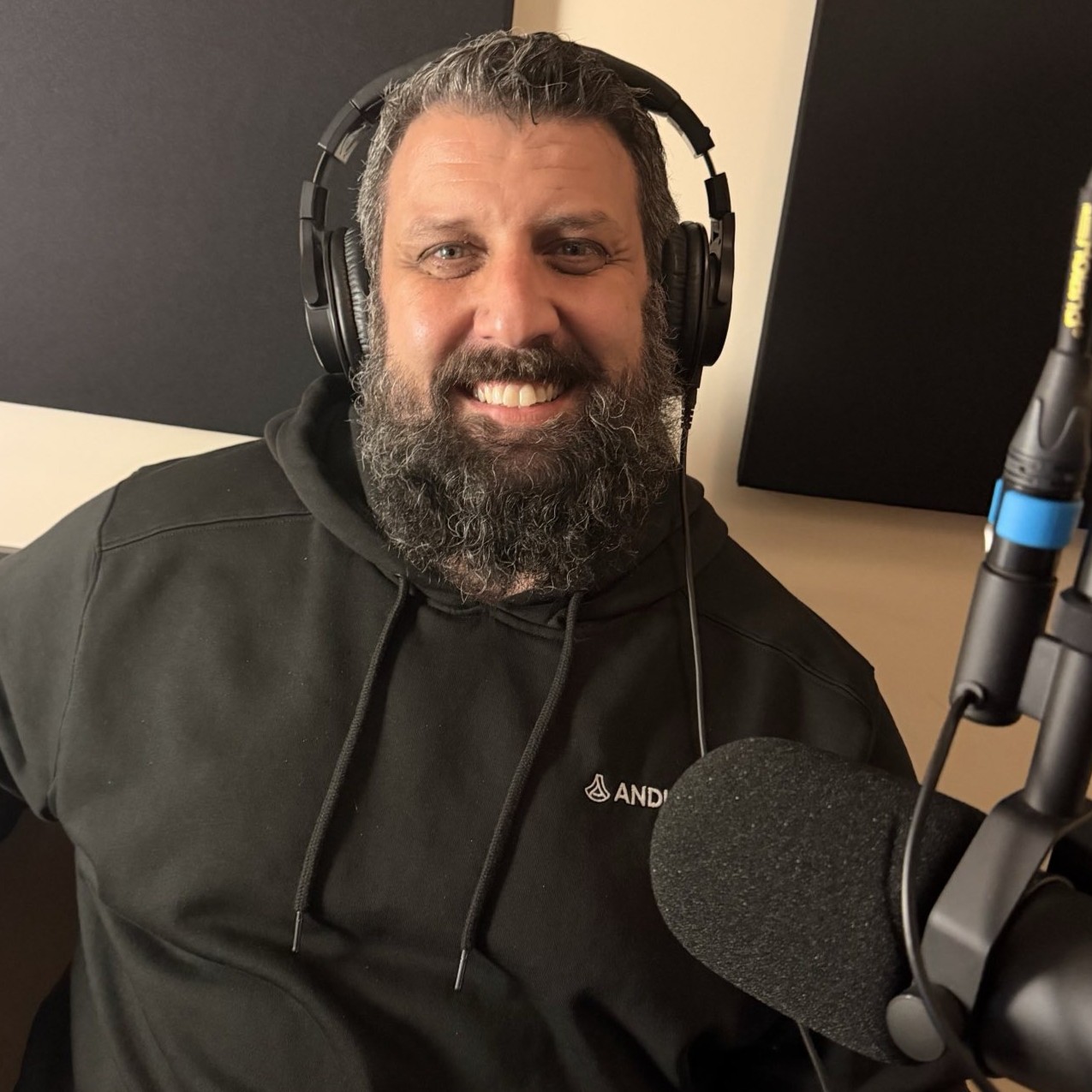
Jeremy Brooks returned to Burlington after 25 years of military service and jumped almost immediately into civic life — running for School Committee, losing his first race, and coming back the next year to win. Now finishing his first term, Brooks has focused on fiscal responsibility, long-term capital planning, and school safety. A father of two daughters currently in Burlington Public Schools, he brings a data-driven, analytical approach to the role.
Jeremy Brooks for School Committee Transcript
00:00:00
Burlington Buzz: Hi and welcome to Burlington Buzz on the mic. This is Nicci Kadilak, your host, and I'm here with Jeremy Brooks, school committee member and candidate for 2026. Hey, Jeremy, how's it going?
00:00:11
Jeremy Brooks: Wonderful. Yourself? How you doing?
00:00:12
Burlington Buzz: I'm pretty good. We do this every year. This is our first of four school committee interviews because there's four candidates this year. And what we really try to do here is just get a sense of who you are as a candidate, what you bring to the role and will bring to the role in another three years, and what sort of helps you stand out and differentiates you from the folks that are. That are running against you or alongside you, if you'd like to be less contentious about it. So let's start out with who you are. Who are you? Not just your resume, but, like, what brings you to this race and what was the defining moment that made you decide to run for school committee back four years ago?
00:00:54
Jeremy Brooks: Yeah, so it was kind of at the height of COVID and then I just moved back into town after being gone for about 25 years doing my military thing. And as my kids transitioned into school, I just, you know, kind of noticed some things, wasn't happy with things and, you know, just kind of started to get engaged. Didn't get enough traction there. So I decided, you know, if I can't be part of the solution, you know, be part of the problem. Right. So then ran, was unsuccessful for the first time, came back the next year and got on, and the rest has been history, you know. And I think you know, about me again, father of two young daughters, one in sixth, one in fourth grade, becoming very avid skiers, as we were talking about earlier. And, yeah, no. One that's got the acting bug and the other is. Definitely follows my path a little bit and loves to cook. So definitely good things.
00:01:46
Burlington Buzz: I thought you were going to say she's an analytical mind, but you went in a different direction.
00:01:51
Jeremy Brooks: No, absolutely not. They're both enamored with technology, but definitely not take it to the depth I do. Really? Yeah. So that's kind of, you know, about me. And then, yeah, I guess, you know, why I'm back again. Number one, it's been an honor to serve. It's been a privilege that, you know, I take very seriously. And, you know, thank the voters of Burlington for giving me this opportunity. And I think, you know, I'd like to continue on the work I've started. You know, three years ago, I ran on fiscal responsibility, stronger policy, bringing practical experience to the committee, and, you know, kind of my first term I worked to turn those priorities into kind of some results. I helped enact the social media policy. We created a liaison position with the district wide school safety council that resulted in, you know, some stakeholder feedback and helping to push a warrant article to close a critical communications gap for incident response out of that committee. So I was pretty proud of that, you know, and then I think one of the other things we talked about at length previously was long term capital planning. Right. That's been my thing all along. This year we finally got it ratified. So now it's a real document the school committee has to leverage for the town and let you know, capital budget, ways and Means, other town entities know, hey, this is what the school is planning to do. Because you know, if we look at a school, we're the biggest cost driver in the town. We absorb about two thirds of the town's budget. So I think just having that responsible planning and communicating that out in time and space where folks can act on it because, you know, I think we'll help everyone in the long run. And then again, just pushing for that technology and innovation, you know, because again, my personal life brings me into that AI space and innovation and I want to start bringing that into schools because again, you know, like we talked about previously, it's, it really is the new universal language, you know, much like math is having computer skills and being able to interact in that digital world and then create and understand how those things work is pretty important today's society. Right?
00:04:04
Burlington Buzz: Yeah, well, and, and you. So a few things come jump out just based on coverage I've been doing recently. And also the, the town's budgeting process, which is happening right now. The long term capital planning process isn't just happening at school committee level either. It's also, it's, it's folding in. I think you can explain this better to the town's long range capital plan.
00:04:25
Jeremy Brooks: Yeah, absolutely. So again, when I pushed it as a candidate, it was really just something I saw as a kind of the gap analysis I did where we can do better. And then once I got on the committee really worked closely with a few members of Ways and Means, which is
00:04:41
Burlington Buzz: the town's finance committee for those of you who are, I guess I should have said, not fluent in town vocab,
00:04:46
Jeremy Brooks: but yeah, no, I did a little bit of deep dive with them, looked at how they're gauging metrics, how they're modeling out cost again for capital projects are going in town and you know, started to ask those Very probing questions of like, hey, this is how I see this 20 year capital plan communicating out to you. What information do you need? How does this help you? How is it relevant? You know, if I do it in today's dollars out to 20 years, we know that's not going to be an accurate model. If it's tight in where it needs to be with accurate estimates at three to five years. And then moving forward as it moves left, we keep updating those costs and you know, that's kind of how we got to where we're at with the current document. And I think, you know, tightening up that a little bit more would help, you know, place a few more of the key cost drivers we have, you know, and some of that life cycle sustainment cost, capturing that a little better in that document will help all involved. Great.
00:05:38
Burlington Buzz: So as a school committee member, you've been there for three years, now you're running for another term. What is, in a very brief explanation, what is the job of a school committee member and what is not the job of a school committee member?
00:05:51
Jeremy Brooks: Wow, interesting learning curve there because you know, when I jumped right in, there was definitely things going. I think really the school committee job is again, the oversight. Right. And then ensuring are we being fiscally responsible? Are we going after the right curriculum and practices, focusing on the right areas and providing the right resources to the teacher, staff and administration to get the things done, continue to build on the successes we've had, improve learning outcomes and then provide spaces and places for folks to have that, you know, world class education that we hope to get out of Burlington school system.
00:06:30
Burlington Buzz: And what is not, what is something that you thought like, oh yeah, I'm gonna do this as a school committee member. And then you came on and realized, oh, that's not really something I can do as a member.
00:06:42
Jeremy Brooks: That's a great question. Yeah, there's definitely some interpersonal issues that get brought up to you as a school committee member. Always happy to help and refer out to the right person. I think it's a little hard sometimes when you get brought an issue that's either very near and dear to your house or you're just very empathetic to the person bringing it to you and you really want to help them, but you got to kind of pass off and go, hey, you really need to look at the administration or the principal and you know, please let me know if you're not getting the feedback you need. And then that's really how you follow up. Right. This is some things that just aren't in your purview and you can't reach down that far to, you know, affect the school thing. And then, you know, sometimes it's things you can do and you can help out where you can. Right. And I think that's, you know, that's kind of where the line is drawn. And then helping folks understand policy is, you know, some of the things that's not necessarily native to the job, but you get asked a lot of questions, well, why can't I do this right? You know, and because we've gone through the whole policy menu and we've revamped that over the first term that I was in. You know, you have a very fresh set of documents that's not aged and you can go, you can point to, you know, hey, in document 1, 2, 3, 4, 5, JJ, ABC 23 letters behind it. Here's, here's the policy and here's why this happens. So these are the feedback mechanisms you need to get into or this is how we can affect something that you'd like to do if I can't personally, you know, get the thing done.
00:08:06
Burlington Buzz: Yeah, well, so we saw, we started with talking about capital planning and we, we sit here in BCAT studios, which is at Burlington High School. And Burlington High School has been through the wringer, hasn't it? So a two year long feasibility study ended in a failed vote for a debt exclusion that would have built a new $330 million addition renovation here. What do you, what's your assessment, your honest assessment of where we are right now, what's realistic for next steps and how would you on the school committee sort of shepherd those steps forward?
00:08:42
Jeremy Brooks: Okay, so as you guessed, I may have anticipated this question coming along. So I did have some, you know, things I want to get out and you know, again, first and foremost, need hasn't disappeared. Right. We still need to do something. We can't just wait in perpetuity for something to happen. Right. That being said, the answer now kind of goes back to some of the things I talked about right after the vote didn't pass is, you know, I think we need to rebuild that trust with the community. Because I think coming out of that vote, what I saw was as we went to vote and you know, as it got closer, there was a lot of people that either didn't understand it was happening or why it was happening. So I think, you know, rebuilding that trust to go, this is why this need is here, this is why it's present and better communicating our plan so folks understand, because a Lot of folks got in late in the game and didn't realize, you know, hey, two years of work had been done. There'd been a lot of plans either removed or, you know, vetoed out because of certain constraints or things you just couldn't get around. Right. So that. But I also think too, you know, with the committee continuing the work, this is almost the time to step back and do a little reflection and go, hey, where did we fall short? You know, let's step back and look at a few courses of action we can take to bring this forward again. Because I think what we can't do is just rush back into the same thing we were doing to try and, you know, work that next step of the committee as if we were, you know, had gained approval or not. But I think it's just, we really need to step back and take a good look at. Okay, hey, does this look like an addition kind of scenario? Is this a hybrid scenario? If it's a new building, what are the must haves? What are the things we absolutely have to do? And again, I think the voters were pretty clear that fiscal responsibility is going to be the number one priority for them. Right. Because I think the majority of the questions I feel were very much of, you know, how does this impact me from a tax perspective? How does this impact my wallet, which, you know, in this economy, I get it. Right?
00:10:46
Burlington Buzz: In this economy, yeah.
00:10:48
Jeremy Brooks: Totally understandable. Right. So that's where I think we, as a committee and then as a subcommittee could do a little bit better job. Again, we are going forward with the statement of intent and everything, but again, I think we just need to take that deliberate step back maybe for six, eight months and do that work as the committee really refine in scope two or three courses of action, then bring it back forward. And I think that maybe would help some things because, again, so almost.
00:11:16
Burlington Buzz: Almost a menu or sort of a decision tree is what you're kind of envisioning, correct?
00:11:20
Jeremy Brooks: Yeah. Okay.
00:11:22
Burlington Buzz: So, okay, so you mentioned folks sort of coming in later in the game not knowing what was going on. I witnessed that, too. And of course, as people who have been communicating about this for two years, it feels like, oh, man, I just wish you had been here a little bit before and. And followed along in the process. So how do we bring. This is. This is a narrow question. And then I'm going to open it up. How do we bring folks in without going and knocking on 10,388 doors? Right. How do we. How do we make sure that the people who are coming out and voting on this, which was what, 38% of our population or something like that this time. How do we make sure that they are following that process from start to finish so that they have that trust, so that they have seen all of the thought And I mean, this was a very complicated project. A lot went into it. You know, how can we make sure that we're. That people are actually seeing this? And then just so you know, I'm going to expand that to say, like, how do we bring people into this conversation when there's really only a handful of folks who are coming and giving input, at least in public meetings.
00:12:26
Jeremy Brooks: Sure. No, and I think it's a great question. Right. So how do you bring people in? I think it needs to be communicated, you know, early and often. I think bringing it, you know, into town meeting and having updates because then that gets folded into the state of the town and the books that go out, because a lot of people read those. Right. You know, getting some more information out to people, not just in the social media sphere, because I think if you followed that at all, it was very, you know, just rapid fire information coming
00:12:57
Burlington Buzz: and, and some correct and some incorrect. Correct and some incorrect assumptions that sort of fit. Founded the basis for some arguments that people were making.
00:13:06
Jeremy Brooks: No, absolutely. And I think that's where you could help close some of those knowledge gaps where if there's kind of a document source of truth, almost like a project register that you could go to, because again, if it's in multiple sources of official town documentation, then it becomes, okay, this is a, this is really a thing. Right. Because it's in these many places, baby. Now you do have a source of truth that's, you know, not universally agreed upon, but agreed upon. Right.
00:13:38
Burlington Buzz: Well, and I think that it's one thing to say, well, we've been meeting for, you know, every two weeks for the last two years, go back and watch our meetings, but nobody has time for that. And so I think your idea of a project register might make sense. You know, having a place where it just very lightly details. This is what was talked about. This is why we vetoed this option or modified this option and just a sort of an ongoing list so people can follow along with that without having to watch, I don't know, 25 hours of meetings.
00:14:10
Jeremy Brooks: Yeah. Or more, I don't know. Yeah. And then just breaking that down to that, you know, bite sized chunk so folks can, you know, take that and almost like a podcast style like this, you know, where you have 20 minutes. I'm driving to work and I. Can I listen to something that just gives me. Gets me up to speed. Right?
00:14:26
Burlington Buzz: Yeah, it would be nice to have something like that, wouldn't it? All right. Are we done talking about bhs? Sure, yeah.
00:14:34
Jeremy Brooks: Unless you want to. Unless you want to talk more about it. I can spend as much time as you want.
00:14:38
Burlington Buzz: Couldn't we both. I would love to move to curriculum. You mentioned curriculum. There's where the district is in the middle for folks who don't know of an overhaul to the ELA curriculum, to the math pathways. And then we're also talking about health and help me out here. Health and physical education. Correct frameworks. So here's. Here's a question. Curriculum decisions involve bunches and bunches of people. There's committees out the wazoo for. For all of these things where. Walk me through sort of where the school committee fits in that curriculum selection and design process.
00:15:17
Jeremy Brooks: Okay, so let's take it from ckla. I guess the. The curriculum that we voted on and have now implemented is in year one
00:15:25
Burlington Buzz: at K through five in elementary schools.
00:15:28
Jeremy Brooks: So basically, the work had started previous to me getting on the committee. A committee was formed. They started to look at options, weighed several curriculum programs with representatives from each school, the middle school, the high school. So it was really a holistic group of folks, all grade levels, all different special education specialization, intervention specialists. So you really had a broad representation of the district educators to go, hey, these are the things that are important to me and my sphere of influence. You know, how did these curriculums help me or hurt me or, you know, any number of things through that they distilled down from several curricula to a wit and wisdom and ckla. Then that was brought before the committee. We had a few meetings where we talked about it. And then after the committee meetings, it was, you know, all five of us separately going to Dr. Chen to ask our 101 million questions. Okay, about, you know, why this curriculum was good start. You know, kick the tires on it.
00:16:33
Burlington Buzz: Dr. Chen is assistant superintendent and the
00:16:36
Jeremy Brooks: director of learning and curriculum. Okay, so, yeah, that gets brought to committee. So. And then we kind of kick the tires on it and understand why. And again, it was one of those things. It was a little bit of a tough decision sitting in my seat, because I had almost expected a little more universal acceptance for one curriculum versus another. And it was really almost split 50, 50. So it was really hard to pick apart the details and really dig into why this one's just a little bit better and why we should have done it.
00:17:08
Burlington Buzz: And you're, and you're trusting the professional educators because they're the ones that are specialists in their field.
00:17:12
Jeremy Brooks: Right. And then that's the thing, you know, it's just me as a person, I'm a very kind of pragmatic person. And then if I don't understand something, I'm just going to keep pulling on that thread and asking, you know, that five whys and continue asking why until I can't ask why anymore. And I've, you know, kind of run, run that to ground. So, you know, I know sometimes that can seem a little tedious when folks watch meetings where I ask question after question. But that's again, really just the what I feel like I need to do to understand and make sure we're doing the right thing. So, you know, it's just one of those where I'm not trying to be difficult. It's just I really need to kick the tires on things. And I'm a very, because of my product background and my project background. It's, you know, cost, schedule, performance, always, right. So I start to pull on those, okay, it's going to cost us this much. These are the things we expect to benefit from it. You know, when do we realize that or how long is it going to implement and what's our, you know, sustainment cost and things like that? Because again, going back to the money and not just the outcomes is if this is a burden that we can't sustain, it'll be great for a short term, but what's the long term benefit of this? Right. And that's really the, the long term
00:18:15
Burlington Buzz: risk of not being able to or
00:18:17
Jeremy Brooks: if you don't select the right one and it doesn't get the outcomes you need. So it's one of those things where, yes, it seems very short in the fact that you're gonna make decision to implement this, but how often do you turn over curriculum? Not very often. Right. So it is a long, enduring artifact that you're gonna have to revisit and supplement and all that. And you just really need to make sure that the program you're selecting is going to have those long term benefits. And, you know, that was, you know, why I started pulling on the questions of, hey, what's the implementation success of this? How many, you know, what's your user return value? You know, kind of like that website metrics where, you know, hey, how long are they clicking and you know, who's staying for more than three minutes kind of stuff.
00:18:58
Burlington Buzz: Yeah.
00:18:58
Jeremy Brooks: Okay. And that's really what I wanted to dig at because it was a new addition that we bought versus I believe it was edition two or three. I gotta have to go back and look at it. I should know that offhand, but I don't. But that was why I started going down that route, because it was a new edition. So the proven success was with the previous edition. So, like, how many districts have implemented this new edition and what success or challenges are they having with it? And that's again, really where I start to dig into the details and try to look at things a little differently than some folks do.
00:19:34
Burlington Buzz: And the approval then came from whom?
00:19:38
Jeremy Brooks: So the school committee voted to approve that curriculum and bring it forward to town meeting. So then what that triggered was the school committee agreed that yes, CKLA is our preferred curriculum based on all of
00:19:52
Burlington Buzz: that input from all of those people on the committee and your interviews and meetings.
00:19:55
Jeremy Brooks: And then that got brought to town meeting and the warrant article was put before town meeting for a little over $500,000 to approve that curriculum, which thank you to them for doing so. And it was a pretty exciting time at the town meeting because not always. Not always fun and exciting for us to be there, but that was definitely one of the highlight moments for us as a committee over this last term, for sure.
00:20:18
Burlington Buzz: Yeah. So, you know, speaking of curriculum,
00:20:23
Jeremy Brooks: we
00:20:23
Burlington Buzz: do have folks that show up at school committee meetings. They talk about curriculum, they ask questions. I'm talking parents, community members with respect to the curriculum that is currently adapted by the school district. So at any subject matter we could be talking about, what do you think the district is doing well with implementation, and what do you think could be tightened up or changed or improved?
00:20:46
Jeremy Brooks: Okay. So for the current CKLA curriculum, things were doing well. There have been many rigorous PDs. There's lots of planning going on. So I think The K through 5 educators, with the support of the district admin, have been very laser focused on getting it right in the rollout. I think they're very keyed into ensuring we grab the right data metrics. From the teacher educator side, I do worry sometimes we're over sampling, but again, that's a whole other separate conversation.
00:21:23
Burlington Buzz: Are you talking about testing?
00:21:25
Jeremy Brooks: Not necessarily testing, but just the progress checks with the testing with the others. So you can, from holistic or from a cumulative standpoint, all the tests you're taking, it's 45 minutes here, 45 minutes here, 45 minutes here. That adds up to like, you know, days of time on learning. So you gotta be very cognizant of that time on learning and how it's impacting what the assessor is doing. But again, during a rollout, it's very important. I think one of the improvements to your question would be refining that, you know, because we have mountains of information, but what data do we actually need? Or excuse me, mountains of data. What information do we actually need? Right. So do we.
00:22:03
Burlington Buzz: I've heard you say this for the last three years.
00:22:05
Jeremy Brooks: Yep. And we need to distill it down to, like, those three or four touch points as the curriculum is inflated. But I think right now, erring on the side of oversampling is not necessarily a bad idea because you can figure out, are these metrics meaningful? Are we tracking the right things? And I think, you know, an improvement for us on the school committee or merely the district is, you know, engaging more parent feedback in that loop because it's a new curriculum. Where's my kid? Struggling. Because when they go home every night or they're trying to do something that's reading or math or whatever, if there's pain points you're seeing, bring those up to the teachers so then they can flow them up to your team chair, and then that team chair can then flow it up and it'll get, you know, published across different schools as they have, you know, quarterly meetings and things like that and have reviews. I think that's where a lot of those things will bubble up to the surface, where now we have this information that says, hey, these are things we're doing well, these are things we're doing bad. And as these user concerns bubble up to the top, now you can maybe figure out where those dependencies are and figure out how you can make the program better. Right. So. And I'm sure some of that work's going on. It just hasn't been presented to us yet.
00:23:17
Burlington Buzz: Okay, so now talking about adopting new curriculum. Right? So the curriculum that we have in place, it's. It's here, here to stay. But for adopting new curriculum, where do you think that balance is between school committee involvement, district admin, school at school administration and staff, and then parent involvement?
00:23:38
Jeremy Brooks: So, again, I think that source of truth, you know, no one lives it closer than the parent that's at home trying to help their student do homework or work through a problem or any number of things. Right. So continuing to engage with at the teacher level, at the administrator level, you know, if you're seeing gaps in your child's education, again, bring those issues to light. Right. And you have to communicate and, you know, that's where it's incumbent upon us as a committee to hear that feedback. Right. And then act upon it. And I think that's where we can definitely do better in some regards. Right. Because again, we have folks that are starting to show up regularly and I think that's a great thing. Right. Because I really think that shows, you know, that we're gaining a level of trust in the community that they want to come before us and, and share those, share that feedback with us, share it with us on the record. Because that's always a good thing. Right. And, you know, again, if that's not your preferred method, communication always, you know, just reach out, email me and, you know, if it's something you need me to bring up, I certainly do that and have done it on occasion too. Right.
00:24:47
Burlington Buzz: Yeah.
00:24:48
Jeremy Brooks: So I think just, you know, for us as a committee, putting on those listening ears. Right. To figure out where the pain points are and as the new curriculum starts getting talked about, understanding and asking the questions how it's going to address these pain points that we know. Right.
00:25:05
Burlington Buzz: Yeah.
00:25:05
Jeremy Brooks: And I think that's where we'll fit into that new curriculum as the committees, you know, again, for the six through eight with the new reading curriculum. So we just had 1 27th at Marshall Simons.
00:25:19
Burlington Buzz: Yeah.
00:25:20
Jeremy Brooks: Yeah. We had both curriculum providers present for
00:25:23
Burlington Buzz: us for the new potential middle school ela. English Language Arts curriculum.
00:25:28
Jeremy Brooks: Correct. And then Shameless Plug for. Please go to parentsquare. There's a survey open to provide your feedback. All the materials that both providers gave us to review for the curriculum are available online at the district website. So please, please, please check that out and provide your feedback.
00:25:51
Burlington Buzz: Because this feedback is essential.
00:25:53
Jeremy Brooks: Yeah. And again, this is, this is one of the things I'm going to look at when I sit down at that desk and they ask me to vote, I'm going to look at, you know, I kick the tires on it. Here's, here's my, you know, put on my product manager hat. Oh, hey, here's cost, schedule, performance is what I like about is what I don't. I'm going to take the, you know, expert feedback of these are why all these things are good. And then, you know, that last pillar that's going to make me decide one way or the other that's going to form my opinion for the vote is going to be, what is that? Parent feedback. What is, what are they telling me? What is everyone telling me? And if you don't give me that feedback, then, you know, I have to go sample. But my sample size may not Be as big as, you know, the survey can get. Right.
00:26:31
Burlington Buzz: Yeah. Where do you think parent rights over education end and the school's professional judgment begins? Just kind of speaking on this parental involvement, engagement kind of thing.
00:26:44
Jeremy Brooks: I guess a little more context on that because again, this been, you know, something that's definitely come before the committee of late. You know, I think the existing mass general law, federal laws, education standards are very clear on, you know, what is and what isn't under the purview. But I also think there is room for not sorry debate. But you know, we got to raise issues where if we're implementing new curriculum, hey, what are the left and right limits of this? You know, why is it needed those kinds of things? And then that's really why I was really pushing more for the opt in policy stuff because that way for surveys. Correct. Administered just surveys and a lot of other things too. Because again, I understand initially it would be a challenge to get buy in. Although it does keep folks engaged because they know they either have to say yes or no. Right. So if they really feel passionate about something now I can share my voice or say yes or no, my student is going to participate in this or not. And I think with the opt out everyone just kind of forgets. It's like, oh, it's going to happen anyway. It's fine. Yeah. And I think that's really why I took the position I did. And you know, to say hey, for the opt in it just makes more sense because it gives folks and parents that last check to go do I want to do this? Do I not? And it helps remove some ambiguity on should I or shouldn't I? Because now you have to, you know, do that task switching, put your brain to it, focus on it for a few minutes and go, hey, do I want to do this or not?
00:28:23
Burlington Buzz: Right, right, right. Whereas it stays unread in my inbox and gets buried by the other 55 things if I don't have to act on it.
00:28:30
Jeremy Brooks: Yeah.
00:28:31
Burlington Buzz: So I'll be a little bit more specific. What if a parent comes to you as a member or to the committee as a whole about with a concern about what is or what isn't being taught in school? What do you think an effective response from the school committee and from the district administration, I have to add, would look like?
00:28:53
Jeremy Brooks: So, yeah, timely feedback, number one. Right. Because that is the things that folks are going to be most passionate about because if they, if they're spending the time to come to our meeting, they want turnaround. And again, going back to that comment I made right at the opening. Living and operating in the digital world, right. Feedback's immediate. We don't have time to.
00:29:17
Burlington Buzz: We're not used to having to wait for answers. Exactly.
00:29:19
Jeremy Brooks: Right. Not that immediate feedback is always appropriate, but you know, it's that 24 to 48 hour expectation that a lot of folks have now. And it's just, you know, it's a business rule that a lot of folks in their professional personal lives really kind of live by. So, you know, working better to hear it kind of those standards. And then, you know, again, if we set a date as a committee to respond back to something, we gotta respond back to it and respond back in the timeframe we said and provide the information we said we were gonna say. So I think that's, you know, one of the things we can kind of clean up where in the past it hadn't been as good. Right. So I think that's one, one way we can help affect that. Sorry, there's a second part of the question and as I was talking, I've forgotten.
00:30:05
Burlington Buzz: I think it's just really like what, what happens when a parent comes and says like, I don't like that this is being taught to my kids at school. What, what?
00:30:16
Jeremy Brooks: So then it becomes the determination of is this something that is truly opt outable? Right, yeah, based on the curriculum. And I think that's where we have to be very careful. Going back to your other comment. With the comprehensive health and physical education framework, there is a lot of attention being put on that because it does move and shift curriculum around by the dese standard that says, hey, these things that were now opt out of both are gonna be moved into a part of the health curriculum that are not Right. So I think that's where parent concerns are going to come from. Along that vein, to put it more specifically. And I think that's where, you know, I as a committee member have been pulling that thread for a little while. Like, hey, how's this going to affect the program instruction? What things are we moving and where are we moving them to? Because that will allow that feedback loop to happen. Like you're talking about where parents can say, hey, this is, this is, you know, what I want, this is not what I want. These are things we want to see, not what we want to see. And it gives really everyone a chance to weigh in on it before we make a final decision, number one, and number two, again, not to harp on the comprehensive health physical education framework.
00:31:29
Burlington Buzz: Well, that is one that's in development and there's a committee that's working on it, so I think it's okay to talk about that.
00:31:34
Jeremy Brooks: Yeah. And I guess the thing is too, again, where Desi said, hey, you have to have a framework, but it's not mandated that you will follow exactly that one. Right. So it is very much.
00:31:43
Burlington Buzz: They give you a sample framework and have you build your own.
00:31:46
Jeremy Brooks: Correct. Yeah. And right. In the instructions, it's explicit. You know, it needs to be a community driven curriculum and has to, you know, kind of essentially represent your time.
00:31:55
Burlington Buzz: That's where the standards of your community or the values.
00:31:57
Jeremy Brooks: And it has to. It's a very much a community focused piece of the curriculum. So. And I think that's where, you know, we don't need to charge headlong into just. Okay, well, the checklist says do these 23 things because it is very much community focused program. And it explicitly states that in there. We need to follow that. And, you know, really in committee, do the work for that subcommittee of pulling the thread, peeling back all the onions, getting stakeholder feedback to understand, you know, where those left and right limits are. Right. And just understanding what in the framework we need to implement what we don't and how we change things in the right way.
00:32:40
Burlington Buzz: And it sounds like you, you're, you can correct me if I'm putting words into your mouth, I don't want to do that. It sounds like you would support a vision that represents community input and the values of the community, whatever is sort of finally decided on. Yeah.
00:32:56
Jeremy Brooks: And I think that's, I mean, that's really important to keep, you know, keep pulling on the, you know, getting the parent involvement because it's, again, one of those things where this is a, you know, kind of very important moment where you have the opportunity, should you take it, to provide all that feedback. But if we wait until now, it's vote time. Right. It's going to be kind of too late.
00:33:18
Burlington Buzz: Right, right, right, right. And, you know, I think just, it bears repeating that the loudest voices in the room on one side or the other or the top or the bottom, like they could be anywhere, aren't necessarily representative of the. So average. Right. Of the average person in the community. So, yeah, I think it's important to get a lot of feedback. All right, we're kind of nearing the end of our, of our interview here. There are three other candidates for school committee this year. I would love for you to let us know what makes you stand out apart from, what sets you apart from those three, those other three school committee candidates.
00:33:54
Jeremy Brooks: It's a great, great question. I think I may have put something together for that. Again, I think it's, you know, kind of like I, You know, again, I think it's, you know, I'm asking Burlington voters for another term because I've shown I approach a job with a student focus, respect the taxpayers and moving ideas into action. Right. Whether the issue is policy, safety, capital planning facilities or future ready academics, I believe Burlington needs steady, serious leadership. You know, it'll keep this committee going and working in the right directions. And you know, I think over the last three years I've, you know, I ran on three pillars and believe I've delivered on those three pillars in a very short time. So again, that ramp from candidate to committee member has been very short and you know, in my opinion, effective where, you know, with support of the committee and you know, initiatives I've pushed, we've, we've gotten things over the finish line and I think we've moved meaningfully in a lot of ways and there's a lot of work to be done and I think, you know, I'm excited to take that work on and you know, continue the things we've started. Yeah.
00:35:12
Burlington Buzz: What would be the, let's say, two top things you would focus on or want to focus on in the next three years?
00:35:18
Jeremy Brooks: That's a great question. So again, tight neck up the capital planning, getting that really, really dialed in where we have life cycle costs captured, the output of that would be, you know, what is next for Burlington High School? I think also in the classroom again pushing for more computer pathways. The AI innovation curriculum is kind of onboarding now. So again, I think to the really big technology area where because the uniqueness of our geography, we have a lot of companies and technology around here that can help supplement the curriculum. So, you know, I'd like continue to advocate for that, continuing to represent parents voices and really just bring that feedback to bear in the committee and you know, helping to move along decisions.
00:36:19
Burlington Buzz: Yeah. All right. What was what, what is one thing that you would like voters to know and understand about you that they might not already.
00:36:30
Jeremy Brooks: Number one, I'm a very approachable person. I don't, I don't mind what time of day it is, where it's at. If you see me walking down the street, pull on my sleeve and tell me, get to talk to me.
00:36:44
Burlington Buzz: Can confirm. I've texted you at 6:00 clock in the morning with questions before or 9:00 clock at night.
00:36:49
Jeremy Brooks: Yep. Give me a call, send me an email. You know, I'll do my best to respond in a very short order, you know, and I want to make the voters and the parents and, you know, really anyone in this town feel like I'm here to represent them. And I think I've done a fairly effective job at that. Again, I think the other thing that folks don't know about me or maybe don't quite know about me yet is again, I am that very deep, analytical person where although it looks like I'm moving in one direction, I'm always thinking and there's always wheels spinning and there's lots of things that keep me up at night that I want to do. And I think there's definitely some progress to be made.
00:37:32
Burlington Buzz: Wonderful. Well, Jeremy Brooks, thank you very much for joining me for this Burlington Buzz on the Mic episode. Really nice to see you again.
00:37:40
Jeremy Brooks: It was really great to see you. Thank you for having me here. And I appreciate your time as well as BCATs. And I think, again, I'd like to ask for voter support on April 11. Polls are open from 8am to 8pm at Burlington High School. Come in by the gym. I'll be there.
00:37:57
Burlington Buzz: I love it. You're just taking my. You're taking my job. That's great.
00:38:00
Jeremy Brooks: Yeah. Yeah. I'll be. I'll be number two on the list.
00:38:02
Burlington Buzz: Okay. All right. Wonderful. Early voting starts on March 30th. We will hope to see your ballot. Come. Have a great day, everybody.
Hillary Kleck is running for School Committee for the first time, motivated by more than two decades navigating the public and private education system as a parent — including years advocating for her daughter, now 21, who attends Perkins School for the Blind, and experience on the regular education side as her son has moved through elementary school at Fox Hill. A data consultant with a background in electrical engineering, Kleck brings an analytical lens to questions about transparency, communication, and community engagement.
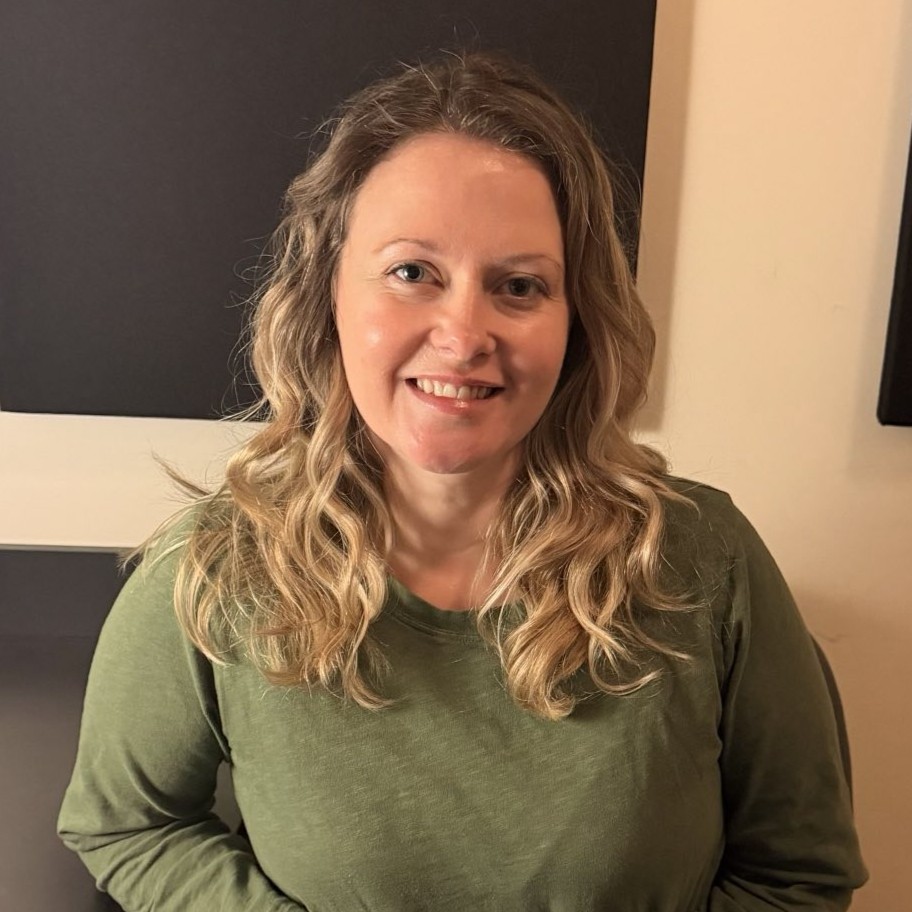
Hillary Kleck for School Committee Transcript
00:00:01
Burlington Buzz: Hey there. Welcome to Burlington Buzz on the mic. This is your host, Nicci Kadilak, and I'm here with candidate number two for school committee. This is Hillary Kleck. Hey, Hillary, how are you?
00:00:09
Hillary Kleck: Hey, Nicci. I'm good. Thank you so much for having me today.
00:00:12
Burlington Buzz: Yeah, thanks for coming. We do these interviews every year. We've been doing it now. I think this is the fifth year that we've done these. Fourth or fifth year that we've done these podcast interviews with candidates for contested roles. So we're just trying to get a feel for you.
00:00:27
Hillary Kleck: Great. I'm excited to tell you about myself. I tell everybody, I'm really an open book. I'm not always going to just come out and talk a lot, but you give me the questions, I got some answers. If not, I'll find them.
00:00:39
Burlington Buzz: Okay, wonderful. Well, I'm excited to introduce you to the community. So that's, you know, question number one.
00:00:45
Hillary Kleck: Yes.
00:00:45
Burlington Buzz: Who are you? What was this defining moment that made you decide to run for school committee this year?
00:00:51
Hillary Kleck: Yeah. So I'm Hillary Kleck, obviously. I'm a Burlington parent. I have a son at Fox Hill in the elementary school and then a daughter who's 21 who we've worked with the special education system, with the district. So she goes to Perkins School for the blind. She was born blind, multiple disabilities developmentally. So she goes there. But Lucas is at Fox Hill and loves it. So I've always been, I'll say, interested. You know, it's a passion. It's just part of who I am. I think as far as education, you know, my parents pushed me to learn and just be who I wanted to be. But, you know, they pushed me at school for sure to get good grades because they thought I could. And that's what we do with our kids. I mean, I think we're in just a, say, a challenging place, I think time right now that I like. I just feel like I can be someone I really love to listen and hear others experiences. I feel like my experience is pretty unique for having raised my daughter and all the things we've been through and ins and outs of education and everything that kind of intertwines with that, you know, it's our everyday lives. It's not just. You can't just put it in a box and be like, oh, this is education. You know, there's so many parts of our lives that come into play there.
00:02:27
Burlington Buzz: Yeah. And as a parent, I think as a parent, especially to a child with more needs than the average child, like, it Just does become your life.
00:02:35
Hillary Kleck: Yes.
00:02:35
Burlington Buzz: You have to become an expert in all of the things that are going on with your kid.
00:02:38
Hillary Kleck: Yes, 100%. And you stay up late nights and you learn things you never thought you'd learn before. Join all of the Facebook groups.
00:02:47
Burlington Buzz: Yes.
00:02:47
Hillary Kleck: Yeah, exactly. And there's so much more now than when my daughter was younger, but. Yeah, so it was just a time. She's. Now that my daughter is 21, she'll be transitioning to another program. She can only go to Perkins until she's 22. But it just. And I've always been very involved in, like, the SEPAC and million things at Perkins.
00:03:09
Burlington Buzz: SEPAC. Special Education Parent Advisory Council for those not in the know.
00:03:13
Hillary Kleck: Thank you very much. And so. And now that Lucas is in fourth grade, and it's just been a good time for me personally, where I feel like I can commit the time and energy and everything that, you know, this. That this position warrants and deserves. So it just felt like a good time to be able to kind of make that jump myself into the. Into the public school system. Education.
00:03:39
Burlington Buzz: Great. And that's a great segue to what, as you see, it is the role of a school committee member. And what is not the role of a school committee member?
00:03:48
Hillary Kleck: Yes, that's a good question. It's actually, you know, going around and getting signatures and talking with other people. Before everything was all official, that was a lot of the question came up repeatedly was, what does the school committee actually do? So I did look it up, actually, the policies, just to see, like, you know, what exactly are the responsibilities of the school committee? So, I mean, I see it or I see where I come in and what I would bring to the school committee. Like I said, I. I feel like the school committee and schools in general, public schools, like, we all come from so many different backgrounds, like, and experiences and children with different interests and learning profiles and, like, it's a big job for. For everyone involved. So I see the school committee is, like, what I would want to bring is more of listening and more proactive engagement. I think the school committee is doing a great job. I mean, like, look how great our schools are now and our students are succeeding. I just see that role as kind of helping lead the leadership, you know, the superintendent, the office of learning, teaching and learning. Let's kind of be the. Say the. Not fill gaps, but be the bridge between those offices and leadership with families, parents, the community.
00:05:30
Burlington Buzz: Great. The Burlington High School debt exclusion vote. Yeah. We've been through the wringer with Burlington High School Several years. It was a two year process with a school building committee to try to put forth a plan that the community could get behind. And in the end the community did not get behind it. What do you see as far as the next steps and how, as a school committee, would you shepherd those next steps forward?
00:05:54
Hillary Kleck: Yeah, I mean, I know right now they're going through the next application for funding, the MSBA application, which I. Looking at the research, it feels not promising. Looking at all the other schools or a lot of other schools in the state that you know, are probably in a worse position than we are. So that's, you know, disappointing. I don't think it hurts trying to get it. I mean it would make sense. So you don't want to miss out on, on money.
00:06:28
Burlington Buzz: Sure. But it's a high percentage reimbursement for a high, multi-hundreds of million dollars project.
00:06:34
Hillary Kleck: Yeah. So it's, it's not something we just like, oh, we're not gonna even do that or try. That would, that doesn't make sense to me. But as far as, you know, what do we do to move forward? I mean, like you said, people turned out in some good numbers, big numbers to say, no, we're not ready to spend this money. My questions are more of yes, we're in a crazy time to say the least right now. With what are the projections for finances? Everything's probably only going to get more expensive in the upcoming years. The needs for a new high school don't just disappear though. They're only going to worsen in what we see in just physics. But the fact is we have to do what's best for our students. And so I think I would like to know more about the people who voted no. Why, why exactly? Like is, were they not. They need more information? Do they not see this project as it was? You know, the final decision as what we should have. We've just got to get more collaboration, I think. And that may seem like high hopes for some, but we have to move it forward in some way. And you know, I would love to help get people excited about a new high, show them that the money is going to a really good place and what we're going to do with that money as soon as we can.
00:08:08
Burlington Buzz: Yeah, I mean, I think that it, it almost, it almost felt like there were some folks coming in later on in the process and saying, well, I don't agree with this, but not really having seen the two years of work that went into it and all of the opportunity, all of the options that were struck down because you know, community feedback or because it wasn't feasible or it was the wrong, you know, whatever. There's a lot of reasons. So how do we then raise awareness about this without going around to every single person in the community? How do we get that collaboration? How do we get people involved?
00:08:42
Hillary Kleck: I mean, I think. I mean, thinking of the different kind of just groups in some ways of, you know, we have parents and families who are more so directly invested. The educators, the people who, you know, come to work here every day. And so I think getting, like I said, I think there should be. I mean, if you want to get down to the details, like, let's have some open forums or like just friendly gatherings of what. How do we move forward? Throw some ideas out there. What gets you excited about a new high school? What are the real reasons, or more specific, not necessarily real, but more specific reasons of the money being the issue? I mean, I completely understand of like, no one wants more taxes, more money out of their pocket, but we, I think there just has to be more time to discuss on a rational basis and a level field of how do we move this forward? Because as much as parents and families want, it's still the rest of the community. You know, it has to agree that we're. We're in for this. Right.
00:09:54
Burlington Buzz: And the demographic that shows up to vote is not necessarily all parents and families.
00:09:58
Hillary Kleck: Exactly.
00:09:59
Burlington Buzz: You know, it's folks maybe who don't have kids in the school system or who are on fixed incomes or...
00:10:03
Hillary Kleck: Yes, totally. And I mean, that's all understandable. That does. That's not lost on anyone, I hope. But. But again, the reality is that our, the school needs some updating to keep our students moving forward.
00:10:19
Burlington Buzz: Yeah. Well, let's talk about curriculum now. Shift gears a tiny bit. The school department has been working on some updates to curriculum in the last few years. We've got a literacy curriculum that is brand new. At the elementary school level, we're adopting a new one. At the middle school level, we're working on math pathways, and there's a committee. And there's a committee working on health and physical education standards as well. We don't have those frameworks yet, but that's coming up. What do you see as how the school committee fits into this sort of curriculum development and approval process?
00:10:56
Hillary Kleck: Yeah. So I see it as kind of the checks and balances of why are we doing this? What are the specifics for the changes and updates, why are they needed? Which, I mean, I, I know we've seen Some different scores and things like that, but yeah, so I kind of see it as the school committee, as the, as the people to get into the nitty gritty of it. What, what are these exact reasons that, you know, parents, I mean, I spoke a little bit about this before, but it's a lot on parents to understand all of it. You know, we're not. We rely on the te. And I think we want to rely on the school committee and the leadership board to give us what is going to move our students forward in the curriculum and how that's going to be handled within the day to day of the educators. That's still another big part of it. But, you know, if my student, my sons, we've seen a little bit of the literacy, the. Excuse me, the literacy curriculum updates at Fox Hill, and they have the books that. I mean, he enjoys the books. I've asked him about that a little bit. Because reading is something he doesn't love.
00:12:21
Burlington Buzz: No, it's not his favorite. That's too bad.
00:12:23
Hillary Kleck: It's not basketball. But I mean, they're always willing to talk to me and give me more information and discuss everything. So I value that. But. And then with the math, I've heard a little bit. I'm not as experienced in that side with not having, you know, as a personal experience with the math curriculum. But it sounds like from what we came from to what we have now with the different options for middle school and then getting. And then going into high school with algebra and the other pieces, sounds like they made a great decision in my. My book.
00:13:04
Burlington Buzz: Oh, great. Okay. So, yeah, so speaking of that, like, implementation, where do you. Where do you think the school district and the school committee have done a good job? And where do you think maybe still. Still needs some work?
00:13:16
Hillary Kleck: Yeah. Yeah. So I'm excited about how we, how they're using data to drive us forward. Data is in my blood, I would say so. My current profession is in data. So I truly believe in the validity of using good data to move this forward because. And that doesn't have to be just numbers. That can be some good qualitative data on how things are going just on a one, on one basis or from educators, etc. But yeah, so I think that's a great step forward in looking at that. And I know Dr. Chin and the board and committee have been instrumental in that. I also think there's, you know, in the past several years we've made improvements. And thinking about like the lunch, at least at Fox Hill, I'm wondering if it's around the district now, I'm assuming. So, you know, with a lunch menu, with the buses, transportation. I know that's always an issue for everyone. Don't even get me started on the special education side of transportation. We could do a whole podcast on that.
00:14:41
Burlington Buzz: That is another can of worms.
00:14:42
Hillary Kleck: We won't open today, but. Yeah. So I think. I think we're moving in the right direction and for the right reasons. I think looking at just data I've researched in DESE and across other resources is. Yeah, I don't want us to fall behind in science and technology. I think math, that falls into play.
00:15:09
Burlington Buzz: You mentioned DESE. I just want to make sure people know that's the state department of education.
00:15:12
Hillary Kleck: Yes, go ahead. So, yeah, so I think. I think we should start sooner than later on science and technology. I know there's only so much, you know, people can do, but for the math curriculum, like I said, I think we're headed in the right direction and I'd be really excited to be a part of that process and be involved. I personally love math.
00:15:37
Burlington Buzz: Same.
00:15:38
Hillary Kleck: Yeah, go math.
00:15:39
Burlington Buzz: Math girls for life.
00:15:42
Hillary Kleck: But I think, you know, just being on the parent side of things and. And I would really like to see the school committee. I mean, I'm going to sound like a broken record, but I'm sorry, but communication.
00:15:57
Burlington Buzz: We haven't said that yet today. I don't think so. Yeah, it's definitely something important to talk about.
00:16:04
Hillary Kleck: Yeah. Because I think, like, we started out talking. I think a lot of people don't understand exactly what the school committee does and what we're. What they're here for. And so I think just getting that kind of little bit more engagement mobilized around parents and families would be really helpful. We, you know, like, through ParentSquare, I know we get a lot of information and it's fantastic. I also do websites and things like that in my history. So I would love to see, you know, the Burlington Public Schools website, maybe get a little revamp and maybe even a little data center in there of seeing some of these. A little more transparency in what these surveys are telling us and how the board and committee are taking those insights and being active with them.
00:17:03
Burlington Buzz: Okay, wonderful. So we've talked about the school committee role in curriculum design implementation. Things like the teachers are implementing. Let's just be clear. But we don't have school committee members teaching classes, as far as I know. But now, what about the parent role? Where do you think that parents rights over school and education end and professional judgment on the part of the school administration, district administration and teachers begin.
00:17:32
Hillary Kleck: Oh, that's maybe a can of worms now. Well, I think it's, I mean, honestly, in my experience, I feel like it's, I'm gonna say individualized, but I mean all parents and families have their own opinions and kind of philosophy with school and how they expect it to be handled. I mean, I know I have some friends that like the kids at school, the teacher is going to, they know best, they're going to handle things.
00:18:05
Burlington Buzz: Teachers are going to take care of the teacher part.
00:18:07
Hillary Kleck: Yeah. And like they come home and that's time for, you know, home time. And then there's others that, I mean we, we do a lot with outside school activities as well. So, I mean, I think it's. I 100% advocate for collaboration, communication, two way street. I know that's not always easy, but on so many basis, it's, I think helping the families, I would say get what they want. But understanding the families and where they're coming from can go a long way than just, you know, kind of ignoring things or kind of, you know, let's have a response. I like response, even if it's not what you want to hear more than just kind of silence. And in my experience, not necessarily with Burlington, but definitely in special education, sometimes it's, you got to push a little bit more. And maybe that should always be on the parents, but also some families and parents like you. I think there has to be like a good question of like where or maybe a couple of questions of where does this fall into policy and personal preference and safety and health of a student versus this is just what I want because it's on my mind right now. Or, you know, this is, this is our opinion. It doesn't matter what anyone else thinks. You know, things like that. It's. I mean, it's tough. They're very specific questions and things that I know people have that I wouldn't even pretend to understand from without hearing from them first.
00:20:10
Burlington Buzz: Yeah. So, you know, kind of going along with that. You partially answered this already, but I just want to give you an opportunity. So what if a parent comes to you as a school committee member or to the school committee as a whole? It's a public meeting about something that's being taught or something that's being not taught in the schools. What do you think a good response is from the school committee?
00:20:32
Hillary Kleck: Well, that's a, that's a good one. I mean, I know we've had these questions come up in school committee meetings recently. I mean, I don't think there should be just a canned, you know, premeditated response necessarily. I mean, I think it should always be explored, investigated, if it's complaint, things like that. As far as what's being taught or not taught, I mean my, I'd say my personal philosophy, but as a school committee, again, I think I'll say it's how does this affect the student, students, families, the educators of, of safety, Whether that's mental or physical, emotional safety? Is it. How are others responding to it, if others are involved? I think there's just a lot of questions. I would, I think I would, I guess ask questions before having a response to really understand the situation, not make assumptions.
00:21:46
Burlington Buzz: We're coming to an end here. I do have some final questions for you. There's four total candidates and you are one for two seats. So what, what sets you apart from the other folks that are running alongside you?
00:22:02
Hillary Kleck: Yeah, I mean, not to put them all in one group, but I would say, you know, I am a parent of our current Fox Hill elementary student who will be going, if all goes as planned, to the middle school and to the high school here in Burlington. So I'm very invested personally with, with how the schools continue and grow in the next several years. But as, as with my daughter, I've seen, not here, but you know, in other words, systems we've been in and other places just around, you know, outside of school, there are a lot of students and families that are being excluded and, or have problems or issues or just, even just things they love, they want to continue. Not to sound all negative, but I love to listen to people and understand their experiences. I want to advocate for people who don't necessarily have the time or energy or understanding or resources to be able to speak up more. So I really want to listen and help progress and be able to help the school committee learn a little bit more about what families and, and even community citizens are feeling about the schools.
00:23:36
Burlington Buzz: Great. And what would be your top two priorities in the next three years? I'm going to ask that again with my face next to the microphone. What would be your top two priorities in the next three years if you're elected?
00:23:51
Hillary Kleck: My top two priorities would be long term planning, more investment in that and looking ahead, being proactive, working. I think that also entails working more with other departments of the town, government and community. And then my other priority would be, I'm going to include data in all of these and communication. Let's just lump all that in there. But as far as the communication piece is. Yeah, that would be bridging gaps, engaging parents and families in the community, definitely in positive ways. There are other things. There's so many modes of communication right now, it's hard to be everywhere. But you want to be transparent and holding everyone accountable too. I think so. I would just like to. I mean, that's kind of a vague general answer, but let's pull all these resources together, like all this data that we have, all of the meeting minutes and communication that's going around. Let's pull all these together and make even, I'm going to say a central database, a central place where people can come to and say, hey, I have this question. Who do I ask without going through five channels of, of emails or phone calls? So just, just bringing together kind of one. One central place that people can get their answers and speak up or, you know, whatever they need to, they feel like they want from that.
00:25:32
Burlington Buzz: Great. What is one thing that you would like voters to understand about you that they might not already know?
00:25:40
Hillary Kleck: Let's see. One thing that's done.
00:25:47
Burlington Buzz: You gotta pick one.
00:25:51
Hillary Kleck: If I had to just say one thing is I hope voters know that I care. Yeah, I mean, I guess we should hope that everyone cares, but I'm devoted to this and we'll work really hard for everybody. Great.
00:26:11
Burlington Buzz: Alrighty. Well, that brings us to an end here today. Hillary Kleck, thank you for being here.
00:26:16
Hillary Kleck: Thank you very much.
00:26:17
Burlington Buzz: And Hillary is a candidate for the school committee election. We will be holding that election on April 11 from 8am to 8pm at BHS Gymnasium. But early voting will be starting on March 30 and run through April 8. So if you have any other questions about that, you can check in at Burlington Buzz and get all of your election related information and we'll see you next time.
Aaron Reeves is a first-time candidate and Burlington resident since 2020, when he and his wife moved here with their family. Reeves has six kids, all educated at home. Reeves previously worked with a Christian nonprofit in Somerville focused on developing young people, an experience he says is central to why he wants to serve on School Committee. A musician and audio producer, Reeves says he brings a newcomer's perspective to questions about trust, transparency, and academic standards in Burlington's schools.
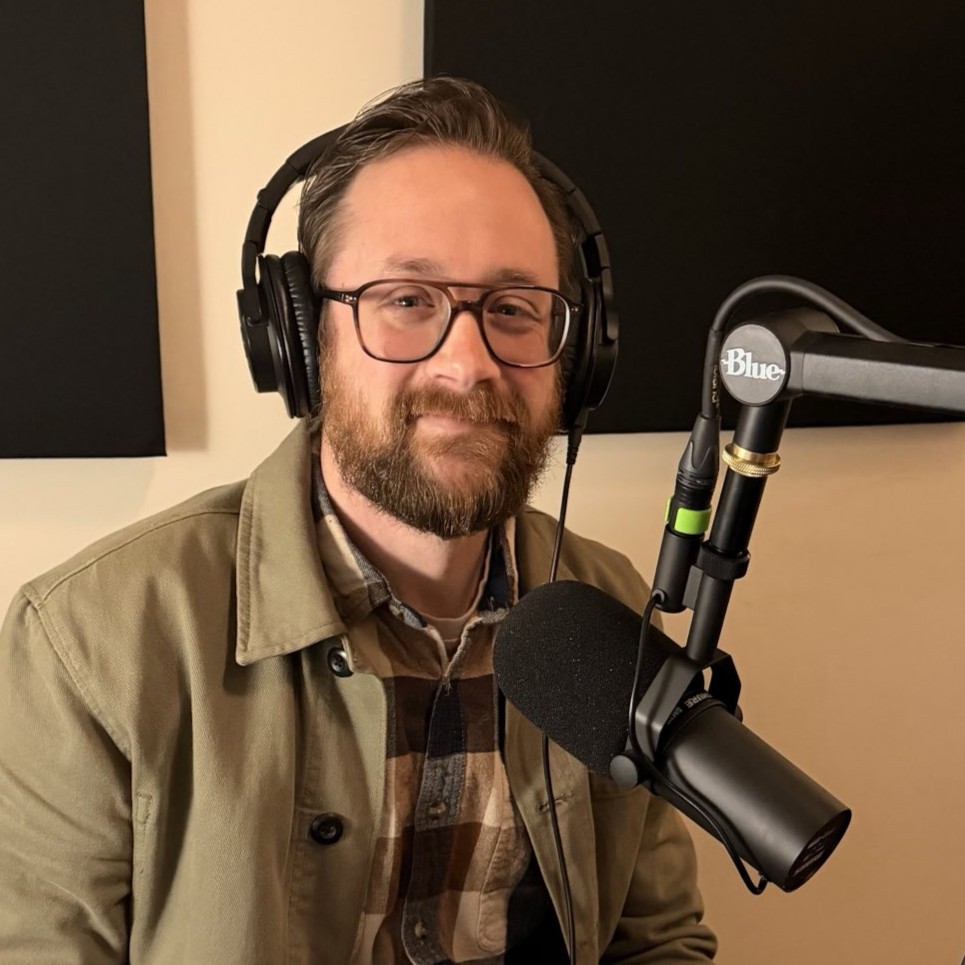
Aaron Reeves for School Committee Transcript
00:00:02
Burlington Buzz: Hello and welcome to Burlington Buzz on the mic. This is Nicci Kadilak and I have Aaron Reeves here. Hello, Aaron. How are you?
00:00:11
Aaron Reeves: Hello. I'm doing great.
00:00:12
Burlington Buzz: Wonderful. So Aaron is one of four school committee candidates this year for two seats on the school committee. And we're here just to get a sense of who Aaron is, why he's running, and all of the important things that listeners are going to care about. So. So, ready to get started?
00:00:28
Aaron Reeves: I am.
00:00:29
Burlington Buzz: All right, perfect. So let's get started with just the easy ones. Who are you? What is the sort of precipitating moment that made you decide? I am going to run for school committee this year? Sure.
00:00:40
Aaron Reeves: Yeah. Well, again, my name is Aaron. I'm a resident of Burlington since 2020.
00:00:46
Burlington Buzz: Okay. Ooh, that was an interesting time to move into this town.
00:00:49
Aaron Reeves: I know, right? Well, it was interesting. Our friends lived here and we would visit them all the time and then they chose to move away in 2020, and the owner of the home that they were renting offered us to start renting the same home. So we moved essentially into our friend's house. So that was fun. And we always dreamed because we lived in Malden at the time and we lived there for a long time. I was like, man, it would be great to get into Burlington. It's a great town. And so it was kind of a dream come true to come to Burlington. And man, we fell in love with the town. It's incredible. We love living here. And yeah, I say we. I'm. I'm married. I have six kids.
00:01:28
Burlington Buzz: Oh, okay.
00:01:29
Aaron Reeves: I'm 37. With kids you lose track after a while. Oh, my gosh. Yeah. And. And the more kids you have, the harder it is to remember. Cuz kids age you, but.
00:01:39
Burlington Buzz: And they age themselves as well.
00:01:41
Aaron Reeves: Right.
00:01:41
Burlington Buzz: So, like, you have to remember a lot of different ages now.
00:01:43
Aaron Reeves: Yeah, my oldest is 13 and he is bigger than I am. He's incredible. And yeah, I love my children. It was always a dream, you know, for my wife and I to have a lot of kids, and we fulfilled that dream.
00:01:56
Burlington Buzz: Okay.
00:01:57
Aaron Reeves: So now we're living it out.
00:01:58
Burlington Buzz: Mission accomplished.
00:01:59
Aaron Reeves: And yes, we are done. If anybody's wondering that six is. We were like, yeah, six is good. So that's where we're at. And yeah, the reason, you know, I wanted to run for school committee, it kind of, you know, a lot of people are like, man, you're kind of a newcomer. Nobody knows you up to this point in time. Haven't really been, you know, super engaged with a ton of town events and things like that. Apart from, you know, in my line of work, I love, you know, engaging with local churches and things like that. So apart from that, didn't really get involved in a lot of Burlington stuff. We go to Burlington Day and fourth of July. I love all that stuff.
00:02:41
Burlington Buzz: It's amazing.
00:02:42
Aaron Reeves: But government's different. Yeah, government's a little different. And honestly, my entire life I've always been attracted to government stuff and engaging at a political level. But, you know, just because of the season of the life of life I was in, it never, you know, became an option for again kind of background. For almost 20 years, I served with a Christian nonprofit out of Somerville.
00:03:06
Burlington Buzz: Okay.
00:03:06
Aaron Reeves: And my focus was developing young people. And we would. We would have college age students come in for, you know, semesters during the year and then in the summers and. And then throughout the year we would invest in young people, high school and younger. And because that was like a very intense lifestyle, we were traveling all the time and, you know, getting engaged at a local level was very difficult. But I left that job at the end of 2024. Shortly after, I started doing work with my audio company. And I was like, man, it'd be cool to maybe pursue some of those dreams. So I just started asking around and I had a few friends locally that suggested, like, hey, we, there's an election coming up for the Burlington school committee. Have you ever thought about doing something like that? And I was like, no, that sounds interesting. Might be fun. And then most of the people I talked to were like, why do you think that would be fun? It's just like, I've had a lot of people who are like, that's an interesting thing to call fun. And I was like, well, it's. It's serving, you know, it's serving our town. It's getting engaged with what's going on in our community because we're a community, right? And I'm a people person. I love connecting with people of, you know, we share the same values or not, it doesn't really matter. We're all humans and I love connecting with people. So I was like, this could be a great opportunity to get to know our town more and serve in a. In a significant way. And I really believe in the next generation. Like, I want to help as much as I can, prepare young people for their futures and discover what they're good at, be prepared to, you know, dive into society and contribute. So that's kind of the reason I'm running. And, you know, there's all the Other stuff, you know, little things on the side, but at the core of it, that's why I just want to help. I want to help our community. And I love Burlington, and as long as we live here, I'm like, might as well try to serve and, you know, make good happen here. So.
00:05:07
Burlington Buzz: All right, so let's talk about the school committee role itself. Right. What do you see as the. The sort of charge of the school committee member and also, like, what isn't in. In the purview or the charge of the school committee?
00:05:18
Aaron Reeves: Yeah, so I'm new to town politics, obviously. When I started to think about running, I. I began to do research and look at, you know, what is the role? That was actually one of the biggest questions that I had when my friend suggested I run. I was like, what's the school committee actually do? What's their job? And from what I found, you know, with Google and online and even from the town, my understandings are the responsibility of the school committee is to be accountable to the superintendent and to represent parents well and. And, you know, create policies, oversee the budgets of, you know, our incredible schools here. And I think, you know, after you know, reading all of the, you know, the hard data, the, you know, the textbook definitions of the school committee, I, you know, kind of maybe ideologically or believe the purpose of the school committee is to maintain and build trust with our parents and ensure that, you know, their students, their kids, are being trained with the greatest education and academics possible so that they're prepared for the future. And obviously, there's everything else gets encompassed within that. But I don't think we can have a strong school committee without strong trust between the parents and the school committee, because the parents are. Are releasing their children into the hands of these, you know, centers of education, which is a huge deal. And it's so important that, you know, schools stay focused on the academic portion and support parents in their decisions, you know, when, you know, different things come up. So I think that is kind of the main point and. Yeah.
00:07:17
Burlington Buzz: Cool. All right, we're going to talk about curriculum in a minute, because I do think curriculum is a large part of the conversation, 100%. First, though, I want to talk about something that's near and dear to our hearts as we sit here in the Burlington High School building, which is bhs.
00:07:32
Aaron Reeves: Yeah.
00:07:33
Burlington Buzz: So this will be my fourth time saying this, but we have been through the ringer here at BHS the last couple years. There's been a building committee that was established to do a feasibility study, try to Produce something that was going to be agreed upon by the community. The community could really get behind it, and they did not. It turns out that the community was not supportive of the plan that was put forward. And so kind of back to the drawing board. So my question for you is, what do you see as the next steps here? And as a school committee member, how would you kind of shepherd those next steps forward?
00:08:06
Aaron Reeves: Yeah, that's a great question. Yeah, I think the. The town voted. It was. It was pretty like, vocal in that and I think historic turnout as well. And yeah, I think the next steps for this, again, we're kind of back at the drawing board. I think the town wasn't against something nice for the high school. The town was against the plan and wanted to see a better representation of dollars spent and wiser planning, more thorough planning. I think one of the, personally speaking, one of the issues that I had was not having the state funding. Where you look at other schools that are being built across the state before they even propose, they have, you know, the plan, they. They've secured some sort of state funding. So I would like to see and, and help, you know, maybe hire a grant writer to do the work that we need done professionally to get that grant so that we can, can build. And I, I think there's a lot of people in the community that can, you know, give their resources and, you know, resources, not maybe money, but the, the skill and the time in order to come up with a solution. And so again, I came in, you know, obviously I came out and voted for that. I came in kind of late with the whole project and, and so the, the build up of it, you know, I, I didn't. I wasn't a part of every conversation leading up. And I know those things. You know, for, you know, one side, there is already a lot of meeting and, you know, there's the feasibility study and things that go into it. And I don't want to discredit the hard work that was already put into it, but it seems like there could have been other options and just other avenues explored. So again, for myself, you know, if I'm elected into this position, I will work hard with other school committee members to find another plan and be transparent about that all the way through. Not just kind of showing what I want to happen, which kind of feels like what happened, but, you know, saying, hey, here are all of our options. We could be creative and find it. So I think what's important as well is that we. I was talking to a friend last night about this, the school building, yes, we want it to be great, but we want our scores and, and the educations of the students to be strong as well.
00:10:54
Burlington Buzz: Yeah.
00:10:54
Aaron Reeves: And statistically we're struggling as a school system compared to other, other schools in the state. And so there's all this emphasis right now on obviously we have a physical need which when you have a physical need it's hard to ignore.
00:11:12
Burlington Buzz: Right.
00:11:13
Aaron Reeves: Ignore it. But I think getting our academics more balanced with what we're spending for our teachers pay and, and things like that, like, kind of like let's see some better results before we throw a bunch of money at a new school. Because I'm a little bit old school in the, in the mindset, like we can make old things work as long as, like they're, if we can create a great result. And actually even in my line of work, that's kind of what I'm really good at. You know, and just for preference for everybody listening because we were just having this conversation beforehand. I'm, I own an audio company. We service churches and venues all over New England and a lot of, a lot of places have outdated equipment that's not adequate most of the time to do the job. And, and so my company specializes in turning that equipment into kind of a world class or professional, giving those kind of results. And we're really good at being resourceful. And so I think that's something that I can bring to the team and hopefully create, you know, create solutions where there's, you know, obviously these problems. I hope I'm making sense here.
00:12:33
Burlington Buzz: No, I think you are. So I do have a follow up question though.
00:12:35
Aaron Reeves: So. Sure.
00:12:36
Burlington Buzz: You mentioned you, you came in late in the process. A lot of people did. I think there were a lot of folks who were like what, $330 million? No, thank you.
00:12:43
Aaron Reeves: Sure.
00:12:44
Burlington Buzz: Didn't necessarily follow those two years.
00:12:47
Aaron Reeves: Yeah.
00:12:47
Burlington Buzz: And so I guess my question is, and I've asked everybody this, how aside from going and knocking on 10,388 doors, how do we bring more from the beginning so that people are aware of all the work that's been done and they feel like they're invested and involved and informed about this project so that when the vote comes, there's not. I don't want to say that this was a surprise or it wasn't, but you know, that we sort of know what we're going to get.
00:13:15
Aaron Reeves: Yeah, I think that's such a great question. Well one, I think efforts like yours here at BCAT and the Burlington Buzz, you know, they're they're great sources of information and engaging people to get them involved early on. You know, do we need more, you know, stations like this in Burlington communicating or just more people or more people
00:13:40
Burlington Buzz: reading that or watching that?
00:13:42
Aaron Reeves: Yeah, sure. I mean, door knocking is super effective. I've been doing it a lot.
00:13:48
Burlington Buzz: I bet you have.
00:13:49
Aaron Reeves: But, yeah, I think, you know, leveraging social media, leveraging, you know, the digital platforms that you guys have, and I mean, even leveraging young people to be advocates for these things. Because I think, you know, Gen Z and beyond, they're great with all the digital, you know, interfaces, so they could get out there and, you know, help their parents engage at this level. Because I think, you know, we have so many incredible people in our town. Surely there's a. There's a way to solve this issue right, where, you know, we're. We're not dividing each other. I think that that's the other part. It kind of left a bad taste in my mouth. There's this kind of division that we feel like the schism between people in our town over this debate where it's like, oh, these people, you know, some people are saying, you know, nobody cares about our students. But I think the reality is everybody cares about our students. We all really care. We just really want a solid plan and we have to be willing to listen to both sides. And that's a hard thing to do. But at the end of the day, a decision that's made probably is not going to please every single person. But, yeah, I think there is a path forward for this. It just takes a little bit more planning and. Yeah.
00:15:03
Burlington Buzz: Okay. Okay, now onto curriculum. Here we go.
00:15:07
Aaron Reeves: Great.
00:15:08
Burlington Buzz: So curriculum decisions involve a lot of people you've got. Right now, the school district is in the middle of adopting a new English language arts curriculum, developing new math pathways, also working on science curriculum, also working on health and physical education frameworks. So my question for you is, what do you see as the. The role of the school committee in the process of that curriculum adoption? And we'll go a little bit deeper into that as we move along.
00:15:37
Aaron Reeves: Yeah, well, make sure it's teaching strong academics, things that are going to prepare our students, like I said earlier, to integrate into society. It's as simple as that. I mean, is the curriculum teaching them what they need to know without, in my personal opinion, all the fluff, like all the extra stuff added?
00:16:02
Burlington Buzz: What's the fluff? What's the extra stuff?
00:16:04
Aaron Reeves: It could be. You know, let's. When curriculums kind of deviate from just keeping, you know, let's, let's talk about math or let's talk about, you know, do we need agendas like the LGBT and, or even, you know, if you were to flip that, like Christian ideologies or Islamic ideologies or, you know, things that we use for examples in these curriculums. Again, they're, they're so diverse. So you have, you have to create things in that. If we keep those things to the core of what it means, like, hey, let's teach our kids how to do good, good things again, without. Without bringing in extra agendas. I think that's important because when you bring in ideologies into, like, a math class or an English class, that might be different from a home, a household that disagree with that ideology, that's up to the parents. Like, it's hard to, like, send your kids to a place where, you know, they're learning things and being taught things in a way that's partnered. Maybe it's not directly teaching, like, hey, you need to believe this, but if those ideologies don't align with the household, then it's. It's still being taught in an inadvertent way. And I don't think that's. I don't think that's right. Kids aren't coming to school to learn ideology or spirituality. They're coming to school to learn academics. And that's great. They should, we should just focus on that. So sorry, I stumbled about my words.
00:17:39
Burlington Buzz: That's okay.
00:17:39
Aaron Reeves: We'll clean it up a little bit. Yeah, sure. And, yeah, I don't want to come across, like, I know there's so much work that goes into choosing a curriculum and even, you know, the companies that create these curriculums, but I think we need to be careful to honor and respect parents wishes and how their kids are being taught.
00:18:00
Burlington Buzz: All right, so that is a perfect segue into the next question, which is where is the line? How do you balance the. I think there were five things that I enumerated in my last podcast. So you've got the school committee, you've got parents, you've got teachers, you've got school administration, and you've got district administration. So where does that line between sort of parental rights or control over what their kids learn versus, you know, trusting the professionals to execute and implement 100%?
00:18:33
Aaron Reeves: Well, it's. I think this is the role of the school committee ultimately. Right? We need to listen to the parents, we need to hear their concerns, and then we need to make sure we're Communicating and creating policies around the curriculums being brought in that reflect those concerns with the parents. And I think as long as we're doing that, people will be happy and students will get great educations.
00:19:01
Burlington Buzz: Are there specific areas in the curriculum where you think that the school is. Schools, school committee, school department are doing a good job, and then are there areas where you feel like more needs to be done?
00:19:15
Aaron Reeves: I think the place of improvement could be in making what is in the curriculum more accessible and understandable. And I, you know, I've watched several of the school committee meetings, you know, in the last several months, and I have appreciated Dr. Chen. She's. She. She's someone that does the curriculum.
00:19:46
Burlington Buzz: Yeah, she's the assistant superintendent, and she's been working a lot on curriculum review.
00:19:50
Aaron Reeves: So I've appreciated the work that she's put into that because, you know, it's. It's easy to look at someone and what they're doing, and even if you disagree with some of the content being brought in, just to write it off. But it was like, hey, that's a lot of work. And so. But I think it has been difficult from just talking to parents in town, it's difficult to find out what's at the core of a lot of these curriculums. And so that raises the question, are subvert ideologies trying to be brought in to. That are not in agreement with certain family values? And so just like, families just want to know. It's like, hey, are my kids going to learn about this sex or, you know, or, you know, in some of these, you know, curriculums, or, you know, different things about what they. What they should believe and how they should call each other and all this stuff, kind of bringing it just back to the basics. So. And just being able to, like I said, let's just find. Is there a way to find out what's in these curriculums clearly and give it to the parents? Like, hey, here it is. It's easy.
00:21:06
Burlington Buzz: When a parent does come to the school committee with a concern about what's being taught at school or what's not being taught at school, what do you think is an appropriate response from the school committee?
00:21:16
Aaron Reeves: Thank you for sharing your concerns. I think acknowledgement of the concern is so important. In my previous job, I worked with people all over the world, and we had a staff of about. I think, at our greatest, we had about 40 people, and all of them are between 18 and 25. So they're young.
00:21:41
Burlington Buzz: Okay.
00:21:41
Aaron Reeves: And one of the things that I learned quickly in leadership, especially when I'm leading very kind of passionate young people, full of vision is that one. They have their way of doing things, they want to do it. And I have my way of doing things, but I'm the one in authority and leading. And maybe they don't see the whole picture. And so when conflict inevitably arises, as a leader, you need to, despite your own preferences, you need to make sure that the person opposing you or is challenging your authority or doesn't quite fully understand the full picture is heard, whether they're right or wrong.
00:22:24
Burlington Buzz: Yeah, that's so easy to just.
00:22:26
Aaron Reeves: It's so easy.
00:22:27
Burlington Buzz: I disagree with you or I know more than you.
00:22:29
Aaron Reeves: Yes. And I think we see a lot of that in our culture, unfortunately, politically is. I disagree with that. I'm not gonna listen to you. Your, Your argument is invalid. And we pick and choose and I think we need less of that. We need more just like open, honest conversation. And we need to kind of, yeah, weep with those who weep, have joy with those, you know, celebrate with those who are celebrating and you know, to quote the Bible. But yeah, we need to listen and really care for each other. And that's what I'm committed to, you know, listening again, it doesn't mean I will always agree. It doesn't mean that always probably do what someone wants me to do, but I will always commit to listen and hear someone out again. I believe the greatest way the school committee can operate is to. It is that kind of two sided coin of maintaining the trust with the parents and providing that kind of strong academic base for our students. And I don't think you can have one without the other. So. Yeah.
00:23:47
Burlington Buzz: All right, we are coming to an end here, but I do have some final questions for you. First and foremost is what is it that sets you apart from the other candidates? There's four candidates, two seats. Why are you a good fit for this role this time?
00:24:02
Aaron Reeves: Am I allowed to be funny?
00:24:04
Burlington Buzz: I mean, I don't know if you've met me, but we do have fun.
00:24:07
Aaron Reeves: I have a nice beard that sets me apart right there, but it's not as cool as Jeremy.
00:24:13
Burlington Buzz: I was gonna say. I feel like Mr. Brooks is running on beard.
00:24:15
Aaron Reeves: If you got me like a year ago, my beard was almost down to my, my belly. It was really long, but I couldn't keep up with it. It was so much work. There's all this stuff you got to put in it so your skin doesn't get dry. And no one wants to hear about that on this podcast. No, you know what? I. What I Think I bring, I bring in a different point of view, a different perspective. I think, again, I'm very appreciative of the people serving our committee. And, you know, I'm running alongside of Katherine and of Jeremy and Hillary. And, you know, I'm right now, if you just look at demographically who's on the committee right now, you have four women and a man. I think it would be cool to have more men on the team. And I think, you know, that kind of combination of diversity could lend itself to, again, some of the issues that, you know, I've brought up greater trust with parents and maybe, maybe greater solutions or more solutions that everybody across the board might, you know, agree with or be supportive of. So I think that's what I bring. And it could, it be, it could be cool. As a young man, you know, I'd probably be the youngest in that, that group as well. I don't really know anybody's age, but
00:25:33
Burlington Buzz: I say you're probably right. Yeah, just like mental, mental math here.
00:25:37
Aaron Reeves: Yeah.
00:25:38
Burlington Buzz: What do you. What would be your top couple priorities in the first, you know, in, in the three years that you are elected? If you are elected?
00:25:46
Aaron Reeves: Rebuilding trust with parents in our community would be number one. Making the curriculums that are coming in just more accessible for parents to see and understand.
00:25:55
Burlington Buzz: Okay.
00:25:56
Aaron Reeves: And I think with the, obviously, I think what we talked about at the beginning, this, this whole school project issue, creating, you know, working with committee members and subcommittees, you know, with a lot of passion on and urgency to come up with a feasible solution, you know, for this high school. And, you know, I think raising the academic standard for our whole town. Those are all things that I would work very hard on, you know, in those, in those three years.
00:26:28
Burlington Buzz: Great. What is one thing that you want voters to know about you that they might not already know?
00:26:35
Aaron Reeves: I'm a musician. I play every instrument that you would see on a rock band.
00:26:41
Burlington Buzz: Okay.
00:26:42
Aaron Reeves: So, yeah, drums, guitar, bass. I produce music. I love, I love music a lot. And again, I don't know how that helps me in this scenario, but it actually is a, is a kind of a low key dream to like play on a Fourth of July float. Just like rock and roll, go America kind of music.
00:27:10
Burlington Buzz: Okay.
00:27:11
Aaron Reeves: So I don't know why I'm sharing that on this podcast right now, but I'm sitting in this podcast studio and I was telling the world that dream right now. All right, well, maybe you'll see me on a float this year. I could make it happen.
00:27:21
Burlington Buzz: Since you shared, I will share that My dream was be a professional singer when I was a kid.
00:27:25
Aaron Reeves: Oh, awesome.
00:27:25
Burlington Buzz: Yeah, Yeah, I loved it.
00:27:26
Aaron Reeves: Oh, that's so great. Hopefully you still sing, though.
00:27:29
Burlington Buzz: I. In the shower, in the car, or anywhere else. Actually, I think probably anybody within the sound of my voice has heard.
00:27:37
Aaron Reeves: Oh, that's great.
00:27:37
Burlington Buzz: Something.
00:27:38
Aaron Reeves: Oh, that's great. Yeah. Do you play any instruments?
00:27:40
Burlington Buzz: I play the piano.
00:27:41
Aaron Reeves: Okay.
00:27:42
Burlington Buzz: Yeah.
00:27:42
Aaron Reeves: Awesome.
00:27:42
Burlington Buzz: Yeah, Yeah, I did that when I was little.
00:27:45
Aaron Reeves: Awesome. Fellow musician here. So that's great.
00:27:48
Burlington Buzz: Love it. All right, well, Aaron Reeves, thank you so much for joining us today. For this, um, we will see you at the polls. The election this year is April 11th. It will be at Burlington High School in the gym from 8 o' clock in the morning to 8 o' clock in the evening. Early voting starts on March 30th and ends on April 8th. That's at town hall during regular business hours. And mail in voting starts soon. I don't have a date for you right now, but I'm sure that you can find it on the town website. If you need any more information about the election, please go to Burlington Buzz or visit BCAT's Election Resource center and we'll see you next time.
Episode Notes:
Recorded at BCAT’s Podcast Studio - Thanks, BCAT!
Theme Music:
fight by urmymuse (c) copyright 2018 Licensed under a Creative Commons Attribution (3.0) license. http://dig.ccmixter.org/files/urmymuse/58696 Ft: Stefan Kartenberg, Kara Square