Why I Donated 60% of My Liver: A Living Donor’s Story for National Donor Day
On National Donor Day, columnist Bill Boivin reflects on donating 60% of his liver to save a friend — and how organ donation changed both their lives.

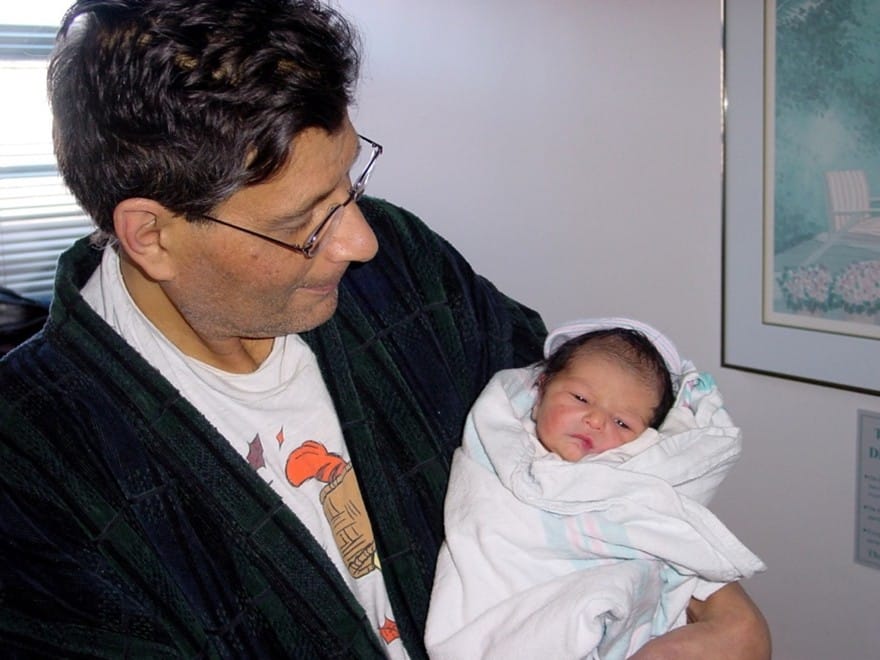
Seventeen people die each day while on a transplant list. There just aren’t enough organs to meet the needs of everyone who needs one. In honor of National Donor Day (February 14, 2026), I am sharing my experience as a living liver donor in the hopes of inspiring others to consider taking a life-changing step for one of the thousands who are desperately in need.
In 2002, at the age of 51, I donated 60% of my liver to a friend whose liver was destroyed by hepatitis C. It was one of the most significant experiences of my life and possibly my proudest accomplishment. It was also a difficult experience, both emotionally and physically. Now, more than 20 years on the other side of it, I wouldn’t change a thing.
Living Donation: Meeting the Urgent Need Faster
Over 100,000 people are on waiting lists for replacement organs in this country — mainly kidneys and livers — and the number of people awaiting organs greatly exceeds availability.
There are only two main sources for organs: cadavers and living donors. Cadaver organs are not enough to fill the need. An increasing number of facilities perform living donations, including Lahey Hospital right here in Burlington. Living donation has two main benefits: the donor directs where their organ is going, and the recipient can receive the organ much sooner than from a cadaver — while they are stronger, healthier, and better able to handle major surgery.
A Friend in Need — and a Split-Second Decision
I had hired Frank, a mechanical engineer from Wyoming, into my working group at the FDA lab in Winchester. Some years later, he was diagnosed with hepatitis C. By the time symptoms appeared, he was already near the end of a long, steady decline. His liver was failing.
At that time, there was no magic pill like there is today. Hep C was a death sentence; a transplant was the only option. Even that would not cure his disease — it would simply replace his destroyed liver. Since the disease had taken up to two decades to destroy Frank’s liver, the hope was that a new liver would give him another 20 years.
Doctors estimated Frank had about six months to live, but the wait list for a cadaver organ was about two years. Frank did not have that kind of time!
Walking through the conference room at work, I passed Frank talking with a group of friends about his need for a transplant and the urgency. Instinctively, I stopped in my tracks, pivoted, and said, “I’ll do it.” It was one of those moments in life etched into my brain forever.
Making the Match
In any tissue donation, compatible donor-recipient matching is essential. Some, like bone marrow transplants, require extremely specific multivariate matching that can involve screening thousands of potential donors — and still, many never find a good match.
It was surprising how minimal the requirements were for liver donor-recipient matching: blood type, health of the donor’s liver, and appropriate size and “wiring.” (Wiring? I can hear you asking. The blood vessel configuration had to allow for removal of one lobe and connection to the recipient. Occasionally, unusual vessel configurations would prevent this.)
Preparing Body and Mind (“Pre-Hab”)
There were many pre-surgery tests and consultations. I underwent multiple CAT scans, ultrasounds, MRIs, blood tests, a liver biopsy, and even psychological screening. It was easily the most thorough physical I have ever had. (Fun fact: the recipient’s insurance pays for all donor medical expenses — sometimes even transportation, lodging, and lost work.)
Quality of surgery is extremely important, as is quality of rehab. But I strongly believe an equally important part of elective surgery is what I call “pre-hab.”
There were three months between volunteering and surgery. I changed my diet, gave up alcohol (for three months before and six months after), doubled yoga to four times a week, and added massage therapy, chiropractic care, and visits to an herbalist. I wanted Frank’s piece of my liver to be the best available — and my remaining piece able to withstand the shock of being split in half.
The Main Event
Our surgery was done at Tufts New England Medical Center in Boston. (Lahey was not yet performing transplants.) I made it clear to my wife Jane that she had complete veto power right up until the moment of surgery. Frank totally agreed with this. The surgical team said in writing that I could withdraw from the procedure at any time and if I did so, they’d simply cite “technical/medical factors as the reason for his withdrawal.” In other words, If I wanted to back out, they had a cover story ready to go! How thoughtful of them.
I don’t remember much about the day of surgery, but one moment stands out. In the pre-surgery holding room, I spoke with a young boy of about eight in the gurney next to mine. He was awaiting brain tumor surgery. That hit me hard – the challenges ahead of me were minor compared to what he was facing. A wave of gratitude swept over me. I had lived 50 years of life and was still healthy enough to give a piece of my body to save another human being. As I counted backward from ten, all I remember is wishing that child well.
I woke up and immediately asked how Frank was doing. Jane and Frank’s wife told me he was still in surgery and would be for a few more hours. I hadn’t considered previously that my surgery would be shorter than Frank’s, but it made perfect sense. For my operation, they simply cut the liver piece out and sealed off the severed vessels. For Frank, each and every blood vessel and bile duct had to be delicately reconnected. My surgery was four hours long; his took more than 10.
The Road to Recovery
When fully awake, I assessed my condition. Attached to my body were tubes: a breathing tube (which thankfully was removed almost immediately after surgery); a central line (inserted through the carotid artery in the neck directly into the heart); a urethral catheter; and an IV in my arm for administering pain meds. (The “a bit more” push button for the pain meds would come in handy in those early days.) There were also two “Jackson-Pratt” drainage tubes sticking out from the 20” long, stapled incision in my abdomen.
I was in no pain, but that initial assessment took my breath away. Being the Sci-Fi geek that I am, I had to continually remind myself of the guidance from Hitchhikers Guide to the Galaxy: “Don’t panic!” I was hospitalized for 8 days, time I spent frequently talking myself down from hyper anxiety.
At home, I rested a lot and cut back on the pain pills, knowing if I masked the pain I’d be prone to overdo it.
It was spring, and I spent a good amount of time sitting in my beautiful yard. Visiting nurses came daily at first, so thankfully, I did not have to travel into Boston for the immediate follow-ups. At about the two-week mark, I carefully walked to the end of the driveway and back. Every day after that I added 10 or 20 steps to my walk. At an early follow-up visit into Boston the last drainage tube was removed, and I was finally back to my intact self. At that point I knew I was going to be totally fine; it would just take time.
There was still a long way to go, however. My remaining liver was still in shock and would be for a month or so. It was not yet making all the enzymes that it had prior to surgery, and so I had major dietary restrictions. I lived mostly on juices and chicken soup. A big treat would be wonton soup from the local Chinese restaurant! It took about 6 weeks until my traumatized liver began to generate all enzymes and I could eat normally again. I lost 26 pounds before my diet returned to normal.
What my body did after surgery was mind-boggling. It regenerated my liver! My liver grew back to about 85% of its original size. Frank’s larger piece of my liver grew to 95% of my liver’s original size. And all that growth took only 12 weeks!!!
I was back to work in nine weeks. At the time, I was active duty in the US Public Health Service and stationed at the FDA. PHS HQ had approved the leave for my surgery and recovery, since I was donating to another FDA employee.
I had decided my rehab would be complete when I once again was able to do 250 sit-ups a day – and I reached that point after about eight months. Twenty-one years later I am in excellent health with no dietary restrictions or any other aftereffects from the surgery.
Today, in honor of National Donor Day, please at least make it clear to loved ones and on your driver’s license that you agree to be a cadaver donor of as many parts as possible.
A Sad Ending — and Lasting Impact
At the time of surgery, Frank’s life expectancy had been 3 months. His new liver started functioning better than the old one; his previously yellow skin and eye color returned to normal almost immediately after surgery.
Frank still had Hep-C, but the doctors hoped the new liver would last for many years. Sadly, that was not to be. It turned out that in the process of growing, the new liver cells were particularly susceptible to Hep-C damage. Frank survived about four and a half years after the surgery, enjoying good health for only about half of them. Our surgery showed that, at that time, live donation to a Hep-C patient was not a good solution.
We were part of a couple of clinical studies during the healing process. Though the unexpectedly short time of success was crushing, the surgeons learned from us, and I’d like to think we helped future donors and recipients.
Just a few years later, treatment became available for Hep-C. Today’s medication can cure Hep-C within a few months. Not only is live donation surgery more successful for patients with Hep-C, but today, a person with Hep-C can even be a liver donor!
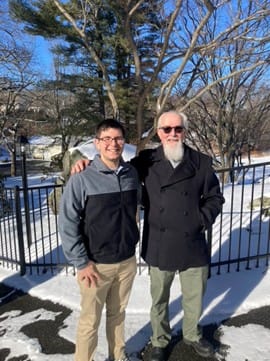
In the four years that he had, Frank and his wife were able to have a child. They picked the first name of Jesse and a middle name of William, after me. That is probably the greatest ‘thank you’ I have ever received. Today Jesse William is a big, strong, athletic college student. He looks and sounds exactly like his father.
Why Living Donation Still Matters
Live organ donation is a difficult process that creates tremendous stress on the body, and obviously I am not expecting you to run out and donate a kidney, a lung, or half of your liver – though it would surely be a wonderful help to someone if you did.
I just want everyone within the sound of my voice to be aware of how much the need for organs outweighs the supply, and to perhaps take one step toward helping one of the many patients on transplant lists. Today, in honor of National Donor Day, please at least make it clear to loved ones and on your driver’s license that you agree to be a cadaver donor of as many parts as possible.
As I always taught my karate students, sometimes the process is difficult, but the rewards can be great. The hardest part is walking in the door. The same holds true for living organ donation. Once you decide to make the commitment, expert hands will guide you the rest of the way. The reward for both the donor and the recipient can be life-long satisfaction, pride, and health.
More than two decades on, I still look back on my experience with a mix of awe, pride, and gratitude. I gave Frank a liver, but he gave me much more: Frank taught me appreciation for life and health; how to face mortality and meet it head on; how to be valiant in the face of uncertainty; how to accept and overcome years of challenges in the unwavering pursuit of a long-term goal, and how to have a dream and never let it go.
I still feel grief for the loss of Frank, but the experience of knowing him and his family outweighs that loss. Knowing and helping him was a privilege and an honor.