Look Closer: How a Ball Python's Branch Unlocked a Nature Mystery
A mysterious chewed branch in a snake tank leads to a winter science lesson and solving a years-old mystery for columnist Bill Boivin.

Many folks look at nature without seeing and appreciating the details. But it’s those details that reveal the dynamic interactions that make up the world around us. Living, once-living, and nonliving; plant and animal; human and beast: Everything works together to create a world that functions so well, we humans can take it for granted until something happens to spark our curiosity.
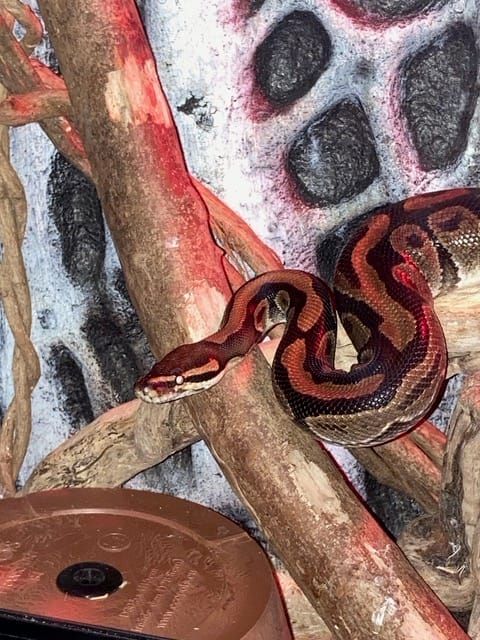
Take this hunk of wood, for example. Several years ago, while doing early spring clean-up, I brought a piece of fallen tree branch from under the snow inside to use in my snake tank. I sterilized it first by baking it in the oven at 250 degrees for two hours. Then, after letting it cool, I arranged it with other pieces to create a climbing structure for Maya, our 18-year-old ball python. From time to time, I wondered about the bare spots on its bark. But I chalked it up to a mystery of nature and didn’t think too much about it.
But last fall, while walking around my yard with an arborist, planning some tree health work, I learned an unexpected lesson that answered that question, along with some others I didn’t even know I had.
Lesson #1: The word “nivean” means snowy or relating to snow.
Lesson #2: The word “hibernal” means active in the winter.
Lesson #3: The environment between fallen snow and the ground it rests on, often inhabited by hibernal creatures, is referred to as the subnivean environment.
Lesson #4: Unlike mice and voles, shrews are not rodents. They are semi fossorial insectivores, meaning they spend just a part of their active days underground.
How does this all come together?
Each year, as spring melts the snow in my yard, small tunnels are exposed, revealing highways that had existed under the snow. Those tunnels, in the subnivean zone, are made by small mammals like mice, voles, and shrews, which create pathways under the snow to roam and to find food.
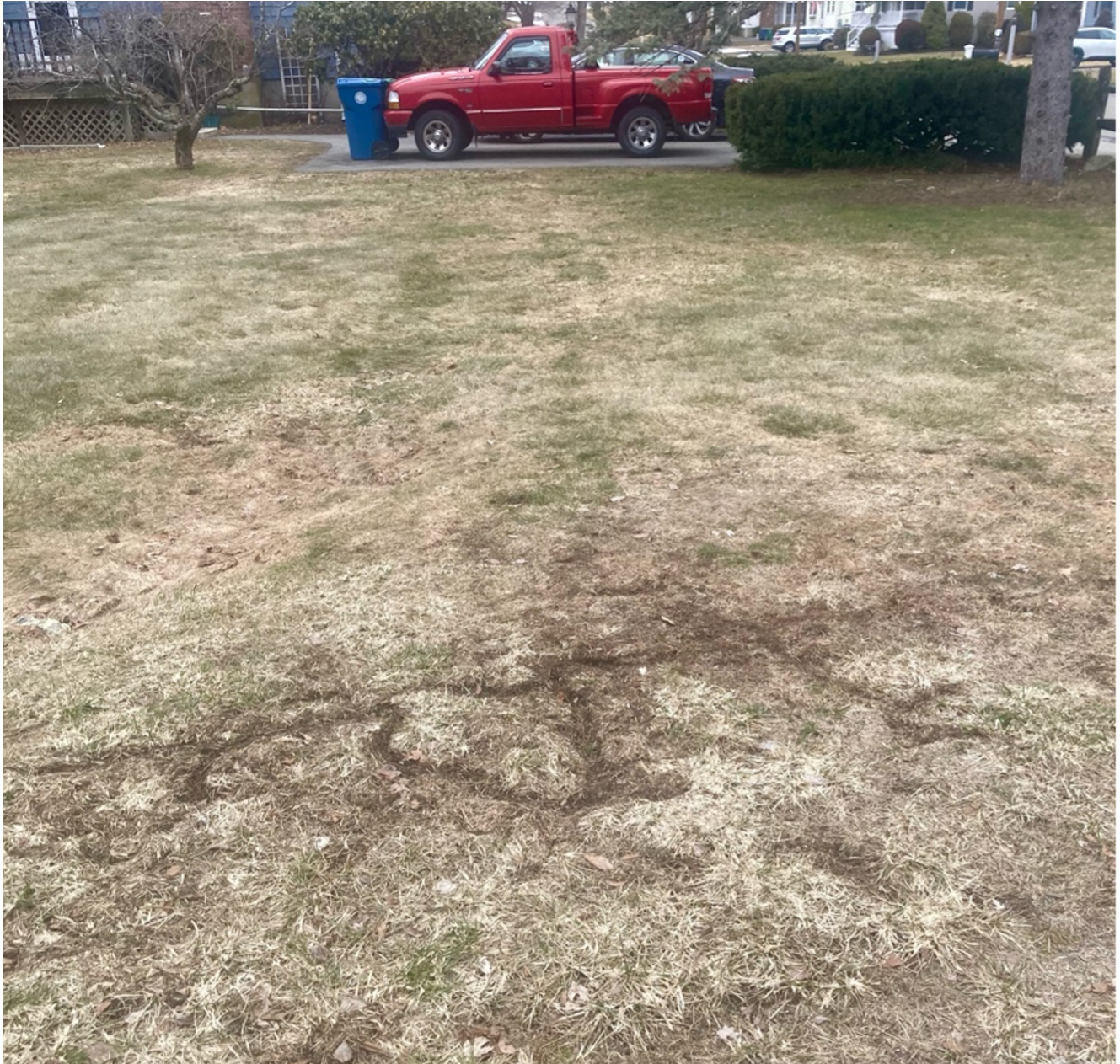
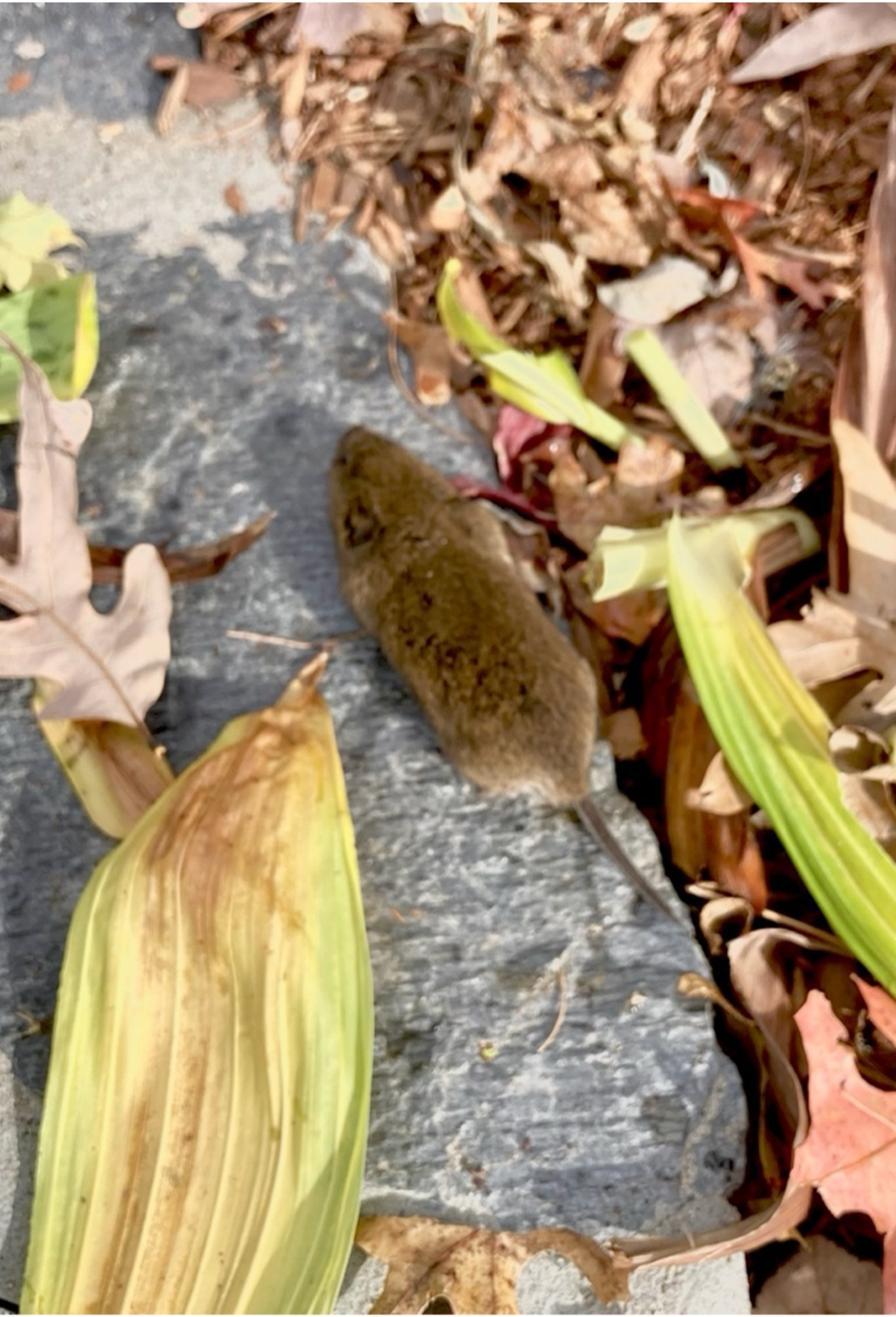
Left: Melting snow reveals subnivean tunnels. Right: A vole running through my yard in November.
The layer where the earth's heat meets the snowpack is insulated from the colder air and is thus more tolerable for the small mammals. In these subnivean tunnels they stay warm and hidden from predators like foxes and owls. They survive the winter by eating grasses, roots, bulbs, and the bark of branches buried in the snow. Shrews also eat their winter stash of insect larvae, bug parts, and paralyzed spiders. (Shrews have venom in their bites.)
On our walk through the yard, the arborist pointed out a low-lying branch on my rhododendron. “See those small bare spots?” he said. “Those are where voles chew off some bark of low, snow-buried branches to survive in the winter.”
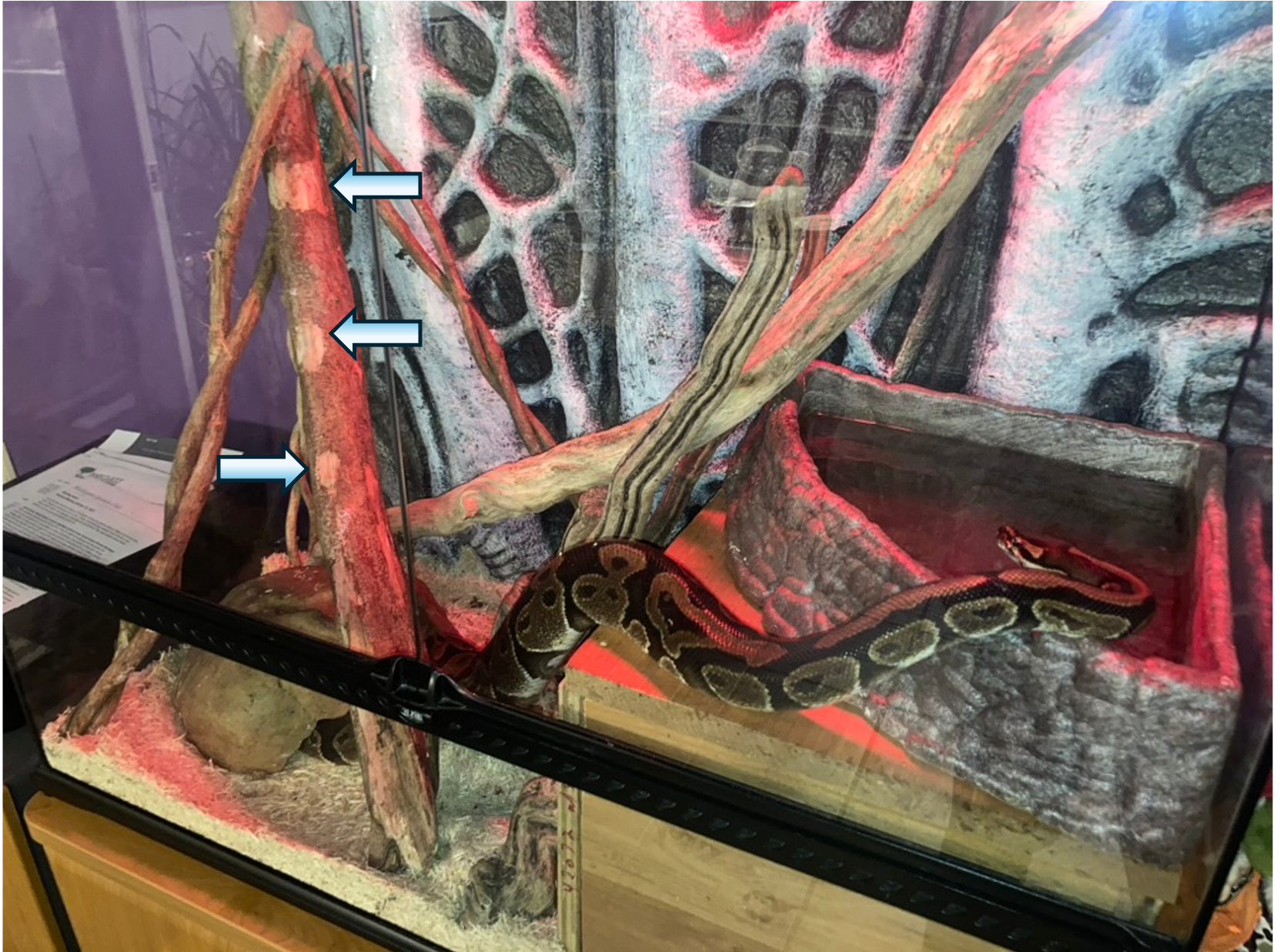
And suddenly, I understood something that had been right in front of my nose. Maya the ball python has had that interesting-looking branch in her enclosure for three or four years now, and the source of the bare spots was now clear: Voles had been at it while it was buried in the snow.
Now I have a snake tank structure with a story to tell!
At 75, I still am thrilled to learn new things, especially about the little corner of nature I’m immersed in every day. Slow down, look closely and see what you can discover in your yard!
Bill Boivin is a scientist, retired from 30 years of active duty with the United States Public Health Service. He is a Burlington Town Meeting Member and Conservation Commissioner. He and his wife, Jane, grew up in Lynn and now live in Burlington with their 2 mini dachshunds, 7 chickens, and Maya, a ball python. Bill and Jane have shared a love of nature, gardening, and wildlife for over 50 years. They have fostered, healed, raised, and loved a remarkable variety of animals in their time together. Learn more about Bill.