A Cage or a Healthy Habitat? Lessons from Samson and Delilah
From tiny fish to tank-busting giants, our oscars taught us the painful difference between captivity and a true habitat.
Many people think that fish ownership is merely for decoration: a betta or a goldfish in a bowl or too many fish crammed into a small tank with bubbling plastic treasure chests or fake coral in a fresh water tank. We learned from experience and research what a fish (or any animal) would have in nature and try to provide that. Samson and Delilah provided a valuable lesson in that path to understanding.
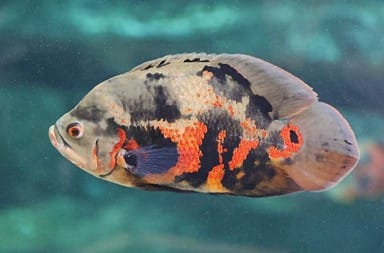
Samson and Delilah were oscars, South American freshwater fish. Having an oscar for a pet is no casual endeavor: They grow to the length of an American football and can live as long as a dog and prefer live food.
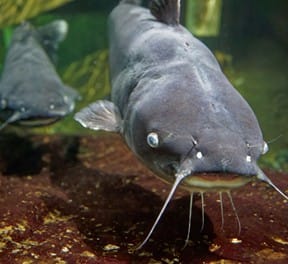
We put two of them, each about the size of a half-dollar, into a 55-gallon tank (four feet long and one foot from front to back) – along with a small Mississippi catfish for clean up work. The only decoration in the tank was sand on the bottom and a 3-D plastic background that looked like fake Greek ruins. The huge tank dwarfed the tiny fish – but not for long.
My wife Jane was working at the pet store when we got them. We started by feeding them guppies and progressed to feeder goldfish. At the peak, together with our turtles, we were going through 150 goldfish a month. (Thank goodness for Jane’s pet store employee discount!) The catfish ate shrimp pellet food that sank to the bottom.
They ate; they grew - they ate; they grew. Once, one of the goldfish managed to sneak behind the background decoration to avoid becoming lunch. We let him stay there, feeding him a few flakes at a time. After a few months, the goldfish grew so large that he hardly fit where he was and, since oscars swallow their prey whole, he appeared to be too large for the oscars to eat. So, we named him Jonah and let him out to swim with the whales. He never got eaten or even chased. He survived a long time in this bizarre predator/prey relationship.
Eventually we discovered Purina trout chow. It looked like dog food in smaller pellets and came in 50-pound bags. Samson and Delilah inhaled the stuff, which meant we no longer had to feed them live goldfish. If I held a pellet in my fingers above the water, they would jump up to get it. Oscars have teeth - and after they once or twice tried to get a taste of my fingers along with the trout chow, I stopped that approach.
The fish were also very powerful. One day we were awoken in the middle of the night by our dog Doof barking wildly downstairs. I thought we had an intruder. It turned out that one of the oscars had burst right through the canopy cover and was flopping around on the floor. We tossed her back in the tank; she was fine. We added two bricks to weigh down the cover and prevent another escape. A few weeks later the same thing happened again, but Doof did not hear it and we found Delilah dead on the floor in the morning. We purchased another female, Dolores, and added two more bricks on top of the fish tank cover.
The three big fish eventually outgrew the tank. The oscars had grown to 13” long; the catfish 18” – now they were the ones dwarfing the tank which, if you’ll recall, only measured 12” from front to back. I got the inspiration to contact the New England Aquarium to see if they would accept them as a donation to one of their huge Amazon River tanks. To my amazement, they said yes! What a great thing – they would be in a much larger, more natural environment. And we could visit them!
Then, disaster struck. A few days before we were to deliver them, we had an extended power failure in the area. Since the tank was so crowded and entirely without plants, the water’s oxygen levels were depleted quickly, even as we tried to scoop and splash – an unsuccessful attempt to aerate the water.
All the occupants succumbed. Elation turned to stunned grief. Rather than a thriving home for its occupants, our tank had been just a cage – and, ultimately, a death trap.
We learned the hard way that fish should be kept in a balanced environment with plants providing oxygen as nature intended – and that keeping animals means accepting responsibility not just for their survival, but for the world they live in.
Bill Boivin is a scientist, retired from 30 years of active duty with the United States Public Health Service. He is a Burlington Town Meeting Member and Conservation Commissioner. He and his wife, Jane, grew up in Lynn and now live in Burlington with their 2 mini dachshunds, 7 chickens, and Maya, a ball python. Bill and Jane have shared a love of nature, gardening, and wildlife for over 50 years. They have fostered, healed, raised, and loved a remarkable variety of animals in their time together. Learn more about Bill.