What’s the Deal With That Pink House?
With a sibling across town and a story that goes back hundreds of years, this Burlington house is more than just a pretty face.
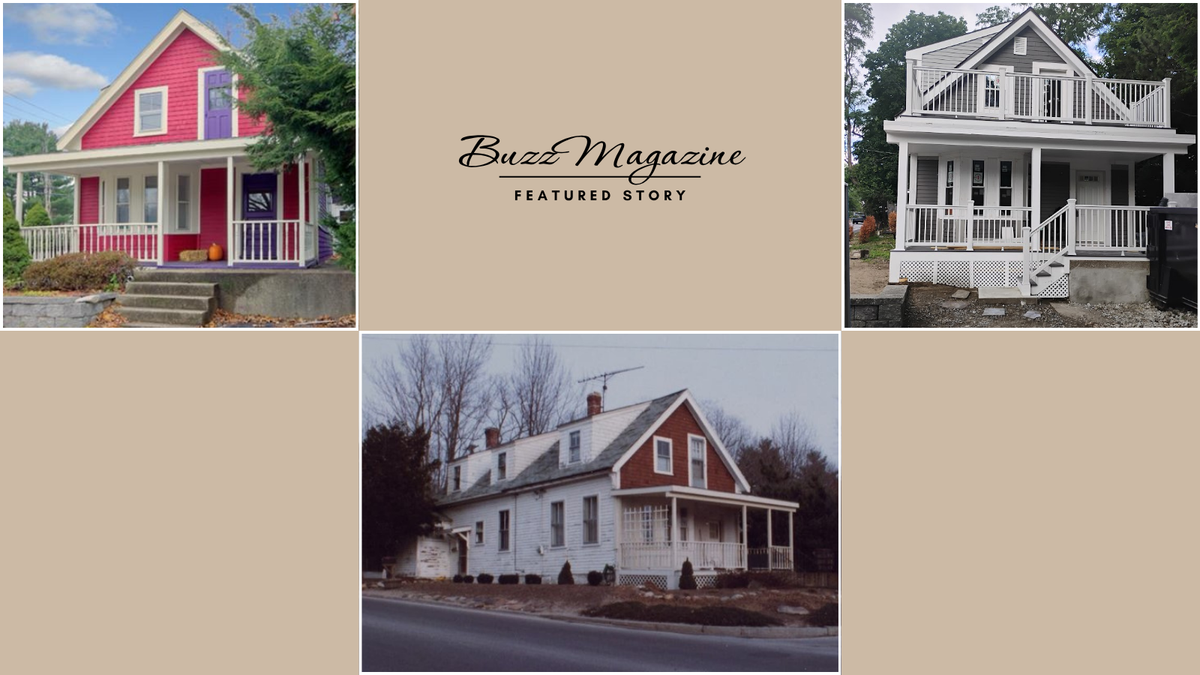
Near the Corner of Wilmington Rd. and Cambridge St. stands a home that has commanded many second glances. Until a few months ago, the house sported a faded pink paint job and a purple door leading out onto its lower roof. But the house’s color isn’t the most remarkable thing about it.
This 235-year-old house, which sits on a tiny lot that would be considered nonbuildable by today’s standards, has a sibling not far away at the corner of Francis Wyman Rd. and Bedford St. Both buildings were constructed in 1792 as the North and West Schools, respectively. These were the first of five district schools built to accommodate the learning needs of the town’s children.
This story was featured in our Fall Magazine
Read our Fall 2026 issue today — now arriving in Burlington mailboxes.
In 1827 the Massachusetts legislature passed a law requiring all towns with 500 or more families to set up free, public schools. Burlington’s entire population barely approached that number, but the town built the South and East schools in 1831 and the Center School in 1851. Meanwhile, our neighbor Woburn (of which Burlington was a Precinct until 1799) forgot to appropriate money to construct the schools and was called before the General Court to explain their failure to comply with the demands of the Commonwealth regarding education, wrote Lotta Cavanagh Rice Dunham in her The History of Burlington 1640-1950.
Massachusetts has always led from the front with respect to public education, with women teaching children in home-based schools as early as the mid-1700s. At that time, religion was the educational priority. Eventually, home-based education wasn’t good enough for our elected officials. In 1789, they changed the law to allow women to teach young children in a classroom provided they were certified by local selectmen.
Certification required a teacher to receive training at a “Normal School,” where they were taught a standardized approach to teaching, curriculum development, and, most importantly, etiquette skills, driven by the social values and accepted civil behavior for the time. Sit up straight, don’t talk in class, raise your hand, respect your elders. Perfectly normal behavior for a pre-teen.

If you like being informed and connected to your community, sign up for the Daily Buzz newsletter now!
By the time Burlington’s five public, or “Common,” schools were constructed, women were teaching in more than seventy percent of the classrooms. Lois Newcomb is one such example: In 1855 she was in charge of both the North and West Schools. Her monthly salary of $20 included room and board, and she received a glowing performance review. “Miss Newcomb has given entire satisfaction to the Committee,” the report read. “The progress of her schools was very marked during the year; and in general deportment was deserving of much praise. She is evidently fitted by nature to excel in the management of children.” Unfortunately, Miss Newcomb decided to change careers and got married; Burlington’s loss.
That same year, Center School teacher Mr. Leverett M. Chase received $45/month with a similarly positive review. He didn’t stay long, either – a pattern the School Committee recognized and spoke out against. In their 1859 annual report summary, they wrote, “When a new teacher takes a school only to make it a halfway house to something else, or to use it as an observatory to spy over the country for a richer situation; when such is the motive of a new comer, it is very certain that he will that only a transient interest in his work, and will leave his charge worse than he found it.”
In 1898 the town opened the Union School, shuttering the regional schools and consolidating the classrooms in one location.
The regional schools were sold. The East and South Schools were converted for residential use and eventually torn down to make way for new homes. The Center School is now the Historical Museum. The West School was sold to Otis Haven who converted it to a garage; it was used as such until 1964 when the property was subdivided into five buildable lots with two houses on either side of the building. The school site was donated to the Historical Society and then transferred to the town.
Become a paying member of the Hive and get exclusive stories from the Buzz, early access to our events, discounted merchandise, and more—all while supporting a Burlington-owned business.
The North School was converted to residential use and remains residential today. You may recognize a passing resemblance to the West School if you look closely today, but many similarities have been covered over by additions over the years, and this year’s renovation has replaced the pink exterior with gray.
Today, Burlington’s nearly 2,000 students are served by six school buildings – a far cry from the tiny schoolhouses where Lois Newcomb once earned her $20 a month. The Union School, which consolidated them all in 1898, served students until 1972 before becoming the Police Department’s home; it was recently demolished to make way for a new station currently under construction.