
Xfinity’s New Burlington Store Is About More Than Cable
The company best known for cable is betting its future on wireless, Wi-Fi, and bundled connectivity.

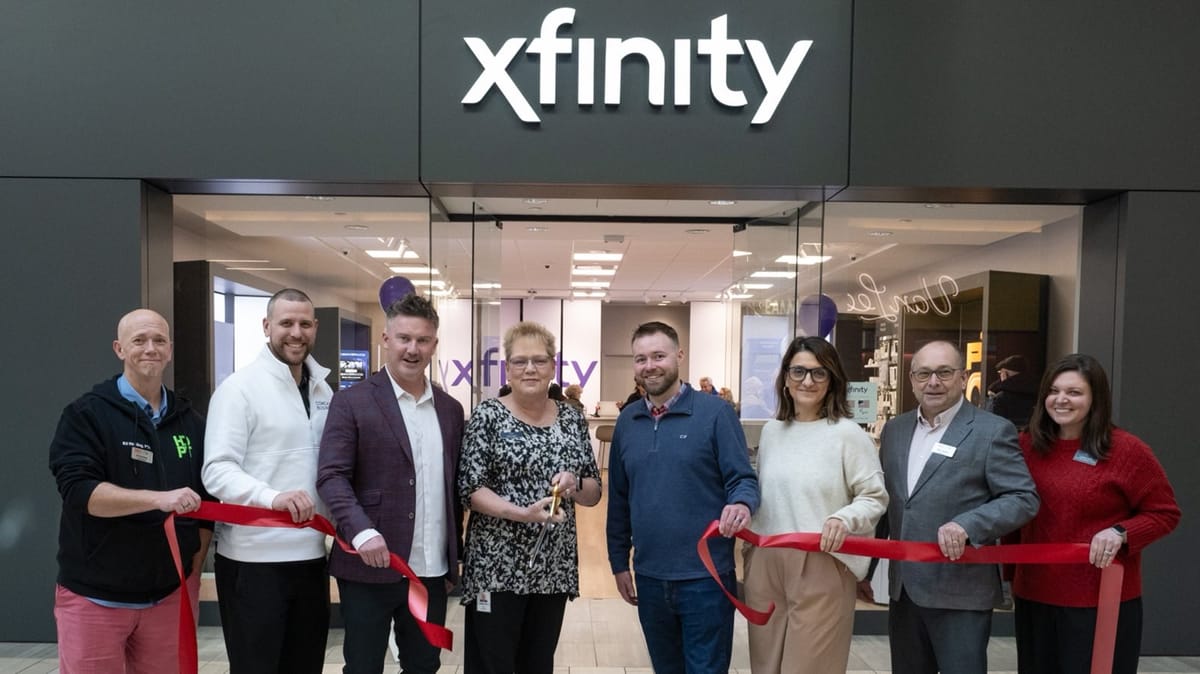
For years, Comcast’s Xfinity brand has been synonymous with cable TV and internet — bulky set-top boxes, unattractive router setups, and the occasional journey through the customer service phone tree maze. But step inside the company’s newly relocated retail store in the Burlington Mall, and it’s clear that today's Xfinity looks very different from the one many residents remember.
Yes, there are televisions. But there are also smartphones and smartwatches, WiFi systems, streaming demos, and sales reps talking as much about mobile plans as they are about channel lineups.
Xfinity Public Relations Director Marc Goodman summarized the company's new direction: Comcast wants to be your connectivity company — not just your cable provider.
The quiet shift beyond cable
The Burlington storefront reflects a broader transformation across the telecom industry, where traditional cable companies are expanding into wireless service, streaming platforms, and bundled internet ecosystems.
One of the companys lesser-known offerings is Xfinity Mobile, a cellular service the company says boasts the fastest 5G network in the country. The service works with major phone brands, allows users to keep their existing devices and numbers, and integrates with Comcast’s existing infrastructure — particularly its network of public Wi-Fi hotspots.
The store’s placement inside the Burlington Mall's Legal Sea Foods wing also tells its own story. Situated within steps of AT&T and Verizon stores, Xfinity's storefront makes a clear retail statement: it wants to be considered in the same conversation as the country’s dominant mobile providers, not just its cable incumbents.
Streaming, sports, and vertical integration
The company’s evolving identity is also tied to its ownership of NBCUniversal, the media giant behind NBC and a portfolio of broadcast, cable, and streaming properties.
That vertical integration becomes especially visible during major live events; live sports remain one of the few types of programming that consistently attract real-time viewers.
The Olympics and the Super Bowl – two of the most bandwidth-intensive broadcasts of the year – both air on NBC this February, and Comcast is using those moments to showcase its video offerings. A major feature of the platform is a low-latency streaming format it calls “RealTime4K,” designed to reduce the delay between live game action and what viewers see at home — a lag that has long fueled spoilers from texts and social media. The company says the technology may deliver live broadcasts up to 30 seconds faster than competitors’ 4K streams, said Goodman.
Meanwhile, NBCUniversal’s Olympics coverage is rolling out interactive features like customizable multiview screens and AI-generated highlight reels that let viewers track specific sports, athletes, and medal events — part of a broader push to make live TV feel more personalized and on-demand.
Pressing the Reset button on the customer experience
Goodman acknowledged Comcast’s long-standing customer service reputation, saying the company is working to make equipment more attractive, interactions more approachable, and support more accessible.
Examples include redesigned cable boxes and routers, simplified interfaces, voice remotes whose command menus are updated to reflect customer needs, and a membership program with perks like the opportunity to win a trip to Universal Studios.
Whether those changes will shift public perception remains an open question for many longtime customers (and ex-customers) — but the retail expansion suggests Comcast believes face-to-face service is part of the answer. The location itself, relocated from Xfinity's previous Burlington storefront on Second Avenue, now sits in one of the town’s highest-traffic retail corridors, facilitating what Goodman described as an effort to “make it easier to do business with us.”
A snapshot of where telecom is headed
For Burlington residents, the new storefront may matter less as a place to sign up for cable TV and more as a window into how the definition of a “cable company” is changing.
Telecom, wireless, and media are converging into a single marketplace where providers compete to bundle home internet, mobile service, streaming platforms, and live content into one subscription ecosystem.
The Burlington store, then, isn’t just another retail opening. It’s a physical marker of an industry in transition — one where the companies that once wired our living rooms are now trying to power nearly every way we connect.