Lost Cat’s Journey Highlights Burlington’s Pet Licensing Rules
Lost Cat’s Journey Highlights Burlington’s Pet Licensing Rules
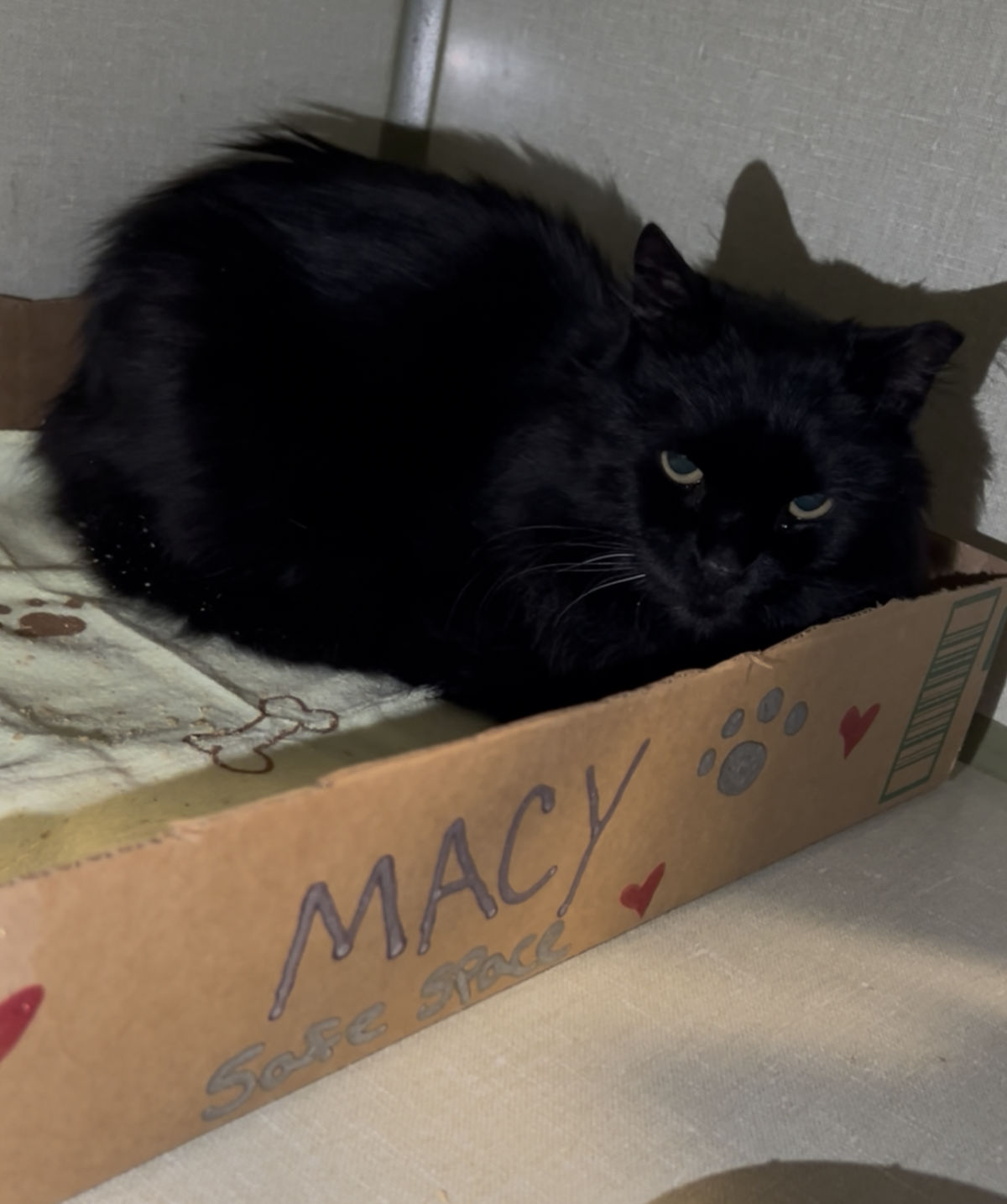
A truck was being unloaded in Burlington, MA, during a February blizzard when workers spotted an unexpected passenger: a small cat sitting among the merchandise.
The cat, later identified by a tag as Macy, looked “scared and shut down,” according to Burlington's Animal Control Officer Jaime Jeffrey. She was far from her home in New Jersey, having traveled unnoticed in the truck.
Macy likely climbed into a truck at a distribution center in New Jersey and rode it to Burlington without anyone noticing. But because Macy is not microchipped, there is no way to identify her owner. “If this cat was microchipped, I could get it back home even if it was across state lines,” Jeffrey said.
Macy’s case highlights a gap that local officials say is preventable.
After a surge during the COVID-19 pandemic, pet ownership in Burlington has stabilized, with about 2,500 dogs licensed in town. And in the 26,000-member community, responsible pet ownership goes beyond feeding and walking your pet — it includes licensing, microchipping, and following local regulations that often go overlooked. Licenses allow officials to quickly identify pets if they are lost, and microchips, while not required for a license, can help reunite animals with owners even across state lines, saving headache and heartache.
Town Clerk Jennifer Priest, whose office is in charge of keeping pet licensure records, experienced that system firsthand. Her two dogs escaped the backyard one Sunday morning, but because they were wearing town tags, they could be identified at the police station immediately.
Dogs are the only animals that can be licensed in Burlington, and Priest said the process is straightforward. Licensing fees are $15 for one year, $25 for two years, or $35 for three years. Dogs must have a valid rabies certificate before they are licensed, and the license is valid only for the duration of the rabies certificate.
“Many people don’t know these details,” said Priest.
A relatively new state law, known as Ollie’s Law, reinforces those requirements.
The law is named after Ollie, a 7-month-old Labradoodle that was mauled at a dog daycare in Longmeadow, Massachusetts, in 2020. The facility lacked state oversight, and there was no system in place to guarantee that the dogs mixing together were vaccinated, tracked, or safe. To close this loophole, the state now requires daycares, groomers and others who care for dogs for extended periods to request proof of licensing and rabies certification.
The goal is to catch lapses, whether from missed renewals or lack of awareness.
Priest and Jeffrey are working with the Select Board to update the town’s fees and bylaws to better comply with Ollie's Law, with changes expected to go before town meeting in May.
Officials say responsible ownership starts before a pet ever leaves the house.
For owners who are looking to get caught up, Burlington is hosting a rabies clinic on May 2 in partnership with the City of Woburn. Owners can get their pets rabies-certified and licensed in one trip. While not offered at the clinic, Jeffrey also recommends microchips for pets, which can be obtained at many vet clinics, humane societies, and pet retailers.
"Even if it was an animal who got out of state, a microchip is really important to help reunite an animal quickly, no matter where they come from," Jeffrey said.
Training is another key component. Jeffrey recommends practicing basic voice commands such as “come,” “sit,” “stay.”
"The basic commands can mean a lot in a really tough situation," she said.
Being mindful of where dogs are allowed also comes into play. School grounds and playgrounds may include children who are unfamiliar with or afraid of dogs, while athletic fields are maintained for sports, not pets. Dog parks, she said, are a better option.
And picking up pet waste is a must. Burlington Animal Control warns that dog waste, contrary to the common belief that it acts as a fertilizer, can carry E. coli, Salmonella, Giardia, and roundworms – contaminants that can linger in the soil long after the waste itself is gone.
As for Macy, she still waits patiently. If she had been microchipped, her outcome might have been different. Someone could have scanned her, retrieved her owner’s information and made a call.
Instead, eight weeks later, she remains at the Burlington animal shelter, waiting to be claimed.
Teo Berbic is a student at Endicott College studying journalism. This story was published in partnership with the Massachusetts News Service.