
From a Lump to a Cold-Blooded Killer
Surprising lessons learned from an experiment in building a saltwater ecosystem

The snail was dull brown, nothing fancy, about the size of a billiard ball. I dropped him into our 55-gallon saltwater tank, and he floated to the bottom, crawled into a corner, and stayed there — a few days, then a few weeks, then a couple of months. I never saw him move; I figured he was nocturnal. Whatever shenanigans he got up to overnight, every morning there he was, right back in the same corner. The most boring animal we'd ever had. A living rock.
To understand how a living rock becomes a killer, you have to understand what I spent months building just to give him — and everything else in that tank — a place to live.
One thing to know about my wife Jane and me: We are caretakers. Over our 55 years together, we have cared for everything from dogs and birds to a raccoon and a 4 1/2-foot ball python.
Our journey of learning about the world through care for animals began in earnest with a little betta in a bare bowl, and fish have been a consistent thread in our lives ever since. We have always had a freshwater tank of some sort, from that simple fish bowl to large tanks. Setting up a saltwater tank seemed like it would be a new challenge and a learning experience. I was excited to experience building an ecosystem from scratch and observe animals we’d otherwise never get to see up close and personal – invertebrates, in particular.
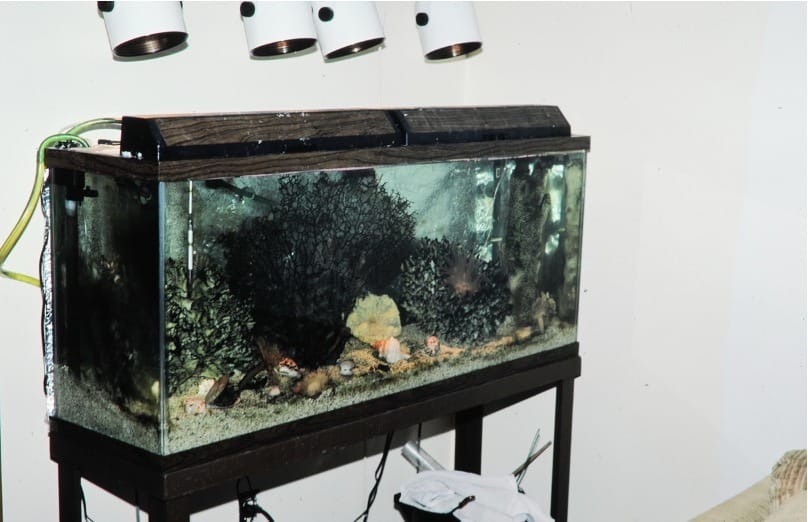
I wasn’t sure what animals we’d put in the tank, but I knew that before we could add any, we had to create an environment where they could survive and hopefully thrive. In the 1980s, before there were things like packaged “synthetic sea salt mixes” and “starter bacteria” to facilitate the process, I had to create the ecosystem from scratch, a process that took months of careful effort and was even more complicated than I’d anticipated.
This aquarium taught me to appreciate the intricate relationships and delicate balance at the chemical and microscopic levels that build the necessary foundation for macroscopic life.
The process involved filling a 55-gallon tank and adjusting to the proper salinity (salt concentration) and pH (acidity/alkalinity). Then I introduced one temporary pair of brackish water fish who were able to live in either salt or fresh water. Their sole purpose was to produce urine and feces with the accompanying small amount of ammonia and bacteria as a seed to initiate a chemical process which over several weeks produced the essential water conditions for the final aquatic environment. The presence of the fish, combined with a bright light, encouraged bacteria and algae to grow and to gradually establish the necessary biological micro-environment. (In a saltwater environment, algae assumes the role that plants occupy in the freshwater aquarium.) I tested the water frequently throughout this two-month-long process to ensure all was going according to plan.
A saltwater aquarium is difficult to establish and maintain in part because its conditions must remain very stable. Freshwater creatures have adapted to seasonal and even daily variations of temperature and water quality that come from living in much smaller bodies of water like ponds and lakes. The ocean, an unimaginably large continuous body of water, doesn’t do that. Saltwater animals have limited ranges of acceptable environmental parameters. That’s also why with saltwater, the larger the tank, the better: More water means more resistance to changes in temperature and pH.
It was very difficult to “decorate” a saltwater tank into anything that looked natural. Live coral wasn’t an option back then, but pet stores sold coral skeletons, which could add height and color to the tank. Bonus: coral’s structurally complex shape provided copious surface area for growing algae. My favorite piece of coral was acquired during a business trip to Taiwan. I bought it from a fisherman at the beach for $10.
After two or three months and innumerable water tests, the temporary fish were relocated to a freshwater aquarium. The tank was now biologically ready, decorated with a few corals, and had a decent growth of algae. Finally, it was time to very slowly add inhabitants.
And what a cast of characters we had! Some, like anemones, were meat eaters. Many – nudibranchs, a sea urchin, pistol shrimp, peppermint shrimp, starfish – were the clean-up crew, just grazing on algae and digging around for scraps on the bottom. The only vertebrates were one pair of small clownfish to keep the anemones company and seahorses, which were still available in pet stores at the time. (They did not survive long in the tank.)
To feed the carnivores, I bred live brine shrimp in a small accessory tank. I also used a long, pointed stick to deliver bits of raw fish to the anemones. Their waving arms would very gently take the offering. Other animals, like the shrimps, would eagerly seize the bits of flesh and scurry away with them.
Once the tank was mature enough, we were able to introduce filter feeders such as feather dusters and shellfish. It was at this stage that we met Jaws.
We never knew what might be available when we visited the pet store. Back then, most saltwater pet store items were wild-caught, and availability was unpredictable. One day they had a fairly sizable saltwater snail. I thought he might be helpful in controlling the algae, which were growing vigorously by that point. I brought him home — and well, you already know what happened next. Nothing. For months.
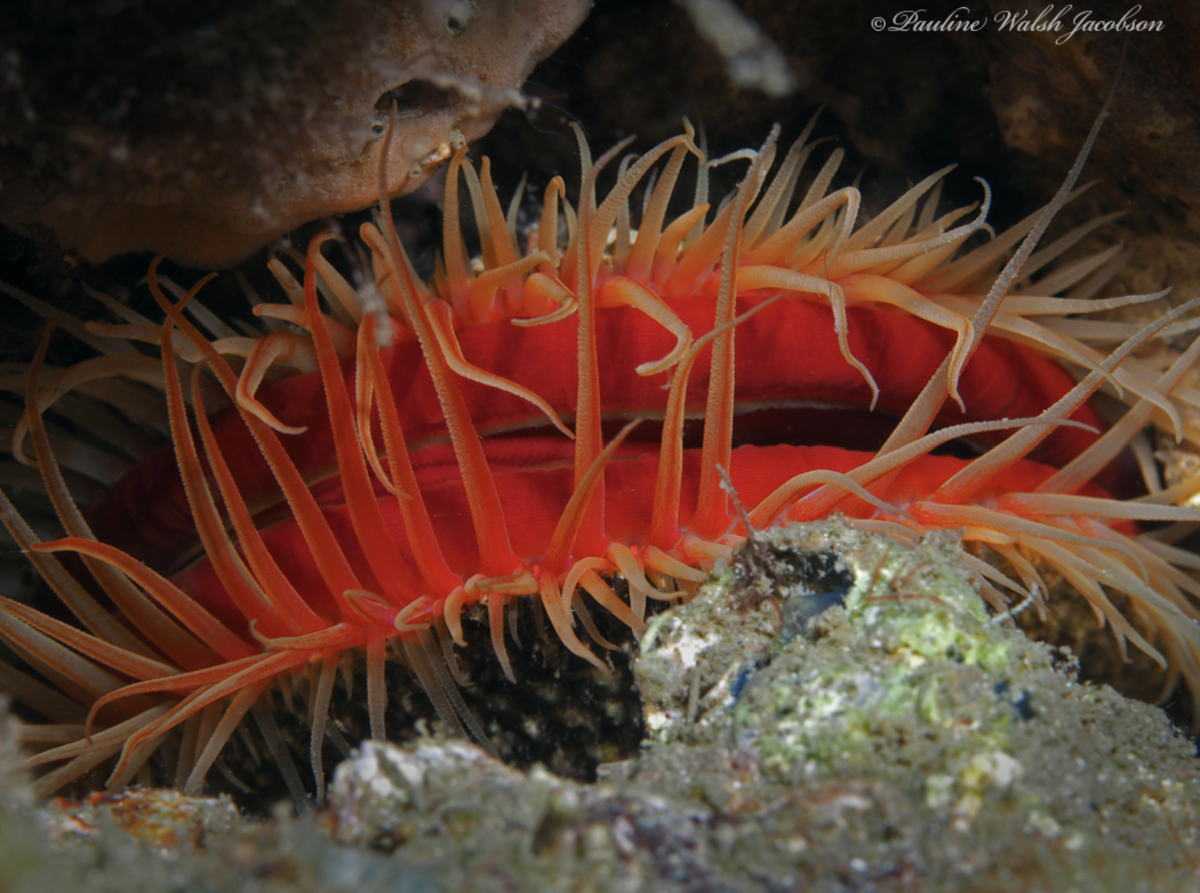
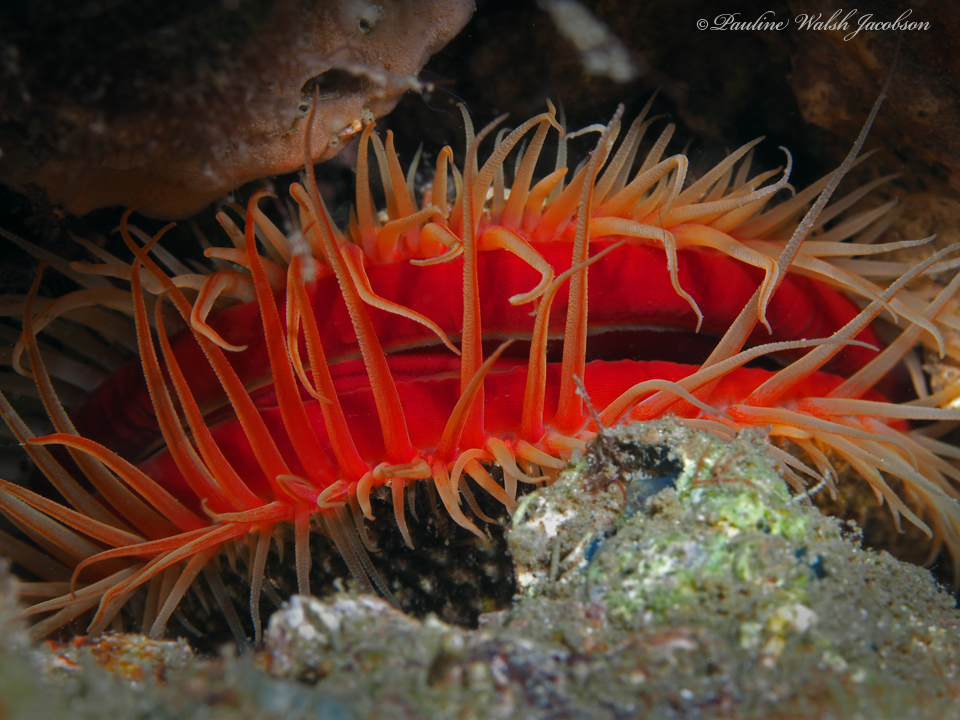
Then one day the pet store had “flame scallops.” Those scallops were normal looking shellfish when closed, but when they opened to filter feed, they were spectacular, waving their flaming red tentacles to capture tiny floating nutrition. I paid $10 each, quite pricey in the ’80s. I brought two home and dropped them into the tank, one at each end. Almost immediately, the big snail started to move! Over a period of about 30 minutes, it lugged itself across the sandy floor over to one of the scallops, perched on top of it, and spread its rubbery body across the seam of the scallop, applying pressure aimed at separating the two shell halves. It persisted in that tension for an hour or more with the poor scallop resisting until it was exhausted. At that point the scallop’s shells finally separated, and the snail’s mouth part oozed inside, devouring the scallop flesh over a period of a couple of hours, after which it paraded across the tank and repeated the process on the other flame scallop. It was twenty dollars down the tube, but perhaps worth it to witness such a fascinating process up close.
Follow-up research revealed that there are herbivorous snails and carnivorous snails. We had unknowingly purchased a meat eater.
The subsequent decision of what to feed this snail was an easy one. I went to a local seafood store that offered a variety of fresh, living shellfish: clams, oysters, and mussels. Mussels were the least expensive, so I told the vendor, “Let me have two of those, please.”
“Two pounds?” he asked.
“Nope, just two mussels.” He complied, weighing them and charging me something like 14 cents.
At home I dropped them into the tank. Being alive and being filter feeders, the mussels survived just fine, so it was not important how long it took the snail to eat them, he would always have fresh food. After a week or so, I returned to buy two more, and then on the third visit I asked for three. At this point the vendor said, “I have to ask, what recipe are you making that requires so few mussels?” When I explained that I was using them as feed in my saltwater tank, he laughed loudly. “Wow, this could be a whole new market for me!”
The saltwater tank was stable and beautiful for a couple of years. At that point Jane decided that she wanted to go back to school to study dental hygiene. Without her income for a planned three-year period, we decided to shut down the saltwater tank. It was expensive to maintain, especially to add any new inhabitants or more coral. We sold all the occupants back to the pet store for fifty cents on the dollar and converted the tank to freshwater as it remains to this day. We saved all the coral skeletons as house decorations.
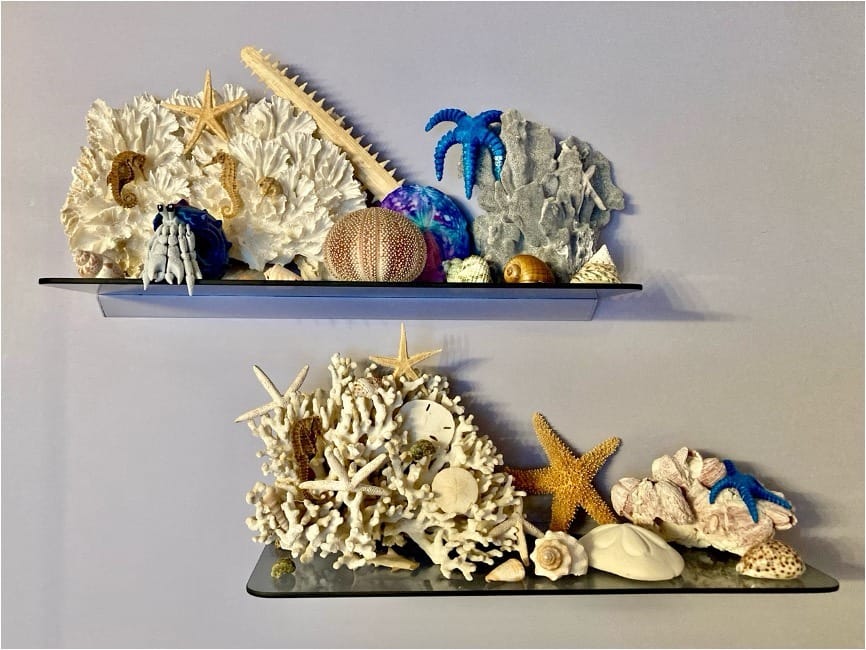
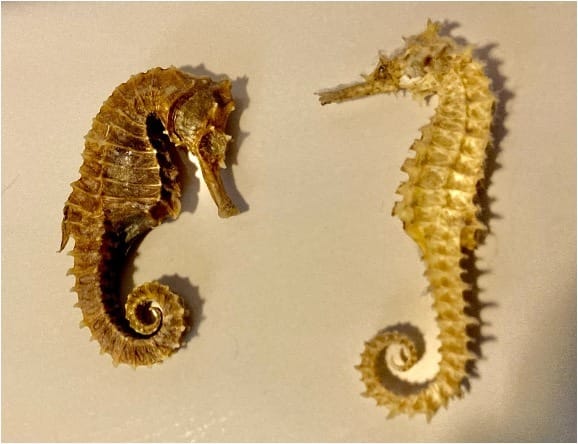
Left: Most of the items in this photo lived in or decorated our saltwater fishtank. The large coral on the upper left was the one acquired in Taiwan. (The blue pieces are not natural and were not in our tank.) Right: Even after 40 years, the dried carcasses of the seahorses are still beautiful.
I use the lessons learned from the intricate biological balance of this aquarium as I maintain the beautiful, well-planted, well-balanced freshwater community tank we have today. This experience opened my eyes to the bottom-up structure of healthy environments. The chemical and microscopic compositions are vital foundations for the larger system. This same concept applies in all healthy environments: a backyard, a forest, a planet, and even inside a human being.
One last thing about Jaws the murder snail: We actually never called him Jaws back then. That name didn't come to me until now, decades later, sitting down to write this — a small, overdue tribute for the most efficient killer we ever kept. I can hear the theme music now as I picture him crossing the sandy floor toward his next scallop… dum-dum, dum-dum, dum-dum…
Bill Boivin is a scientist, retired from 30 years of active duty with the United States Public Health Service. He is a Burlington Town Meeting Member and Conservation Commissioner. He and his wife, Jane, grew up in Lynn and now live in Burlington with their 2 mini dachshunds, 7 chickens, and Maya, a ball python. Bill and Jane have shared a love of nature, gardening, and wildlife for over 50 years. They have fostered, healed, raised, and loved a remarkable variety of animals in their time together. Learn more about Bill.