Big Night: The Annual Migration That Unfolds Quietly Under Cover of Darkness
One spring night, when the weather is just right, salamanders and wood frogs make their big move. Learn about Big Night and why it is essential to our ecosystem.

One spring night, when the weather is just right, an amazing spectacle unfolds.
It’s called Big Night — the evening (or sometimes series of evenings) when amphibians such as salamanders and wood frogs leave their forest homes and begin moving en masse toward nearby vernal pools to breed.
A Big Night for Amphibians
In some communities, these small creatures must cross roads to reach their destination, and volunteers head out in rain gear with flashlights to help them safely navigate the journey. Burlington is fortunate: several vernal pools are tucked into wooded areas near Mill Pond Reservoir. “The pools in Burlington are perfect,” said Suzanne Sullivan of the Massachusetts Association of Conservation Commissions, because they’re isolated from roadways and easy to access from the main trail.
The exact timing of Big Night is never fully predictable. Typically, migration begins on a mild evening with a light rain once temperatures hover around 50 degrees. Drawn by moisture and instinct, amphibians travel to the shallow, fish-free pools where reproduction can safely occur.
This story was featured in our Spring Magazine
Read our Spring 2026 issue today — now arriving in Burlington mailboxes.
And once they arrive, the real spectacle begins.
“The females start to lay eggs, and the males fertilize them,” Sullivan said. “Salamanders twist and turn in the water. Spring peepers and wood frogs call. It’s incredible to witness.”
For those hoping to observe Big Night, preparation is key: map your route, wear proper rain gear, walk carefully, and — most importantly — watch your step.
For more information about Big Night and how you can get involved close to home, check out Mass Audubon, the Wayland Ribbit Rangers, or the Hitchcock Center in Amherst, MA.
Vernal Pools: An Ephemeral Home
Though they may look like simple puddles in the woods, vernal pools are essential habitats for many species that depend on them for survival.
"Let animals do what animals do, and let the forest do what it does.”
- Suzanne Sullivan, Massachusetts Association of Conservation Commissions
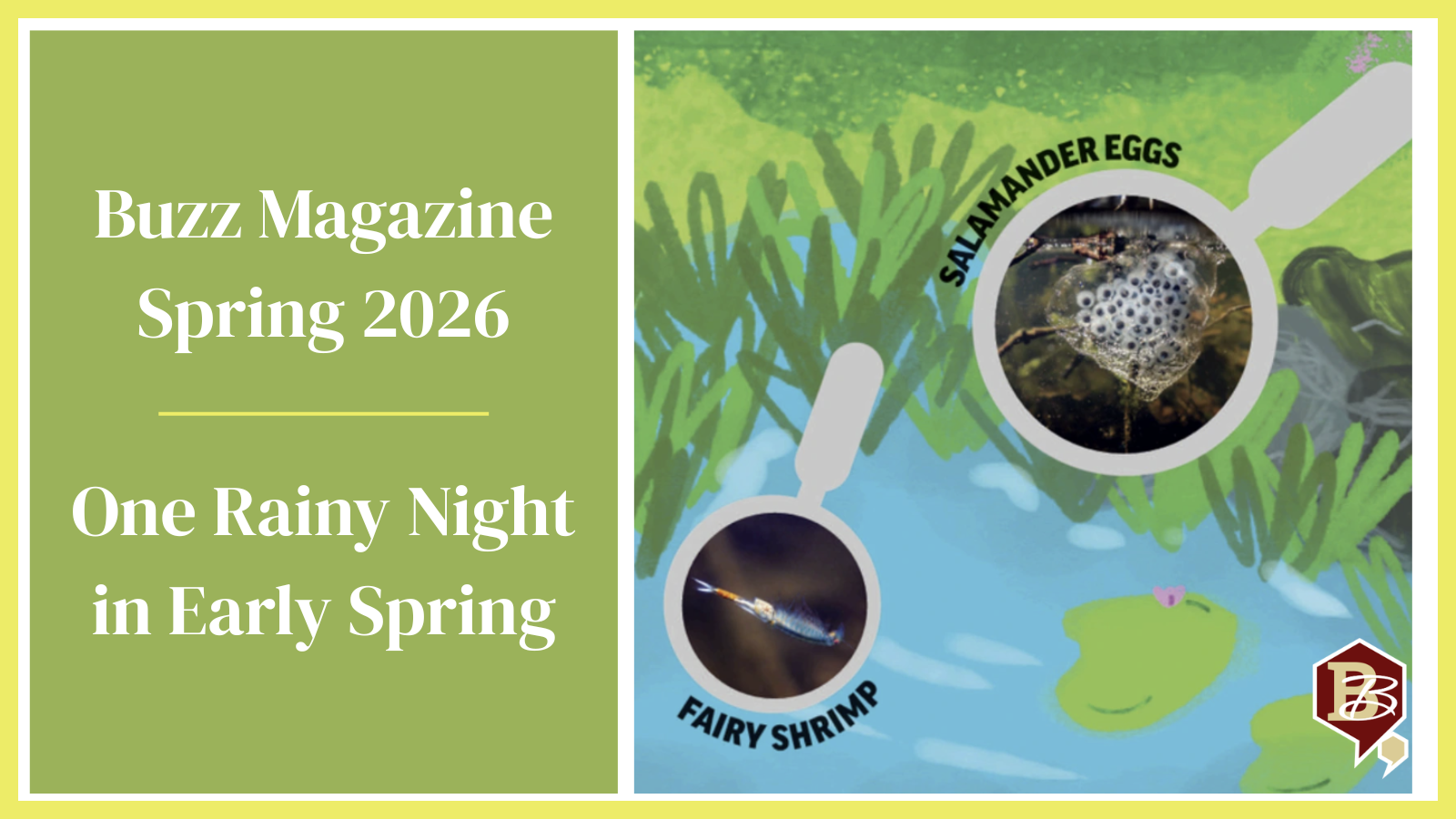
Amphibians such as salamanders and wood frogs spend most of the year in upland forests, sheltering beneath leaf litter and decaying logs. In early spring, they return to these temporary pools to lay eggs, attaching gelatinous clusters to submerged sticks and vegetation. Fairy shrimp — tiny freshwater crustaceans uniquely adapted to fish-free waters — hatch from eggs that have lain dormant in the muddy pool floor all winter. Together, these species help regulate insect populations, feeding on organisms such as mosquito larvae, while also serving as food for birds, mammals, and other wildlife.

If you like being informed and connected to your community, sign up for the Daily Buzz newsletter now!
Vernal pools function within a delicate ecological balance shaped by groundwater, seasonal rainfall, and the surrounding forest. By mid-summer, many pools dry completely, leaving only a shallow depression in the forest floor. Tadpoles transform and disperse into the woods. Fairy shrimp deposit eggs beneath leaf litter before dying, nourishing decomposers and returning nutrients to the soil.
The forest, in turn, shelters the next generation.
“Let animals do what animals do, and let the forest do what it does,” Sullivan said.
Protecting vernal pools means protecting the surrounding habitat — leaving fallen logs, minimizing disturbance, and allowing these small, seasonal ecosystems to continue their quiet, essential work.